RIYADH: Gulf Cooperation Council (GCC) leaders meeting in Saudi Arabia this week will work to strengthen integration as the region recovers from the coronavirus pandemic, the bloc’s secretary-general said on Sunday.
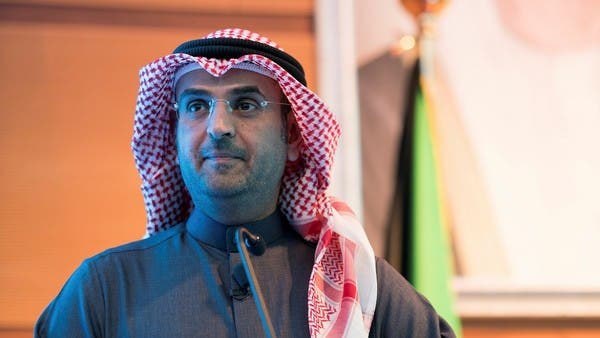
The GCC has achieved many accomplishments and integrative projects over the past four decades due to the vision and wisdom of the leaders of the member states, Nayef Al-Hajraf said in an interview with Saudi state-run Al-Ekhbariya TV.
Saudi Arabia’s King Salman has invited Gulf leaders to participate in the 41st GCC Summit in AlUla on Tuesday.
Among the achievements, Al-Hajraf highlighted the Gulf common market, the customs union, the interconnective power grid, free capital movement and several other acquisitions enjoyed by GCC citizens, which establishes the next stage of the bloc’s “march to build a bright future.”
Al-Hajraf said that GCC transport ministers met on Dec. 24 and approved the establishment of the Gulf Railway Authority, a pioneering development project that will enhance the opportunities for intra-GCC trade, which contributed to around $95 billion in 2018.
“This will increase if this system is completed, which will provide cheaper means of transporting goods and thus enhance the work of intra-GCC trade,” he added.
Al-Hajraf said “today the GCC is steadily moving toward five decades of cooperation due to the wisdom of the leaders of the GCC states,” in a statement issued by the Saudi Press Agency.
He said this year’s summit will be held in the historic city of AlUla despite the exceptional circumstances the world is facing in combating the coronavirus pandemic, which affirms the keenness of the leaders of the GCC states to preserve the bloc “as a cohesive system capable of overcoming difficulties and challenges and enhance its complementary march in all fields.”
He added: “Yesterday, we watched with pride the Saudi presidency of the G20 and how the Kingdom managed to lead the (international forum) to promote international cooperation.
“Today, as we witness preparations for the 41st session of the supreme council, we stress the importance of strengthening all areas of Gulf cooperation and integration and advancing the economic file, by strengthening and supporting joint action to contribute to restoring economic recovery and growth and returning to normal life to achieve sustainable development goals after the pandemic.”
He expressed his thanks to the GCC leaders for their efforts to strengthen the bonds of the “Gulf house” and consolidate its foundations, expressing hope that the outcomes of the summit would advance the march of joint Gulf action, in order to enhance the security and stability of the “indivisible” member states, and to fulfill the aspirations and hopes of GCC citizens toward more coherence, cooperation and integration.
Al-Hajraf also expressed his thanks and appreciation for the great efforts made by Saudi Arabia, under the leadership of King Salman and Crown Prince Mohammed bin Salman, in preparing for the summit “by harnessing all capabilities and overcoming difficulties to ensure the success of the summit,” which is being hosted by the Kingdom for the tenth time in the bloc’s history.
Al-Hajraf commended Saudi Arabia’s diplomacy, which is the “backbone and the main pillar of the GCC system, with its regional and international stature,” and its role in strengthening the bloc’s position “is what pushes this march to the desired horizons.”
The GCC Supreme Council is the bloc’s highest authority and consists of heads of member states and meets for a regular session every year.
The 41st session represents a new stage in the GCC’s march to create new horizons for Gulf citizens and empower youth to be able to lead the region’s “economy and development in the long term, to build an empowered society that is proud of its past and its achievements and looks forward to the future and its ambition.”
Al-Hajraf said the GCC countries own four sovereign funds that are among the 10 largest funds in the world, and greatly contribute toward strengthening the global economy through their large and diversified investments.
He added that the GCC countries constitute one of the largest economic blocs with a GDP equivalent to $1.6 trillion.
The secretary-general said the capital value of the GCC financial markets amounts to $3 trillion, noting that the listing of Saudi Aramco was a historic event that gave depth and strength to the GCC countries.
“These achievements are the result of a 40-year journey, despite the challenges that coincided with the beginning of each decade,” he said.
Al-Hajraf said that the “GCC countries are the center of a circle that includes two billion people,” and we must “look at this circle and the available capabilities, in terms of strategic location, waterways, airports, ports, transportation networks, and the attractiveness of the GCC countries for investments.”


![]()

GCC chief calls for stronger Gulf cooperation to overcome pandemic challenges
Short Url
https://arab.news/zgmzg
GCC chief calls for stronger Gulf cooperation to overcome pandemic challenges
- Al-Hajraf makes plea ahead of GCC summit in Saudi Arabia
- 41st meet will be held in Saudi Arabia's historic AlUla on Tuesday


Latest updates




Recommended


© 2026 SAUDI RESEARCH & PUBLISHING COMPANY, All Rights Reserved And subject to Terms of Use Agreement.