

Pakistan to mass-produce antivenom, rabies vaccine to end reliance on India imports

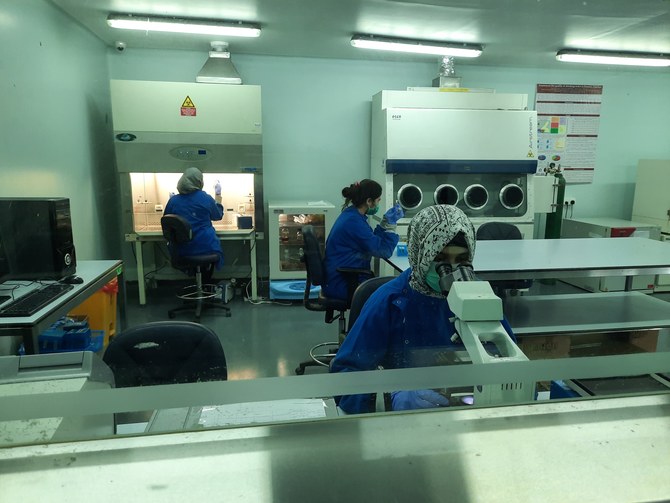
Researchers are working at a laboratory of Dow University of Health Sciences (DUHS) in Karachi on December 11, 2020. (AN photo/File)
Short Url
Updated 02 March 2021
Follow

Pakistan to mass-produce antivenom, rabies vaccine to end reliance on India imports

  • Pakistan needs up to 300,000 doses of antivenom serum for snakebites and 2 million doses of rabies vaccine every year
  • Researchers at Karachi's Dow University of Health Sciences say they'll be able to produce annually 700,000 vials of venom antiserum

KARACHI: Pakistan is going to start mass-producing a vaccine for rabies and antidotes for snakebites next year to end reliance on imports from India, scientists and officials have said.

Pakistan needs between 200,000 and 300,000 doses of antivenom serum for snakebites and 1.5 million to 2 million doses of rabies vaccine every year. Until now, most of it has been imported from India, but strained relations have last year led to a temporary shortage of supplies, prompting the national drug regulator to allow mass-scale local production.

“Entirely new manufacturing facility has been set up and approved from DRAP for mass production of anti-snake venom, anti-rabies sera, typhoid vaccine, and tetanus toxoid,” Dr. Ghazala Parveen, head of vaccines production at the National Institute of Health (NIH), told Arab News on Thursday.  
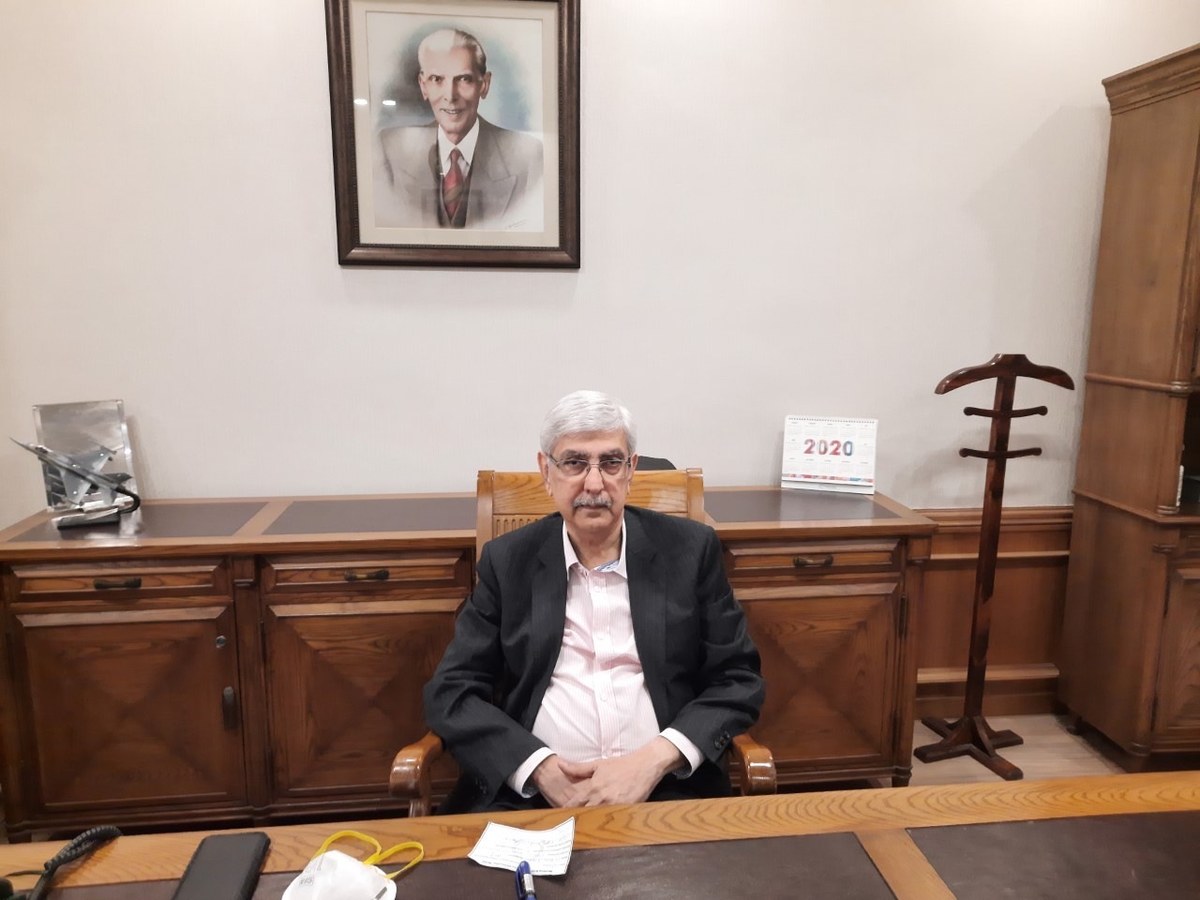


Prof. Dr. Mohammed Saeed Quraishy, vice chancellor of Karachi's Dow University of Health Sciences (DUHS) speaks to Arab News at his office in Karachi on December 23, 2020. (AN photo) 

“With latest machinery and equipment at hand we hope that country will not be importing these products from India in future," she said.

Before local production will be able to meet local demand, which according to Parveen would take at least six months, Pakistan is going to import the vaccine from China.

“Pakistan faces 70 percent shortage of anti-rabies vaccine," Prof. Dr. Mohammed Saeed Quraishy, vice chancellor of Karachi's Dow University of Health Sciences (DUHS), told Arab News.

“We have just started a project. What we are planning to do is to import it from China and repack it in Dow Life Sciences Institute, then market it," he said.

The cause of rabies is almost always a bite by a rabid dog. It is estimated that up to 1 million dog-bite incidents take place in Pakistan every year. In Sindh province alone, 200,000 cases have been registered by October, according to data from Jinnah Hospital in Karachi.  

While self-reliance in rabies vaccine production may take a while to be achieved, with antivenom it is likely to happen sooner, as following successful experiments in obtaining antibodies from horses last year, the Drug Regulatory Authority of Pakistan (DRAP) allowed DUHS to manufacture immunoglobulins used in antivenom therapy for snakebites.
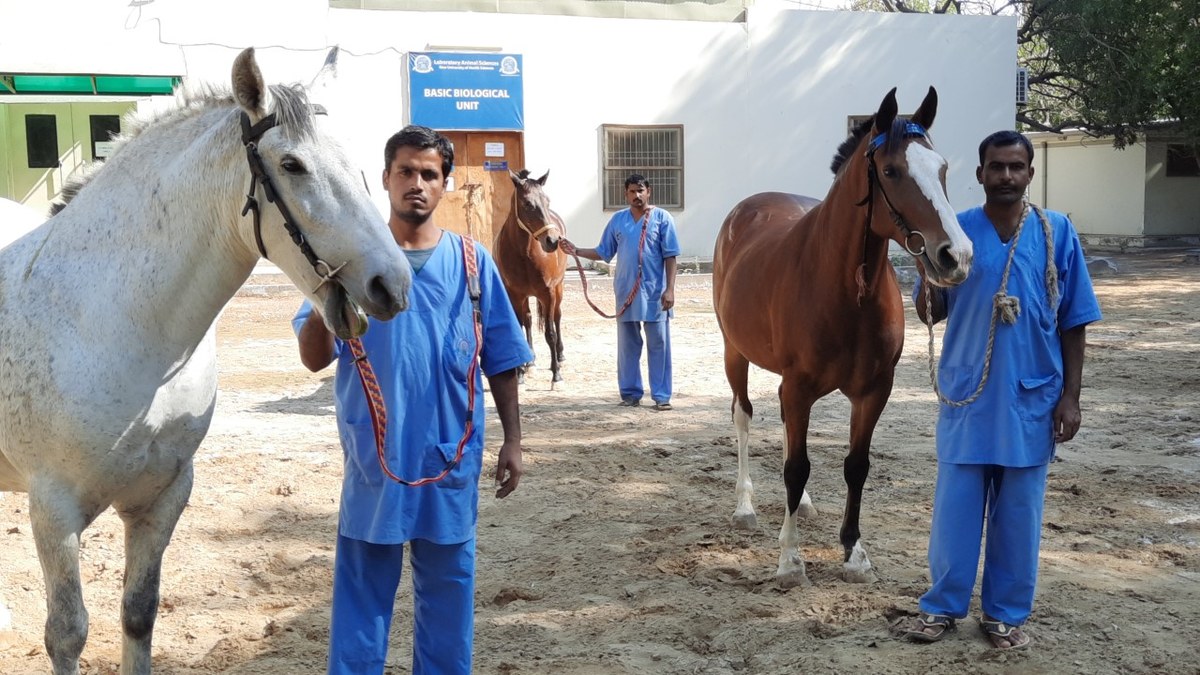


Horses at the Life Sciences facility at the Dow University of Health Sciences (DUHS) in Karachi on December 23,2020. From horses, Pakistani researchers obtain antibodies for vaccine and antivenom production. (AN photo)

The university says its biotechnological facility will be able to produce about 700,000 vials of venom antiserum a year.

"Our manufacturing facility has been certified, inspected and registered by the Drug Regulatory Authority of Pakistan (DRAP)," Quraishy said, "We have enough antibodies for trial purposes and early next year we should be able to use that clinically."

Though no comprehensive data on snakebites is available, most of related deaths in Pakistan are caused by the venom of cobras, kraits, Russell's vipers and saw-scaled vipers — snake species common in South Asia. According to the World Health Organization (WHO), between 81,000 and 138, 000 people around the world die each year because of snakebites.

The prices of locally produced antivenom and rabies shots have not been determined yet but are expected to be much cheaper than the imported ones, which according to Dr. Shaiekh Kaiser Waheed, spokesman of Pakistan Pharmaceutical Manufacturers Association (PPMA), would make it more available to those in need.

"Victims of snake and dog bites are mostly poor people hailing from remote areas of the country who due often can’t afford treatment," he said.


Pakistan okays Bangladesh’s Biman to begin Dhaka-Karachi flights as ties warm up

Updated 9 sec ago
Follow

Pakistan okays Bangladesh’s Biman to begin Dhaka-Karachi flights as ties warm up

  • Pakistan and Bangladesh were once one nation, but they split in 1971 as a result of a bloody civil war
  • Ties between both nations have warmed up since ouster of PM Sheikh Hasina, viewed as an India ally

ISLAMABAD: Pakistan has granted Bangladesh’s national carrier, Biman Bangladesh Airlines, permission to begin flight operations between Dhaka and Karachi, the Pakistan Civil Aviation Authority (PCAA) said on Friday, amid strengthening ties between the two countries. 

Pakistan and Bangladesh used to be one nation, but they split in 1971 as a result of a bloody civil war, which saw the part previously referred to as East Pakistan seceding to form the independent nation of Bangladesh.

Ties between Pakistan and Bangladesh have warmed up since the fall of former Bangladeshi prime minister Sheikh Hasina, who was widely viewed as close to India and critical of Pakistan, following a student-led uprising in August 2024.

Islamabad has attempted to forge closer ties with Dhaka in recent months after the two South Asian nations began sea trade in late 2024, which were followed by efforts to expand government-to-government commerce.

“Pakistan has granted Biman, the national flag carrier of Bangladesh, initial permission for three months up to March 26 to operate flights between Dhaka and Karachi,” a PCAA spokesperson told Arab News, adding that the duration could be extended. 

The approval marks a significant step in restoring direct air connectivity between the two nations.

In Nov. last year, the now-privatized Pakistan International Airlines (PIA) said it had signed a cargo agreement with Biman, aimed at streamlining air freight operations and boosting bilateral trade. 

A PIA spokesperson said the agreement was part of PIA’s strategy to expand its cargo business and offer more competitive services to customers. 

Pakistan has stepped up efforts to rebuild relations with Bangladesh as ties between Dhaka and New Delhi remain strained over India’s decision to grant asylum to Hasina after she fled the country. 

In Feb. 2025, a cargo vessel sailed directly from Pakistan to Bangladesh for the first time in decades and successfully unloaded containers, port officials said.

The two countries signed six agreements last August, covering areas such as visa exemptions for diplomatic and official passport holders, trade cooperation, media collaboration and cultural exchanges, officials said.

Separately, Islamabad allowed Britain’s Norse Atlantic to operate flights to the South Asian country, the Pakistani defense minister announced late Thursday. The airline will operate direct flights from London, Manchester and Birmingham to the Pakistani capital of Islamabad.

“The increase in operations of international airlines to Pakistan will promote a competitive environment leading to world class service and balance in fares,” Defense Minister Khawaja Asif said on X.