Weekly energy recap: Dec. 25, 2020

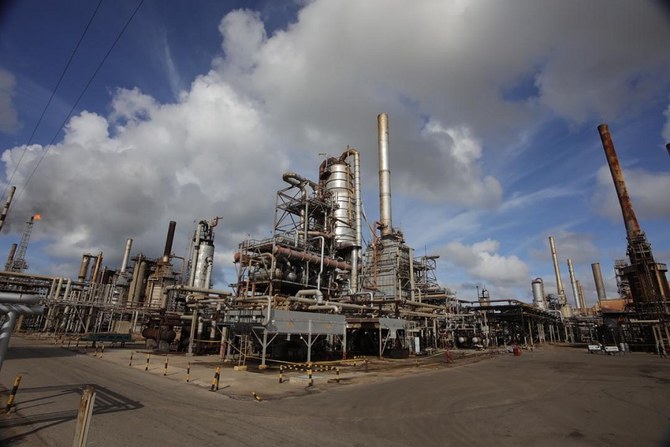
COVID-19 lockdown fears amplified demand worries and provided a weak short-term demand outlook. (File/AFP)
Short Url
Updated 26 December 2020
Follow

Weekly energy recap: Dec. 25, 2020

Crude oil prices registered the first weekly drop after the previous seven consecutive weekly gains. On the weekly closing, the Brent crude price declined to $51.29 per barrel. The West Texas Intermediate (WTI) crude price also declined, to $48.23 per barrel.
Though oil prices registered a weekly decline, Brent crude still held above the important physiological level of $50 per barrel, surpassing the seven-month-long narrow range around $40, which was the Brent crude price average for 2020.
It is possible that crude oil price movement has run into a long overdue correction after seven weekly gains. However, the new coronavirus strain is prompting demand worries amid new travel restrictions that will further hit oil demand.
Brent crude has held above the $50 barrier since Dec. 10, when the upward price momentum was driven by improving sentiments amid vaccination news while the market fundamentals remained heavily bearish. This might not look too good for oil markets going into the new year, but if the world economies pick up, oil prices will pick up as well and investors will disregard bearish fundamentals.
This means that holding above $50 will be a good start for 2021. If Brent crude holds around $50 per barrel, this will incentivize investors in all the commodity markets to buy again because economies will pick up.
COVID-19 lockdown fears amplified demand worries and provided a weak short-term demand outlook after tightened restrictions in the US and Europe outweighed the hopes of a vaccine-induced boost in economic growth and energy demand. This forced oil prices into a downward momentum, with near-term demand concerns trumping hopes for the demand outlook.
On the physical market side, crude oil transactions eased ahead of the year-end holidays as Asian refiners have eased purchases after an earlier-than-usual buying spree in November. This came as a result of lower refining throughput for Chinese refiners in December as refiners cut the monthly run rate to 78 percent due to state-run and independent refiners posting lower run rates because of maintenance works toward the year-end.
When the market opens after the year-end holidays, it will be very interesting to see how speculators will act, and if they will continue to add bullish bets to the oil futures market, as they were the most optimistic in the past weeks when Brent crude eventually moved out of the long-awaited narrow range around $40 per barrel to breach the $50 important barrier for two weeks.


GCC chambers plan Gulf Guarantee project to boost intra-regional trade

Updated 16 February 2026
Follow

GCC chambers plan Gulf Guarantee project to boost intra-regional trade

DAMMAM: The Federation of GCC Chambers, in cooperation with the Customs Union Authority, intends to launch the Gulf Guarantee Project to provide a unified mechanism for exports and trade transactions and to enhance the efficiency of intra-GCC trade, which reached about $146 billion by the end of 2024, Saleh Al-Sharqi, Secretary-General of the federation, told Al-Eqtisadiah.  

Al-Sharqi said, on the sidelines of his meeting with media representatives at the federation’s headquarters in Dammam, that the initiative represents a qualitative leap in supporting intra-GCC trade by facilitating transit movement through a single point, contributing to cost reduction, accelerating the flow of goods, and enhancing the reliability of trade operations among Gulf markets.   

Saleh Al-Sharqi, Secretary-General of the Federation of GCC Chambers. Al-Eqtisadiah

He explained that the federation recently launched a package of strategic initiatives, including the Tawasul initiative aimed at strengthening communication among Gulf business owners and supporting the building of trade and investment partnerships, in addition to the Gulf Business Facilitation initiative, which seeks to address challenges facing Gulf investors and traders, simplify procedures, and improve the business environment across member states.    

He noted that these initiatives fall within an integrated vision to address obstacles hindering investment and intra-regional trade flows by developing regulatory frameworks, activating communication channels between the public and private sectors, and supporting Gulf economic integration in line with the objectives of the Gulf Common Market.    

In a related context, the Secretary-General affirmed the direction of GCC countries to leverage artificial intelligence technologies to support trade and investment flows, stressing the importance of establishing a unified Gulf committee for artificial intelligence to coordinate efforts and exchange expertise among member states. He said the federation will support this direction in the coming phase, drawing on leading international experiences, particularly the Chinese experience in this field.    

Regarding the recently announced electric railway project between Riyadh and Doha, Al-Sharqi revealed that technical and advisory committees are working to complete the necessary studies for the project, confirming that it will positively impact passenger and freight movement between the two countries, enhance Gulf logistical integration, and support regional supply chains.  

On investment opportunities available to Gulf nationals in the Syrian market, he said the federation is coordinating with private sector representatives in Syria to overcome obstacles that may face the flow of Gulf investments, in addition to working to provide adequate guarantees to protect these investments and ensure a stable and attractive investment environment.  

In response to a question from Al-Eqtisadiah about the impact of tariffs imposed by the US on imports of iron, steel, and aluminum, he said that economic and technical committees in GCC countries are continuously monitoring the repercussions of these tariffs on the Gulf private sector, assessing their effects, and taking the necessary measures to protect it from any potential negative impacts.    

Al-Sharqi also pointed to the launch of two specialized committees in the transport and logistics sectors and in real estate activities, given their pivotal role and active contribution to Gulf gross domestic product, stressing that developing these two sectors is a fundamental pillar for enhancing economic diversification and increasing the competitiveness of GCC economies.    

He added that during the past year the federation held more than 40 meetings and official engagements with Gulf and international entities, participated in nine regional and international events to strengthen the presence of the Gulf private sector on the global stage, and signed 12 agreements and memoranda of understanding with Gulf, regional, and international entities to open new horizons for economic and investment cooperation.    

During the same year, the federation launched four digital platforms to support the Gulf private sector, bringing the total number of its digital platforms to eight serving the business community across member states.    

The Secretary-General affirmed that the federation will continue working with relevant economic entities to unify procedures and regulations, reduce non-tariff barriers, and accelerate mutual recognition of products and standard specifications, in a way that enhances the competitiveness of the Gulf economy and supports the growth of intra-GCC trade.