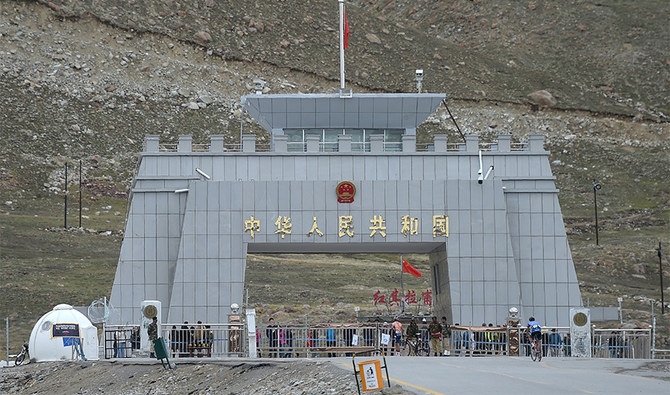
Islamabad: The Pakistan and China border at Khunjerab Pass closed on Friday at midnight after a temporary opening of 10 days, Pakistan’s state-run media reported.
At 5,000 meters above sea level, Khunjerab is the highest paved international crossing in the world, and a major trade route between China and Pakistan, as well as an important gateway to South Asia and Europe. China mainly imports textiles, agricultural products and daily commodities through the pass, and exports plants and herbs.
Both countries had agreed to open the border between December 15-25 to allow over two dozen Pakistani containers to cross over.
The border outpost on the Karakoram Highway usually remains open for trade and travel from May till November-end every year, after which it closes for almost five months in winter. But Pakistani containers have now been stranded in China since December 2019, when the border closed for the winter months, following which all frontiers, including Khunjerab, were indefinitely closed to contain the spread of the novel coronavirus
With the construction of the China Pakistan Economic Corridor (CPEC) – a multi-billion-dollar project of which Gilgit-Baltistan is the entry point — Pakistan’s trade volumes through Khunjerab surged last year, but have remained static in 2020 due to the border’s yearlong closure. Traders have said hundreds of millions in losses have already been accrued.

Pakistan-China high altitude border at Khunjerab closed after 10-day relaxation
https://arab.news/6wv64
Pakistan-China high altitude border at Khunjerab closed after 10-day relaxation
- Border crossing was opened to let through Pakistani containers stranded in China for over a year
- The closure of the border in 2020 has led to losses of hundreds of millions, Pakistani traders say
Pakistanis at remote border describe scramble to leave Iran
- Returning Pakistani nationals recount missile fire in Tehran, transport gridlock as people rush to exit Iran
- PM Sharif condemns targeting of Iranian leader as embassies urge citizens to leave amid escalating strikes
TAFTANT, Pakistan: Pakistani nationals hauled suitcases across the border from neighboring Iran, describing missiles being launched and travel chaos as they scrambled to leave the country after the US and Israel launched strikes over the weekend.
AFP journalists saw a steady trickle of people passing through large metal gates at the remote border crossing between Iran’s Mirjaveh and Taftan in Pakistan’s western Balochistan province.
Powerful explosions have rocked Iran’s capital Tehran since Saturday, with embassies from countries around the world telling their citizens to leave.
“All our Pakistani brothers who were in Tehran and other cities had started to leave and were arriving at the terminal, which caused a lot of crowd pressure,” 38-year-old trader Ameer Muhammad told AFP on Monday.
“Due to the crowds, there were major transport problems.”
The isolated Taftan border lies around 500 kilometers (310 miles) from Balochistan’s capital and largest city, Quetta.
AFP journalists saw the Iranian flag flying at half-mast as soldiers stood guard.
Most people wheeled bulky luggage over the frontier’s foot crossing, while freight lorries formed a long line.
Irshad Ahmed, a 49-year-old pilgrim, told AFP he was staying at a hostel in Tehran when he saw missiles being fired nearby.
“There was an army base near the hostel, and we saw many missiles being fired,” he said.
“After that, we went to the Pakistani embassy so that they could evacuate us from there. They brought us here safely.”
Pakistan’s Prime Minister Shehbaz Sharif has said the killing of Ayatollah Ali Khamenei was a “violation” of international law.
“It is an age old convention that the Heads of State/Government should not be targeted,” Sharif wrote on X.
The “people of Pakistan join the people of Iran in their hour of grief and sorrow and extend the most sincere condolences on the martyrdom” of Khamenei, he added.
A teacher at Tehran’s Pakistani embassy, who gave his name as Saqib, told AFP: “Before we left, the situation was normal. The situation was not that bad.”
The 38-year-old said the strikes on Tehran on Saturday “pushed us to leave the city.”
“The situation became bad on Saturday night, when attacks caused precious lives to be lost,” he said.


