

KUWAIT: An expat landing in the Gulf for the very first time will surely find it a melange of unique experiences. Trying to lock down a rental deal is one of them. In a market with one too many expats and too many options to choose from, the challenge is as real as it gets.
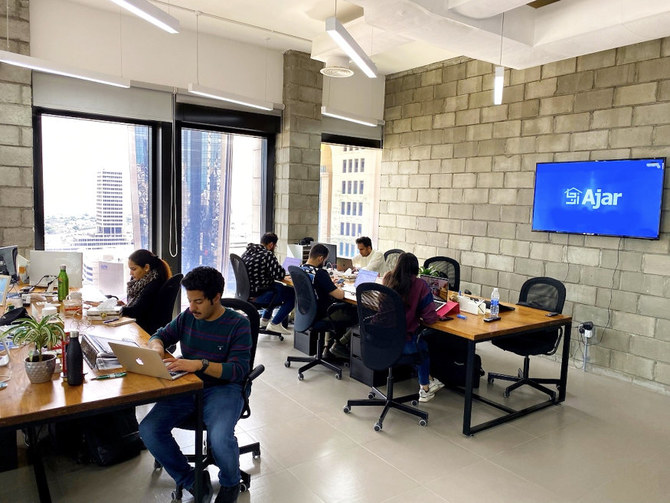
Even if one does achieve the seemingly impossible and finds a place to call home, outdated payment systems can prove to be another thorn in their side. This endless dilemma inspired Shaheen Al-Khudhari back in 2016 to find a definitive tech-based solution. Thus, he became the founder and CEO of Ajar, a property management and rent collection startup.
“The idea sprung when I moved into a new apartment and started facing issues with rent payments, chasing for receipts, withdrawing and safekeeping large chunks of cash for payment, worrying about missing out on the payment if I was not in the country and so on,” Al-Khudhari shares.
Having identified key issues in Kuwait’s real estate market, Al-Khudhari launched Ajar to provide the ultimate convenience to landlords and tenants. The former get a full-fledged property management service in real time, while the latter get to pay their rent without breaking a sweat.
The next step was to convince potential clients to use Ajar services, which was not as big of a challenge as it may seem.
“With my experience as an IT manager in a real estate company, I was able to reach out to many potential landlords that I knew had problems keeping track of their real estate performance. Once those joined, it was a word-of-mouth and network effect that really got Ajar up and running, reaching our first 10,000 units in quite a short time.”
After the astounding success in Kuwait, the next logical step for Ajar was to expand to the Gulf’s biggest real estate market – Dubai. The company later moved its headquarters there. “The UAE’s real estate market is international, with a global mindset, but the practices for rent collection are very unfriendly to the tenant and rather outdated,” Al-Khudhari said. “Rent payment in Dubai didn’t match the (progressive) vision for the city.”
From there on, Ajar exponentially grew in popularity and number of users, which in turn attracted investments that amount to $7.5 million to date.
The onset of the pandemic in March 2020 brought fresh opportunities to Ajar. In a world suddenly left with no choice but to seek contactless transactions and remote management, the company was perfectly equipped to overcome the challenges brought forth by Covid-19. In fact, it has generated more business during the pandemic than in any year since its inception.
“During the lockdown, when banks were closed and people couldn’t step out of their houses, we were the only solution provider for property management and rent collection that was actively collecting rent,” said Al-Khudhari.
“We also learnt from this experience how crucial it is to have a team with a strong mindset that doesn’t get affected by negative media coverage – a focused, knowledgeable and dedicated team can get any company to be the best in its field.”
Today, Ajar is exploring more expansion opportunities to eventually cover most GCC markets in the next few months. Of particular interest are Bahrain, Qatar and Saudi Arabia, but the company does not plan to stop there. “We’ll then be heading to more virgin markets which need to digitize their solutions, like Malaysia,” said Al-Khudhari.
• This report is being published by Arab News as a partner of the Middle East Exchange, which was launched by the Mohammed bin Rashid Al Maktoum Global Initiatives to reflect the vision of the UAE prime minister and ruler of Dubai to explore the possibility of changing the status of the Arab region.