Lebanon to ask consultants to resume central bank audit

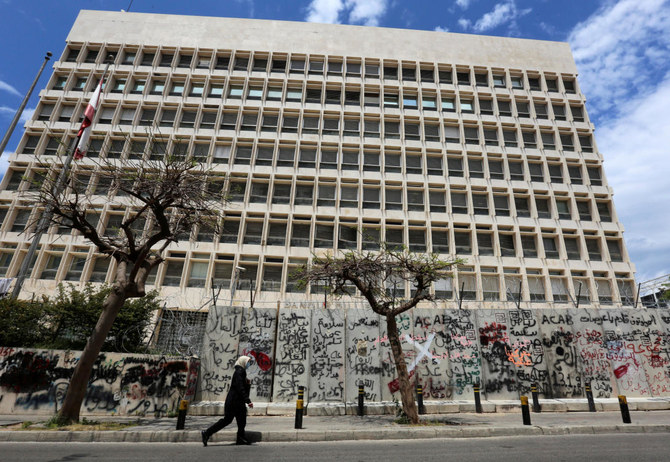
Restructuring consultancy Alvarez & Marsal pulled out of the central bank forensic audit, saying it had not been given information it needed. (Reuters)
Short Url
Updated 23 December 2020
Follow

Lebanon to ask consultants to resume central bank audit

  • Parliament agreed this week to lift banking secrecy for one year

BEIRUT: Lebanon’s caretaker finance minister said it would contact a consulting firm on Wednesday to resume a forensic audit of the central bank, a key condition for foreign aid that has hit a roadblock.
Parliament agreed this week to lift banking secrecy for one year, after the restructuring consultancy Alvarez & Marsal pulled out of the audit, saying it had not been given information it needed.
“It was decided based on the law from parliament and government decisions to contact the firm A&M to resume the forensic audit,” caretaker Finance Minister Ghazi Wazni’s office cited him as saying after meeting with the president.
A presidency statement later quoted Wazni as saying the firm had recently sent a letter to the central bank that showed its willingness to resume work with the Lebanese government.
Such an audit is on list of reforms donors have demanded before helping Lebanon out of its financial crisis, rooted in decades of state waste and graft.
Central Bank Governor Riad Salameh said last month that he favored an audit but that disclosing the accounts of local banks would require a change in legislation.
Some Lebanese officials have accused him of using bank secrecy laws to justify withholding information.


Saudi POS spending rises 4.5% to $3.8bn in late February: SAMA 

Updated 4 sec ago
Follow

Saudi POS spending rises 4.5% to $3.8bn in late February: SAMA 

RIYADH: Saudi Arabia’s point-of-sale spending rose 4.5 percent to SR14.5 billion ($3.8 billion) in the week ending Feb. 28, even as the number of transactions declined.

According to the latest data from the Saudi Central Bank, also known as SAMA, the total number of transactions fell 4.6 percent to 210.53 million during the period.

Freight transport and postal services recorded the largest jump, surging 50.4 percent to SR121.35 million. Apparel and clothing followed with a 44.2 percent gain to SR1.9 billion. 

Personal care transactions grew 21.7 percent, while books and stationery advanced 8.3 percent. Hotel receipts also increased 11.1 percent to SR376.26 million. 

Pharmacies and medical supplies registered a 23.5 percent rise to SR254.51 million, while medical services edged up 10.2 percent to SR531.56 million. 

Food and beverage purchases declined 11.4 percent to SR2.33 billion, though the segment still accounted for the largest share of POS activity. Restaurants and cafes followed with a 1.8 percent drop to SR1.22 billion. 

The Kingdom’s key urban centers reflected the broader trend. Riyadh, which accounted for the largest share of POS activity, recorded a 2.5 percent increase to SR4.86 billion, compared with SR4.75 billion the previous week. Transactions in the capital totaled 65.7 million, down 5.9 percent week on week. 

In Jeddah, transaction values climbed 5.6 percent to SR2 billion, while Dammam posted a 1.6 percent uptick to SR689 million. 

Weekly POS figures tracked by SAMA offer insight into consumer behavior and the continued expansion of digital payments across Saudi Arabia. 

The data also highlights the expanding reach of POS infrastructure, extending beyond major retail hubs to smaller cities and service sectors, supporting broader digital inclusion initiatives.  

The growth of digital payment technologies aligns with Saudi Arabia’s Vision 2030 objectives, promoting electronic transactions and contributing to the Kingdom’s broader digital economy.