


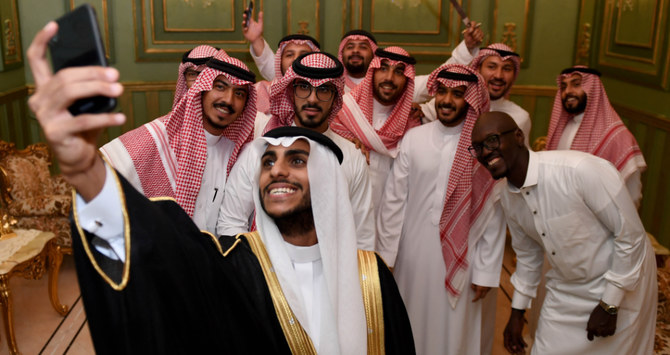

RIYADH: Leaving home, getting married and buying a first property can be daunting and expensive at the best of times, let alone in this age of uncertainty. As a result, many young Saudis are choosing to put off marriage until they have achieved some degree of financial independence.
 Fortunately, the SNAD Al-Zawaj (Marriage), an initiative of the SNAD Mohammed bin Salman program, is providing generous grants and money-management courses to help young Saudis tie the knot and get a head start in life as a couple.
“I was newly engaged, in the beginning stages of my life, and any amount, no matter how small, could make a difference at the time,” Mohammed Al-Oniny, who was among the first to apply for the scheme, told Arab News. “This program lifted a weight off of my shoulders. I was overjoyed.”
Since its launch by Crown Prince Mohammed bin Salman as a personal initiative on Dec. 30, 2018, SNAD has boosted opportunities for social development and economic sustainability in the Kingdom, where 36.7 percent of the population is aged 15-34 and 30.3 percent are under the age of 15, according to the Saudi General Authority of Statistics (GASTAT).
The authority’s Saudi Youth in Numbers report, published in August, found that Saudi men and women are choosing to put off weddings, citing “high cost of living” as the main factor, followed by “high cost of marriage.”
The coronavirus pandemic has only added to that sentiment, with lockdown pressures and financial woes playing a big role in how young people weigh up financial decisions, save money and prepare for emergencies.
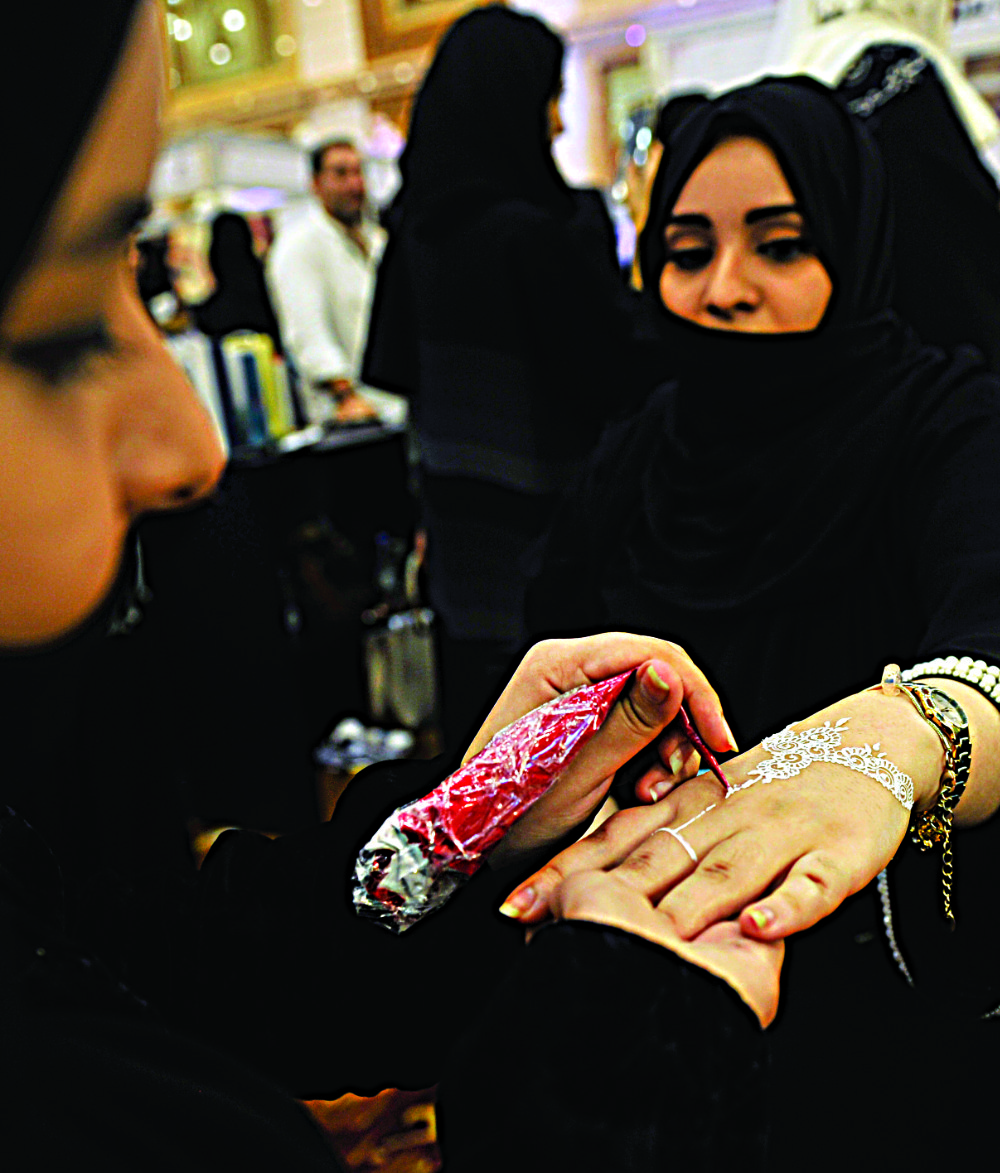
The program has boosted opportunities for social development and economic sustainability in the Kingdom. (AFP)
SNAD Al-Zawaj specifically targets Saudi nationals who are preparing to get married, offering the financial and educational support they need to establish their own households and get on in life.
More than simply handing out money, the program teaches young people how to manage their finances responsibly through a mandatory financial-awareness course. To date, at least 100,000 people have completed the training scheme.
Over that period, SNAD Al-Zawaj has allocated more than SR 520 million ($138.6 million) in funding that has gone to more than 26,000 recipients.
Al-Oniny applied for a grant after spotting an ad on Twitter. “I looked through the requirements to apply and I met all of them, so I signed up and completed the course on financial awareness,” he said.
After sitting an exam and securing a grade above the requisite 60 percent, he was awarded a grant. “I benefited immensely,” he said. “After I passed the course the program sent me SR 20,000 without any request to return the payment in the future.”
PROGRAM PRIORITIZING A STABLE FAMILY AND SOCIAL LIFE
Saudi Arabia’s economic diversification plan, Vision 2030, has prioritized the empowerment of the Kingdom’s large youth population. Help has come in the form of boosting employment opportunities for young people, particularly women, and offering support for startups and young entrepreneurs. With the same objectives in mind, but particularly to help citizens achieve their socio-economic goals, SNAD Mohammed bin Salman was established in December 2018.
Based on several social and nonprofit initiatives launched by Crown Prince Mohammed bin Salman, SNAD envisages sustainable development through social cooperation that ensures a decent life for citizens in line with the teachings of Islam. The most recent initiatives involve support for charitable associations, release of prisoners and development of historical mosques.
Unlike other welfare schemes that simply hand out money, SNAD strives to promote knowledge and awareness to achieve sustainable social development through nonprofit institutions and sectors. Its aim is to develop nonprofit social initiatives for public welfare while addressing the needs of different segments of Saudi society. The first phase, SNAD Al-Zawaj, is designed to motivate young Saudis to get married and have a stable family and social life.
Rather than loading young people with debt just as they are starting out in life, there is no expectation to repay the marriage grant and no limits on how it should be spent. Recipients are simply asked to take the course and pass the exam.
It is also discreet — welcome news for those hesitant about the idea of accepting government assistance.
“The program is confidential,” Al-Oniny said. “No one gave me SR 20,000 and then asked to take my picture to promote the program. This is one of its major advantages. They don’t ask for anything in return.”
The money came at just the right moment for Al-Oniny. “The program is very helpful, and I think it needs to be promoted and spoken about more. It has helped me and it can help so many more people.”
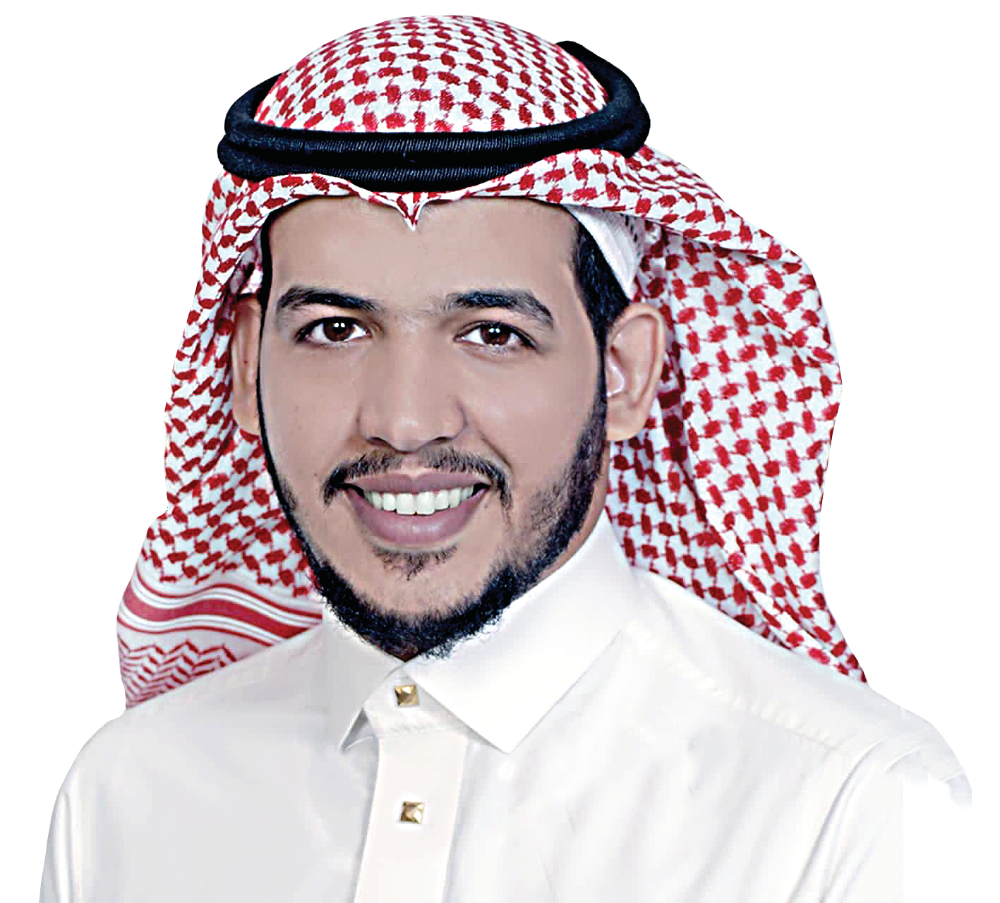
Mohammed Al-Oniny, SNAD Al-Zawaj grant recipient
Al-Oniny has since encouraged his friends to make their own enquiries and has even taken to social media to praise SNAD Al-Zawaj.
“I promoted and explained the program in a YouTube video, and immediately began to receive many questions and comments from people across the Kingdom,” he said.
“I helped them and a lot of people received the SR 20,000 from the program. Many of my friends and people I know have benefited from it.”
The online application process has been streamlined to make it easy to navigate, with video lectures and step-by-step guides.
Although SNAD Al-Zawaj is designed to assist the widest possible demographic, there are limits on who can apply. For instance, the prospective husband and wife must both be Saudi nationals. The man must be between 21 and 40 years of age; the woman between 18 and 40.
Male applicants must have completed a high-school diploma and their salary must not exceed SR 4,000 per month. Furthermore, the agreed upon dowry must not exceed SR 50,000.
Opinion
This section contains relevant reference points, placed in (Opinion field)
Only the male applicant must complete the financial awareness course and pass the exam with at least 60 percent in order to be considered for a grant.
Al-Oniny was particularly impressed by the educational element of SNAD Al-Zawaj, which sets it apart from other welfare programs and appears to embody the self-reliant spirit of a changing Saudi Arabia.
The grants keep the neediest in mind, and thus are prioritized for applicants orphaned as children, people with disabilities, and the families of fallen soldiers.
“It’s different from other social services because it addresses the needs of different groups of society to develop and to flourish, contributing to Vision 2030,” Al-Oniny said, referring to the Kingdom’s economic diversification strategy.
“I am proud to say that the government noticed me — a single person from Yanbu.”


