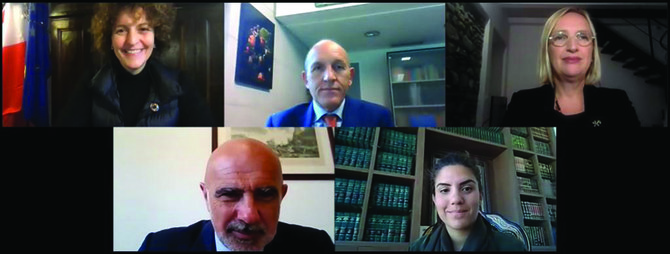
RIYADH: The Embassy of Italy in Riyadh marked the fifth edition of the World Week of Italian Cuisine by hosting an online roundtable discussion of the cultural value of food and culinary traditions.
The event, held on Dec. 9 in collaboration with the Future Food Institute, was titled “Saudi Arabia and Italy: A Journey Between Food and Culture.” The participants included Italian and Saudi experts and professionals who talked about innovative ways in which people can be encouraged to rediscover and express their cultural heritage and identity, promote healthy diets and lifestyles, and protect and develop the agricultural and food sectors.
There was also a special focus on the 10th anniversary of the United Nations Educational, Scientific and Cultural Organization adding the Mediterranean diet to its list of intangible world cultural heritage. An excellent example of the cultural value of food and culinary traditions, the Mediterranean diet encompasses more than simply certain foods or ingredients — it also includes a wide range of skills, knowledge, practices and traditions, from respect for the land and biodiversity to the way the food is produced, consumed and shared at the table.
The event was opened by Roberto Cantone, Italy’s ambassador to Saudi Arabia, and chaired by Sara Roversi, the president and founder of the Future Food Institute.
“The Italian Cuisine Week allows us to showcase Italian cuisine worldwide,” said Cantone. “But it also offers the incredible opportunity to engage in a wide-ranging conversation about food, to discuss what we eat and how we eat it, the way we produce and consume food and how it impacts our well being, our communities, our economies and our planet.
“These issues are at the center of the international agenda and Italy plays an active role in promoting and raising awareness about them — including within the framework of our G20 Presidency, which we took over from Saudi Arabia on Dec. 1.”
Roversi said: “Future Food Institute is proud to cooperate with the Italian Embassy in Riyadh to bring Italian best practices and innovative business cases, as well as to promote our common cultural heritage.
“We strongly believe that public and private cooperation, combined with a multilateral approach, can make the difference in achieving the Sustainable Development Goals of (the UN’s) Agenda 2030 and building thriving global societies. Indeed ‘People, Planet, Prosperity’ (the three stated priorities of the Italian presidency of the G20) have been the epicenter of our dialogues.
“This roundtable represents a crucial bridge for partnership development and cultural exchange between Italy and Saudi Arabia.”
The main speakers at the event included Mayada Badr, CEO of the Culinary Arts Commission at the Saudi Ministry of Culture; Elisabetta Moro, professor of cultural anthropology at the Suor Orsola Benincasa University of Naples and co-director of the Virtual Museum of the Mediterranean Diet; and Cesare Mazzetti, president of Fondazione Qualivita, which promotes and protects the uniqueness of food products.


![]()

DiplomaticQuarter: Italian embassy in Riyadh marks fifth World Week of Italian Cuisine
Short Url
https://arab.news/vj9vs
DiplomaticQuarter: Italian embassy in Riyadh marks fifth World Week of Italian Cuisine

Latest updates







© 2026 SAUDI RESEARCH & PUBLISHING COMPANY, All Rights Reserved And subject to Terms of Use Agreement.