

UAE has attracted 50,000 Israeli tourists since Abraham Accord

1 / 2
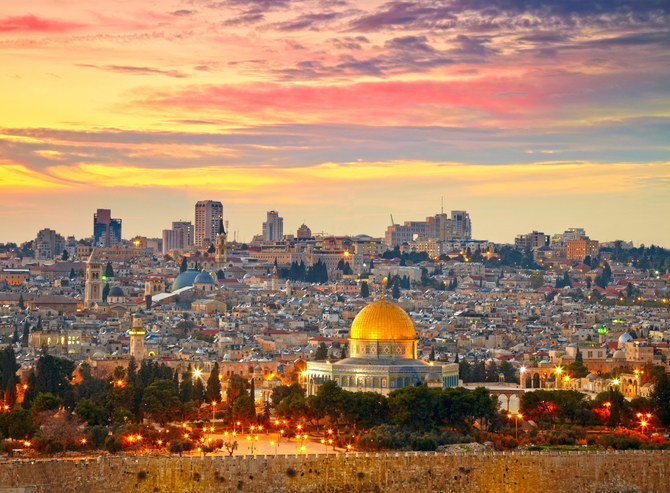
Israel and the UAE signed an agreement to open diplomatic, trade and economic relations between the two countries. (Supplied)
2 / 2
While citizens and residents from the UAE can not visit Israel at the moment, due to coronavirus (COVID-19) travel restrictions, which require foreigners to quarantine for 14 days on arrival, the minster said she is aiming to attract 100,000 tourists a year from the UAE once restrictions are relaxed. (Supplied)
Short Url
Updated 17 December 2020
Follow

UAE has attracted 50,000 Israeli tourists since Abraham Accord

  • Israelis will soon be able to travel to the UAE visa-free and this is likely to start from January next year

DUBAI: About 50,000 Israeli tourists have visited the UAE since the two countries signed the Abraham Accords normalization agreement on Sept. 15, the Israeli tourism minister said on Wednesday.

“We’re talking at the moment about roughly 50,000 Israelis all over the Emirates,” Israel’s Tourism Minister Orit Farkash-Hacohen said during a virtual press conference. “I would say that a lot of Israelis, they just went there . . . Israelis are very adventurous by nature,” she said.

Israel and the UAE signed an agreement to open diplomatic, trade and economic relations between the two countries. As part of the agreement the tourism minister said that Israelis would soon be able to travel to the UAE visa-free and this was likely to start from January next year.

While there are restrictions on foreign tourists entering Israel at the moment, due to coronavirus travel restrictions, the minster has ambitious UAE targets for the future.
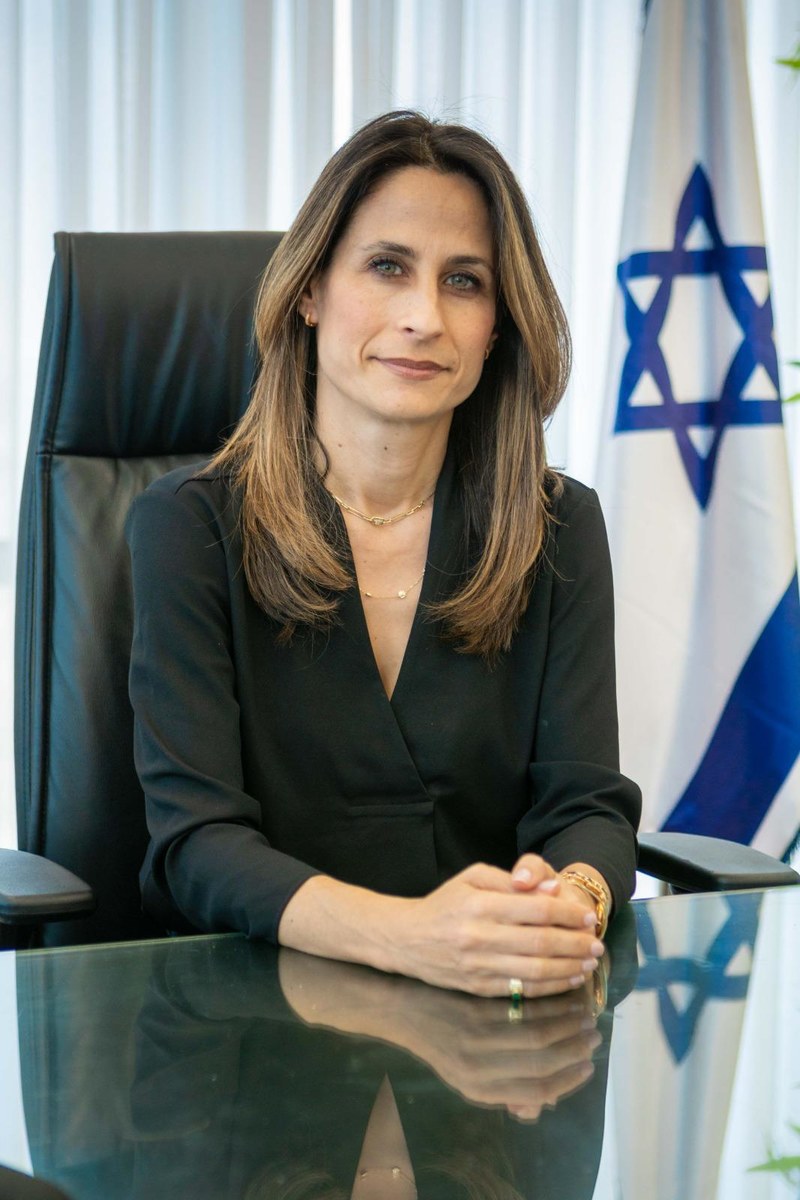


Israel is aiming to attract 100,000 tourists a year from the UAE, Israel’s Tourism Minister Orit Farkash-Hacohen said. (Jonathan Haurstock)

“Our aim, with regards to tourists entering Israel, our hope is to get 100,000 a year from the Emirates when we will start operating,” she said.

The minister was talking during the first-ever UAE-Israel tourism forum hosted by officials from Israel’s Ministry of Tourism. The forum included more than 300 trade partners from the UAE and 100 partners from Israel.

“Tourism is key to building a lasting peace between countries, and Israel looks forward to welcoming travelers from the UAE. I am certain visitors from the Emirates and other countries will enjoy the unique blend of this new, and near, destination. Israel is where thousands of years of history meet modern-day life. It is the home of Tel Aviv and the StartUp Nation and of ancient Caesarea and the magnificent Dead Sea,” Farkash-Hacohen said in a press statement.

Many UAE airlines have already started flights to Israel. Flydubai currently operates 14 flights a week between Dubai and Tel Aviv, and Emirates and Etihad Airways are due to start direct flights in 2021. Israel’s Israir and El Al Airline currently operate flights to the UAE, and Arkia Airline will begin operations in January.


Existing world order would only disappear through a ‘major war,’ says Aboul Gheit

Updated 6 sec ago
Follow

Existing world order would only disappear through a ‘major war,’ says Aboul Gheit

  • Arab League secretary-general calls on member states to preserve it through ‘positive work’
  • Aboul Gheit tells WGS that Arab League has so far been successful in maintaining its ‘cohesion and its role on the international stage’ despite tough challenges

DUBAI: The Arab League’s secretary-general warned Tuesday that despite significant developments in the international arena, these “do not change the existing international world order’s essence,” which would only disappear through “a major war.”

Ahmed Aboul Gheit stressed the need to preserve the League through positive action, given the external forces seeking to dismantle the Arab system and replace it with either a regional one entirely subject to international influence or one controlled by non-Arab regional powers.

“I would like to call on all AL’s member states to preserve the League, through the biggest form of positive work,” he told a crowded hall during his address at the World Government Summit in Dubai.

Aboul Gheit stated that the Arab League has so far been successful in maintaining its “cohesion and its role on the international stage,” despite the challenges it has faced since 2011.

Addressing a session moderated by Imad Eldin Adeeb, political analyst at Sky News Arabia, the AL’s secretary-general said, “I will return the League to the Arab states intact, unbroken, and which is in itself a great success,” noting that the League has continued to be active and represented on the world stage in various forums, despite multifaceted regional and international circumstances.

He emphasized that preserving the Arab League is a “strategic necessity for protecting Arab interests” and safeguarding independent Arab decision-making amid the rapidly changing international landscape.

On Gaza, he explained that the Arab League had exerted considerable efforts and fully exercised its role in relation to the actions and decisions of Arab states.

“If I were to convene a closed meeting with Arab leaders to offer advice regarding the remaining days of Trump’s presidency, I would advise action and engagement that preserves sovereignty and dignity. This means engaging where we can and postponing and maneuvering where we cannot accept,” said Aboul Gheit.

Speaking on the League’s role in ongoing conflicts in the Arab world, Adeeb asked: “Where is the Arab League’s role? I haven’t seen, for example, the League intervene and play a mediating role. I haven’t seen the League attempt to take a position related to inter-Arab conflicts. I haven’t seen the League try to stop the ongoing bloodshed in Arab conflicts.”

Aboul-Gheit replied that the League addresses all these “conflicts and wounds” through periodic meetings of foreign ministers or summits, issuing resolutions that are always agreed upon after the necessary deliberation.

The real problem, he said, lies in the will of the countries involved in the conflict.

“The Arab League is always constrained in this regard. In other words, any government in a country facing a crisis always rejects direct mediation and has its own perspective. Therefore, given the current circumstances, with foreign interventions, internal situations, and relations between Arab states, it is always preferable for us (the Arab League) to leave the lead to the United Nations — that is, for it to take the initiative while the League operates within that framework,” the secretary-general emphasized.