ISLAMABAD: Pakistani President Dr Arif Alvi on Tuesday approved the Anti-Rape (Investigation and Trial) Ordinance 2020 that will ensure speedy trials and stricter punishment in sexual violence cases.
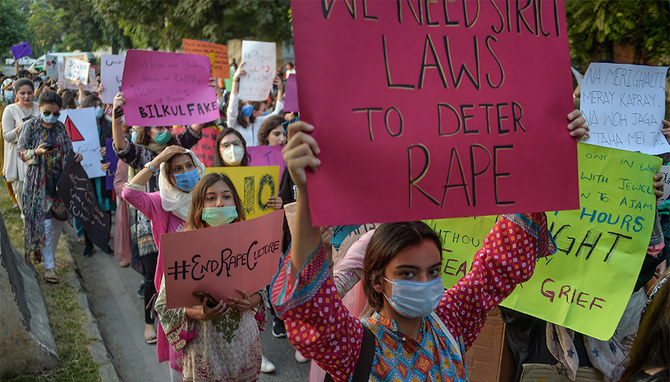
The new law comes months after the headline-grabbing gang-rape of a woman along a major highway, in front of her minor children. The incident prompted outrage, protests and demands by rights activists and citizens that the government do more to stem violence against women, including ensuring perpetrators were held accountable in a country that has seen over 4,000 rapes this year, according to the group War Against Rape.
A statement from the President House said under the new ordinance, special speedy courts would be established throughout the country, which would have to wrap up cases within four months.
“The ordinance will help expedite cases of sexual abuse against women and children,” the statement said.
A Prime Minister's Anti-Rape Crisis Cell would be set up to conduct medico-legal examination of victims within six hours of an assault, the statement added, and a countrywide registry of sexual offenders would be established with the help of the National Database and Registration Authority.
Under the new ordinance, disclosing the identity of a victim would be a punishable offence, and police and government officials who showed negligence in investigating cases would be jailed for up to three years and fined. Police and government officials who provided false information would also be punished.
The ordinance comes into effect immediately but has to be subjected to a parliamentary vote within 120 days when it can be voted out by the National Assembly and Senate.
In a separate statement, the law ministry said a second ordinance, namely the Criminal Law (Amendment) Ordinance, 2020, would also be passed under which "in respect of first or repeated offenders, the concept of chemical castration has also been introduced mainly as a form of rehabilitation, and subject to consent."


![]()

In landmark ordinance, Pakistan approves speedy courts, harsher punishments for rape cases
Short Url
https://arab.news/b9akb
In landmark ordinance, Pakistan approves speedy courts, harsher punishments for rape cases
- New ordinance comes months after the gang-rape of a woman along a major highway in front of her minor children
- Special speedy courts would be established throughout the country and be required to wrap up cases within four months
Latest updates


Recommended


© 2026 SAUDI RESEARCH & PUBLISHING COMPANY, All Rights Reserved And subject to Terms of Use Agreement.