IBM opens its first ever security operations center in Saudi Arabia

1 / 2
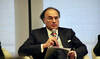
American multinational IBM Security on Wednesday announced the official opening of its first Security Operations Center in Saudi Arabia. (IBM)
2 / 2
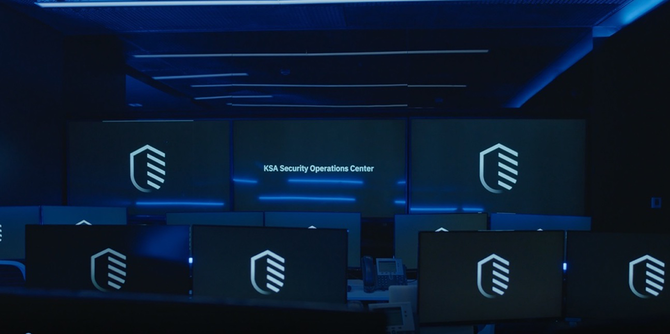
The opening of the new IBM Riyadh facility comes as a survey commissioned earlier this year by cybersecurity firm Tenable found that 95 percent of businesses in the Kingdom last year were the victim of a cyberattack. (IBM)
Short Url
Updated 10 December 2020
Follow

IBM opens its first ever security operations center in Saudi Arabia

  • The new facility will focus on supporting clients responding to cybersecurity incidents

RIYADH: US multinational IBM Security on Wednesday announced the official opening of its first security operations center in Saudi Arabia

The Riyadh center will offer IBM’s private and government sector clients in the Kingdom the option of managing their security operations around the clock via the company’s staff and local infrastructure.

The new facility will focus on supporting clients responding to cybersecurity incidents as well as helping manage emerging threats through real-time analysis and early warning notification of security events.

IBM Security analysts and experts will assist clients with expedited incident investigations and remediation plans.

According to a recent IBM study, data breaches on companies in Saudi Arabia cost firms $6.53 million on average per breach — higher than the global average of $3.86 million per breach.

IBM Managed Security Services manages more than 150 billion security events daily on average.

“The launch of IBM’s security operations center in Saudi Arabia is a critical investment not only in helping our clients respond to ever-increasing cybersecurity incidents but also in providing them with local data residency to support their preferences and industry requirements,” Hossam Seif El-Din, IBM Middle East and Pakistan general manager, said in a statement.

“We are seeing a lot of new threat actors looking to take advantage of the confusion and uncertainty surrounding COVID-19. Therefore, we are also looking to use the new center to drive education and awareness to help clients defend themselves from potential threats,” he added.

The rapid shift to remote workforces amid the pandemic health crisis and a corresponding increase in attacks by cyber criminals have combined to create unparalleled cybersecurity challenges for organizations across the globe.

According to IBM Security X-Force, there was 40 percent increase in security incidents in the first three months of 2020 globally compared with the same period in 2019.

The opening of the new IBM Riyadh facility comes after a survey commissioned earlier this year by cybersecurity firm Tenable found that 95 percent of businesses in the Kingdom last year experienced a cyberattack.

In addition, 85 percent of Saudi respondents to the study said that they had witnessed a dramatic increase in the number of attacks in the past two years.

Companies said they had suffered loss of customer or employee data, ransomware payment demands and financial loss or theft.


Education spending surges 251% as students return from autumn break: SAMA

Updated 12 December 2025
Follow

Education spending surges 251% as students return from autumn break: SAMA

RIYADH: Education spending in Saudi Arabia surged 251.3 percent in the week ending Dec. 6, reflecting the sharp uptick in purchases as students returned from the autumn break.

According to the latest data from the Saudi Central Bank, expenditure in the sector reached SR218.73 million ($58.2 million), with the number of transactions increasing by 61 percent to 233,000.

Despite this surge, overall point-of-sale spending fell 4.3 percent to SR14.45 billion, while the number of transactions dipped 1.7 percent to 236.18 million week on week.

The week saw mixed changes between the sectors. Spending on freight transport, postal and courier services saw the second-biggest uptick at 33.3 percent to SR60.93 million, followed by medical services, which saw an 8.1 percent increase to SR505.35 million.

Expenditure on apparel and clothing saw a decrease of 16.3 percent, followed by a 2 percent reduction in spending on telecommunication.

Jewelry outlays witnessed an 8.1 percent decline to reach SR325.90 million. Data revealed decreases across many other sectors, led by hotels, which saw the largest dip at 24.5 percent to reach SR335.98 million. 

Spending on car rentals in the Kingdom fell by 12.6 percent, while airlines saw a 3.7 percent increase to SR46.28 million.

Expenditure on food and beverages saw a 1.7 percent increase to SR2.35 billion, claiming the largest share of the POS. Restaurants and cafes retained the second position despite a 12.6 percent dip to SR1.66 billion.

Saudi Arabia’s key urban centers mirrored the national decline. Riyadh, which accounted for the largest share of total POS spending, saw a 3.9 percent dip to SR4.89 billion, down from SR5.08 billion the previous week.

The number of transactions in the capital settled at 74.16 million, down 1.4 percent week on week.

In Jeddah, transaction values decreased by 5.9 percent to SR1.91 billion, while Dammam reported a 0.8 percent surge to SR713.71 million.

POS data, tracked weekly by SAMA, provides an indicator of consumer spending trends and the ongoing growth of digital payments in Saudi Arabia. 

The data also highlights the expanding reach of POS infrastructure, extending beyond major retail hubs to smaller cities and service sectors, supporting broader digital inclusion initiatives. 

The growth of digital payment technologies aligns with the Kingdom’s Vision 2030 objectives, promoting electronic transactions and contributing to the nation’s broader digital economy.