

Lebanese creative fashions traditional tableware from Beirut blast’s broken glass

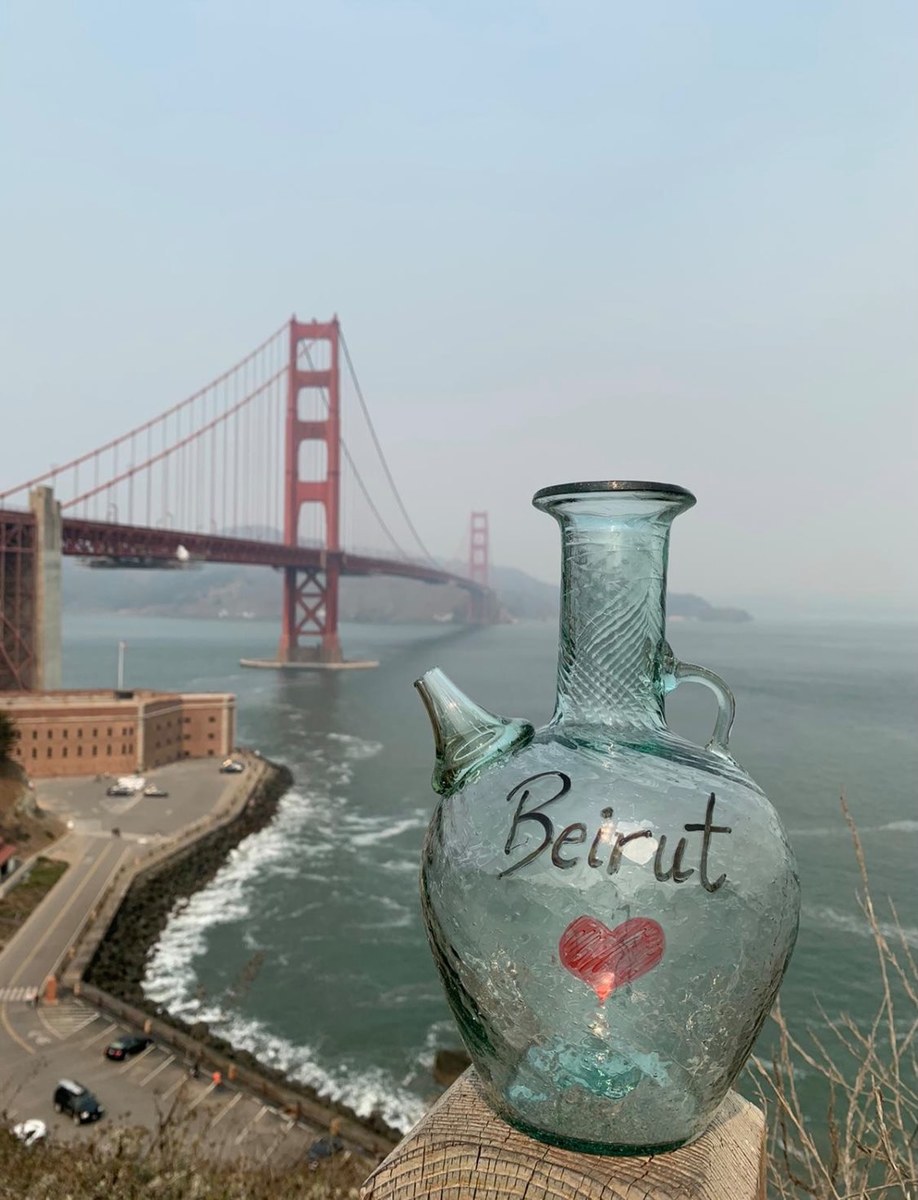
Here, the jugs are photographed with a festive twist. (Supplied)
Short Url
Updated 08 December 2020
Follow

Lebanese creative fashions traditional tableware from Beirut blast’s broken glass


DUBAI: Although she lives in California, entrepreneur and former educator Silvia Fadel remains closely attached to her native Lebanon. She recalls the good and the bad of spending summer days there in the 1980s during the tumultuous civil war.

“I got to experience the war, and I was even shot in my leg,” Fadel told Arab News. “I was part of that generation who grew to appreciate and love Lebanon so much.”

When the massive explosions erupted at the Port of Beirut on Aug. 4, she decided to do something to make a difference. “Seeing the country go down like that hit me hard,” she said.
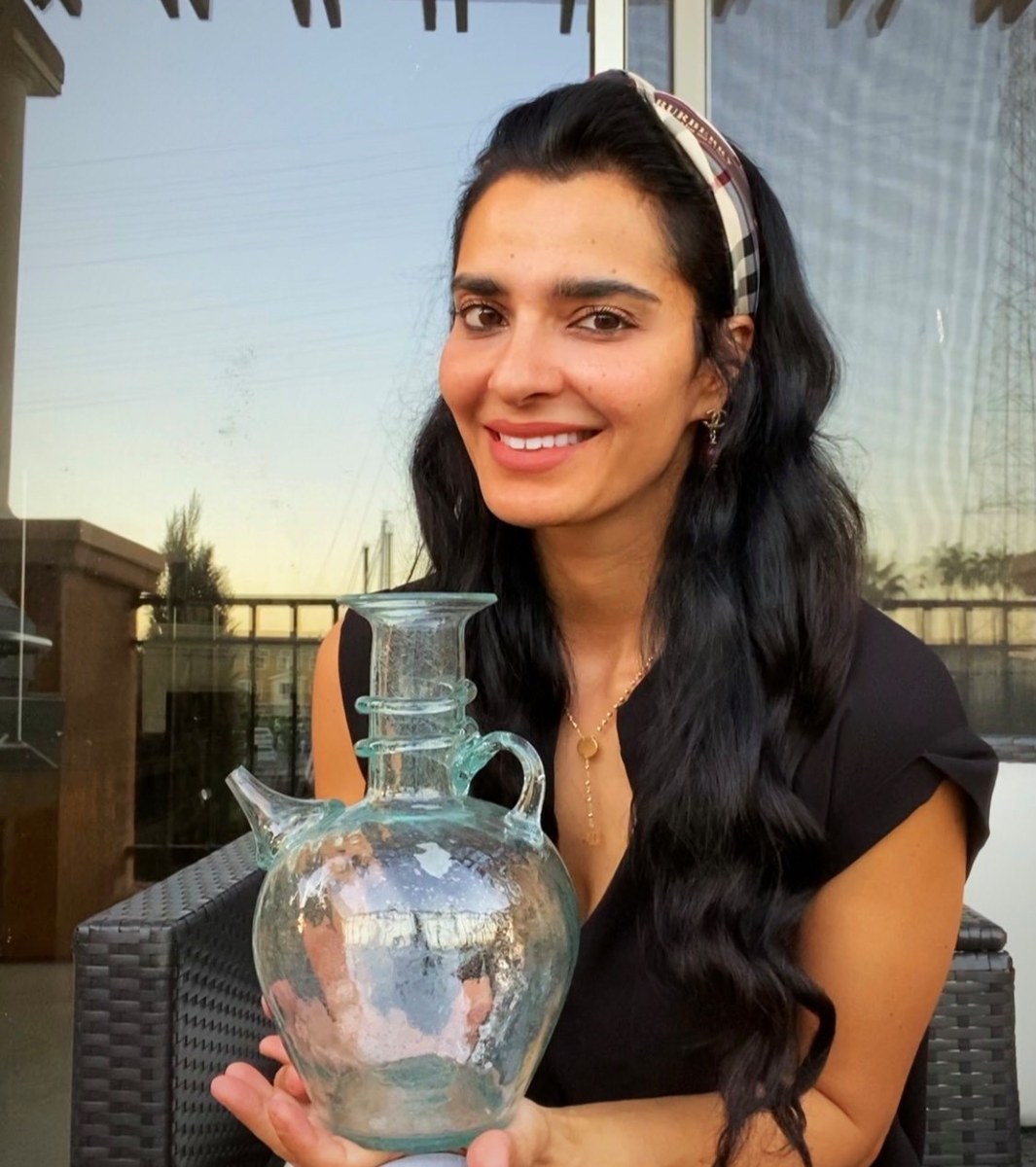


Silvia Fadel is an entrepreneur and former educator. (Supplied)

In early September, Fadel launched her online initiative “Lebanese Glass,” transforming tons of broken pieces of glass into an elegant and traditional water jug called ‘ibriq.’ With every purchase made, a single dollar is donated to the eco-friendly start-up Live Love Recycle, which gathers the glass.

The pitchers come in varied designs and have become popular, with around 50 items ordered per day. “It’s not just Lebanese who are buying them. You get people from all over the world with non-Arab names,” she added.  


Fadel launched her online initiative “Lebanese Glass” in September. (Supplied) 

Transparent with a hint of green, the handmade, painted pitchers are a familiar and amusing staple of Levantine culture. “I think a lot of people like them because they symbolize gatherings. When we used to go to Lebanon every summer, when it was really hot, you would always find an ice-cold ibriq in the middle of the table at every family gathering,” explained Fadel. “It is entertaining to watch people drinking from it and doing competitions to see who can raise it higher!”

To produce the pitchers, Fadel collaborates with the Hammoud family of glassblowers in Tripoli. “The blue-collar workers make them individually, blowing the glass, pounding it on the ground and twirling it in the oven,” she explained.

What makes the jugs unique is that no two are alike. They sometimes bear small imperfections — such as discoloration, trapped air bubbles and soil grains — that ultimately add to their charm. It is a detail that adequately fits Lebanese Glass’ motto: Every jug tells a story.


Yataghan boutique in Jeddah celebrates Saudi heritage

Updated 20 December 2025
Follow

Yataghan boutique in Jeddah celebrates Saudi heritage

JEDDAH: Yataghan, the contemporary Saudi jewelry house founded in 2008 by designer and entrepreneur Sarah Abudawood, has announced an expansion with its Riyadh debut at Kingdom Centre, alongside the relocation of its headquarters and flagship store to a street-front location on Jeddah’s Thalia Street.

The brand, known for blending Arabian heritage with modern minimalism, unveiled two boutiques designed as immersive experiences rather than mere retail spaces.

Every detail of the new Jeddah location has been carefully curated; brass accents inspired by the Yataghan blade evoke precision and luxury, while striped, gray onyx symbolizes continuity and progress, according to the brand’s founder. Vast windows, softened by Yataghan’s signature hexagonal motif, a symbol of harmony, order, and strength, flood the boutiques with natural light, creating an inviting environment for visitors.

Inspired by the Yataghan sword, with its distinctive, single-edged blade, the brand’s collections fuse minimalist design with Arabic calligraphy and tribal motifs.

“The name Yataghan draws its meaning from the two swords on the Saudi flag — a symbol that has always fascinated me for what it represents: conviction, protection, truth, and above all, balance,” Abudawood told Arab News.

“The Yataghan sword, known for its graceful curve and exquisite craftsmanship, embodies purpose and precision. It is drawn to defend what matters and to guard what is sacred. It sets boundaries and restores equilibrium, reminding us that strength is not only about force, but about knowing when to advance and when to stand still.

“That balance is reflected in every piece we create. Because, like the sword, Yataghan is more than an ornament; it is a statement of purpose, and identity.”

Abudawood explained the cultural inspiration behind the brand, highlighting pieces connected to Saudi identity. “This branch carries designs that are deeply connected to Saudi identity and cultural memory. Some pieces are exclusive, inspired by symbols, rhythms, and forms rooted in our heritage, interpreted through a modern lens … Jeddah, in particular, has a unique spirit: fluid, expressive, open, and layered with history. That essence subtly informs the designs you’ll find here.” 

The founder also spoke of the brand’s philosophy of minimalism and meaningful design.

“It comes from my belief that simplicity creates space for meaning. I have always been drawn to architecture and the principle that form must follow function. I design with intention; nothing is accidental. Every line has a purpose, every curve holds a story. Minimalism, for me, is not about removing emotion; it is about distilling it. I want each piece to feel timeless, personal, and quietly powerful.”

The label has been flaunted by high-profile clients — including Jennifer Lopez, Lady Gaga and Lama Akeel — but Abudawood emphasized the brand’s focus on connection over visibility. “Whether someone is a public figure or not, what moves me is when they feel seen by the jewelry. Yataghan has always been about resonance, about creating pieces that speak to identity, strength, and personal stories,” she said.

Looking ahead, 2026 will mark new chapters for Yataghan, including local and international expansion, innovative collections, and a stronger focus on storytelling and community collaborations. “Growth has never been about reach alone; it’s about depth, integrity, and lasting impact,” Abudawood added.

“Ultimately, what drives me is purpose. I’m motivated by the desire to create work that matters, to offer women something that reflects who they are, not who they’re expected to be. Design, for me, is a form of dialogue, a way to translate emotion into form. As long as I’m creating with honesty, intention, and heart, I know I’m exactly where I’m meant to be.”