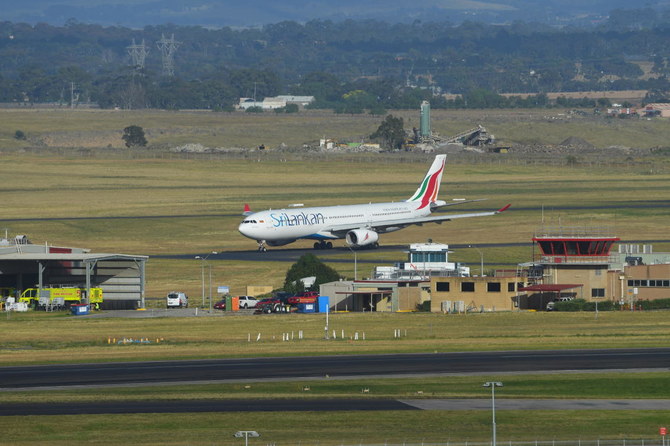
SYDNEY: Australia’s second-largest city welcomed its first international passenger flight in five months on Monday, an arrival that will test the state of Victoria’s revamped hotel quarantine system.
Australia has since March closed its borders to non-citizens, but airports serving Melbourne, Victoria’s capital, stopped accepting any arrivals in late June after an outbreak of COVID-19 that begun at two hotels where arrivals were quarantining.
More than 20,000 infections were recorded in Victoria when hotel staff contracted the virus from people returning from overseas.
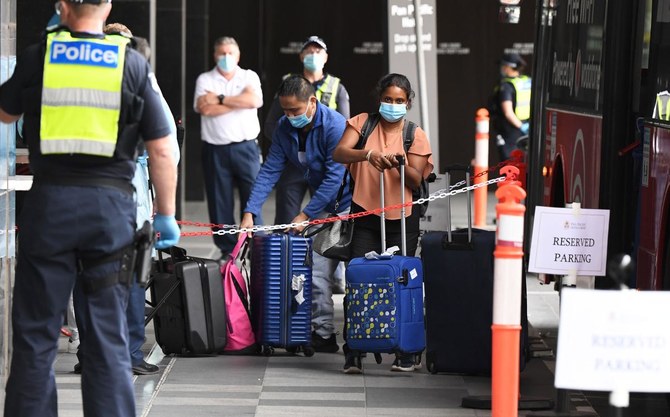
The outbreak has been widely blamed on failures of private contractors to follow protocol. With hundreds of people expected to arrive in Victoria each week, state authorities have said police officers will now enforce stricter standards.
The new system will greet Australians arriving on a flight from Sri Lanka, who will now no longer be allowed to leave their rooms under the new hotel quarantine restrictions.
The system is similar to the model used in Sydney, capital of New South Wales, Australia’s largest state, which has accommodated thousands of people returning without any clusters emerging.
With New South Wales recording just one local infection in the last month, the state has gradually eased most social distancing restrictions.
From Monday, dubbed by the state government as “freedom day,” nearly all venues were allowed to accommodate one person for every 2 square meters. Previously venues were restricted to one patron per 4 square meters.
There will also be no limit on the number of people attending weddings and funerals.
Western Australia said that from Tuesday it will remove restrictions on people arriving from Victoria and New South Wales. The move will see nearly all Australia’s internal borders reopened, a boost to domestic tourism operators and airlines such as Qantas and Virgin Australia.
Australia has reported about 28,000 cases of COVID-19 and 908 deaths since the pandemic began. Just 44 active cases remain in the country, with most in hotel quarantine.


![]()
![]()

Melbourne welcomes first international flight in 5 months as coronavirus curbs ease
Short Url
https://arab.news/gc7y7
Melbourne welcomes first international flight in 5 months as coronavirus curbs ease
- Airports serving Melbourne, Victoria’s capital, stopped accepting any arrivals in late June

Latest updates


Recommended


© 2026 SAUDI RESEARCH & PUBLISHING COMPANY, All Rights Reserved And subject to Terms of Use Agreement.