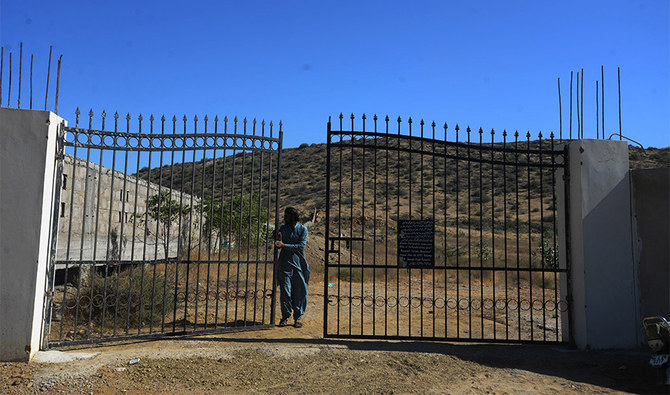

KARACHI: When the coronavirus pandemic ravaged Pakistan’s southern metropolis of Karachi in late March, authorities reserved special space for the deceased at several graveyards, making one of them become a COVID-19-only cemetery. Until now, however, only 17 people have been buried there.
Shah Abdul Latif Bhitai Model Qabristan, a 10-acre cemetery, was established two years ago but until the pandemic has seen no burial. In the beginning of May, when coronavirus mortality was soaring across the country, the graveyard’s caretaker, Syed Muttaqi Zaidi, received a call to prepare as bodies were going to arrive. His men immediately dug 30 graves.
“The deceased would be brought at night or in the wee hours of the day and buried silently amid strict guidelines,” Zaidi said.
“During those days, the relatives would be discouraged from visiting the graveyard, although very few would come anyway due to a very long distance from the city.”
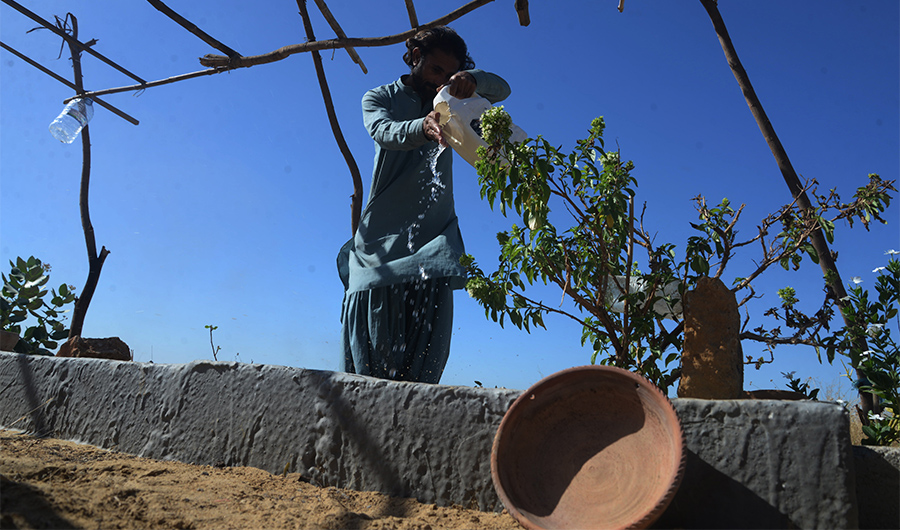
A resident of a nearby village is watering a grave at Shah Abdul Latif Bhitai Model Qabristan in Karachi on December 4, 2020. (AN photo by S.A. Babar)
In the beginning of the pandemic, there was not only a fear of infection, but also a stigma-like anxiety surrounding the burial of coronavirus dead.
“Relatives of one deceased wrote ‘Pyari Amma Jan’ (beloved mom) on the gravestone because they didn’t want to reveal her name,” Zaidi said, but added that “no such things exist anymore.”
After the first 17 bodies, no new deceased have been brought to the graveyard either.
In late May, the government revised its health guidelines and special burial places are no longer required, although the number of coronavirus-related deaths in Sindh province has now risen to nearly 3,000, of which 80 percent have been recorded in Karachi alone.
“I was part of that committee which revised these guidelines for burial,” Dr. Abdul Bari Khan, chief executive of the Indus Hospital in Karachi and member of the government’s committee on COVID-19, told Arab News.
“When a patient is dead, the virus is dead. It takes it a few hours to be dead. So, we changed the SOPs because it was creating a stigma. We were very strict in the beginning.”
Under the revised guidelines, Dr. Bari explained, when the body is bathed, has all orifices closed, and is wrapped in a plastic bag, then there is no danger of it being infectious.
COVID-19 deceased can now be buried at any of the city’s 179 government and over 50 community cemeteries.
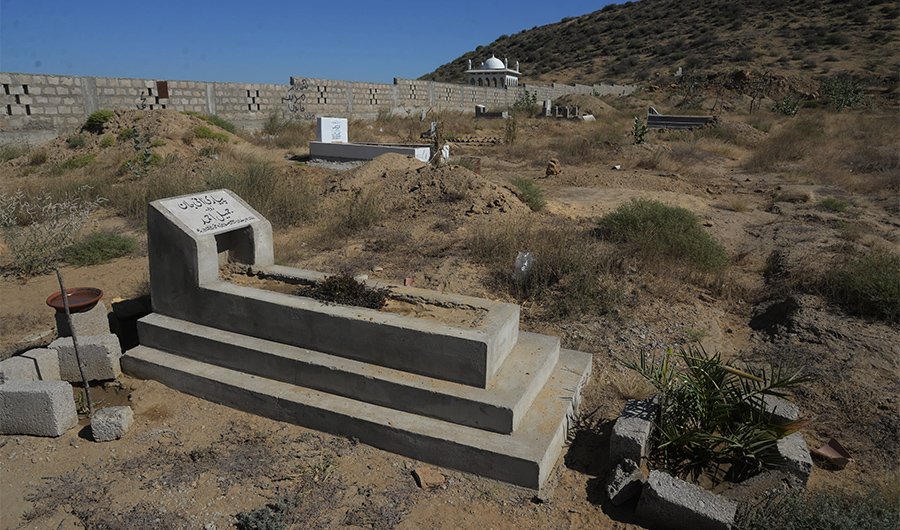
Shah Abdul Latif Bhitai Model Qabristan in Karachi on December 4, 2020. (AN photo by S.A. Babar)
Zaidi believes that the remote Shah Abdul Latif Bhitai Model Qabristan he oversees will one day become an ordinary cemetery.
“Once it’s further developed, this model graveyard will be home to more departed souls. Until then, this is a resting place of coronavirus victims only,” he said.