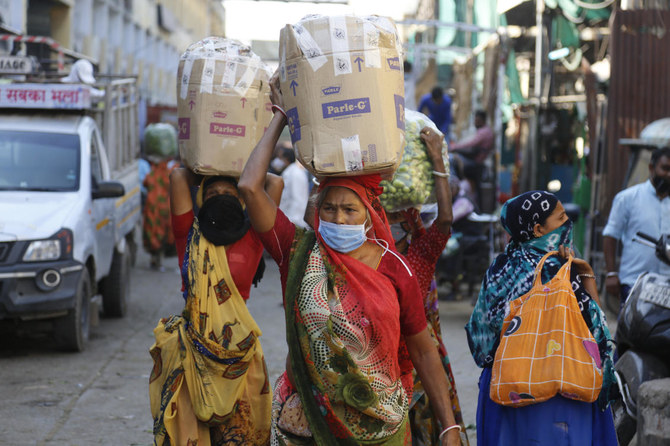
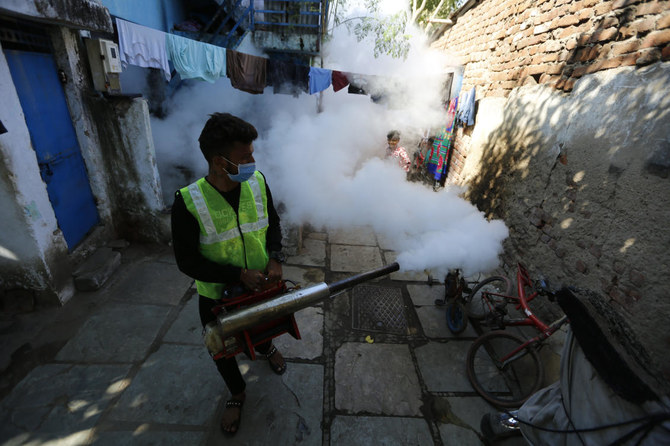
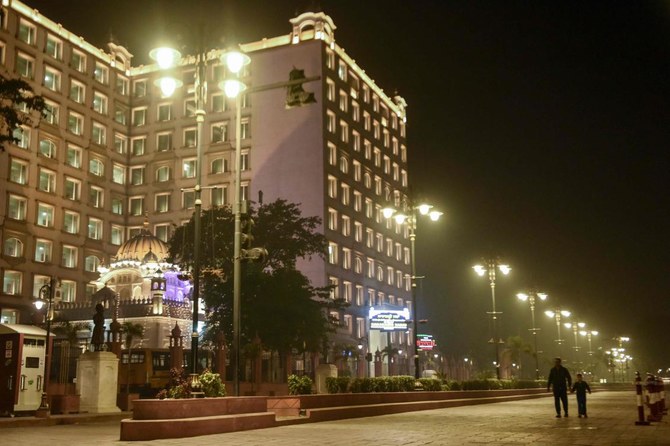
NEW DELHI: India has registered 36,652 confirmed coronavirus cases in the past 24 hours.
India’s health ministry on Saturday also recorded 512 deaths in the past 24 hours, taking total deaths to nearly 140,000. The pace of new cases has seen a downward trend, with single-day cases remaining below the 50,000 mark for a month.
India has 9.6 million total cases, second behind the US with 14.3 million. But globally it has one of the lowest deaths per million population, according to the Health Ministry.
India’s home ministry has allowed states to impose local restrictions, such as night curfews. It has asked state officials to consult before imposing lockdowns at state, district or city levels.

India’s daily cases below 50,000 for a month
https://arab.news/v9dm7
India’s daily cases below 50,000 for a month
- India’s home ministry has allowed states to impose local restrictions, such as night curfews
- It has asked state officials to consult before imposing lockdowns at state, district or city levels
UK police hunt suspects after 600 items relating to the British Empire are stolen from a museum
- The Avon and Somerset Police force said the items with “significant cultural value”
- The force said it wanted to speak to four men over the theft and appealed to the public for information
LONDON: More than 600 artifacts relating to the history of the British Empire and Commonwealth have been stolen from the collection of Bristol Museum, police said Thursday as they released images of four suspects.
The Avon and Somerset Police force said the items with “significant cultural value” were taken from a storage building in the early hours of Sept. 25.
The force said it wanted to speak to four men over the theft and appealed to the public for information.
It was unclear why the appeal was being made more than two months after the crime.
“The theft of many items which carry a significant cultural value is a significant loss for the city,” said Det. Constable Dan Burgan.
“These items, many of which were donations, form part of a collection that provides insight into a multilayered part of British history, and we are hoping that members of the public can help us to bring those responsible to justice.”
The port city of Bristol, 120 miles (195 kilometers) southwest of London, played a major role in the trans-Atlantic slave trade. Ships based in the city transported at least half a million Africans into slavery before Britain outlawed the slave trade in 1807. Many 18th-century Bristolians helped fund the trade and shared in the profits, which also built handsome Georgian houses and buildings that still dot the city.
It was the focus of international attention and debate in 2020, when anti-racism demonstrators toppled a statue of 17th-century slave trader Edward Colston from its plinth in the city and dumped it in the River Avon.
The vandalized statue was later fished out and put on display in a museum.