


Born in the KSA: Young and successful, Pakistani creatives recall Saudi childhood

Short Url
Updated 05 December 2020
Follow

Born in the KSA: Young and successful, Pakistani creatives recall Saudi childhood

  • Filmmaker and producer Emad Khalid Mughal recalls the 'surreal' feeling of growing up surrounded by holy sites
  • Young creatives say that in Pakistan they often have to clear misconceptions about their childhood home in Saudi Arabia

RAWALPINDI: Model Atikah Gardezi, stylist Maryam Raja and producer Emad Khalid Mughal have a lot in common: they’re young, they’re Lahore based, they’re causing a stir in their respective fields, and they all grew up in Saudi Arabia.
Makkah-born Raja lived in Jeddah until age 25 and left for Pakistan three years ago to work for brands such as Zara Shahjahan, Beechtree and Khaadi.
"When I think about growing up in Saudi Arabia, ironically, I think a lot about water, visiting the beautiful Red Sea ... Most people would think desert," she told Arab News laughing.
But the stereotypes which for her need to be fixed are not only related to landscape.
"There’s this idea here that KSA is incredibly conservative and restrictive which, yes in some ways it is more so than here, but the way Pakistanis picture it is a bit off,” she said. “I know it’s not the same for everyone and I speak with some privilege, but over there I felt like I could move more freely, and it helped build up my independence.”
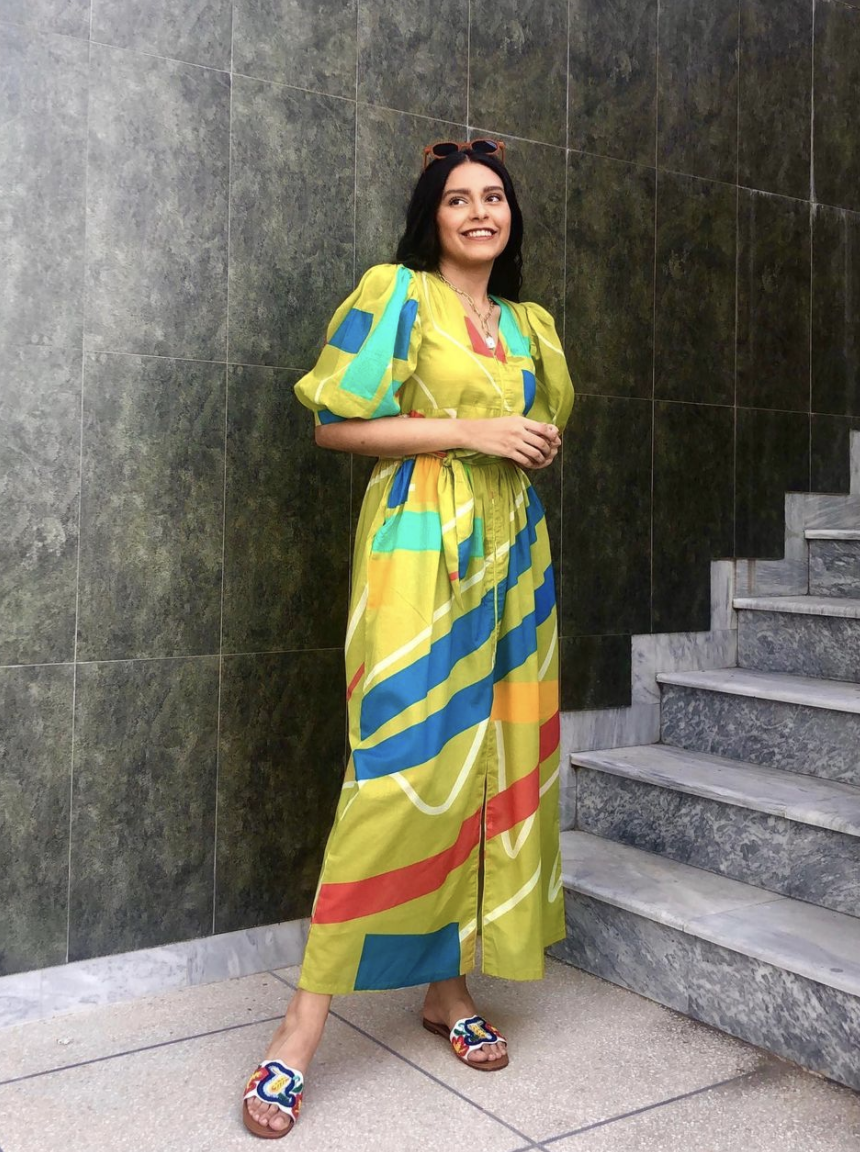


Stylist Maryam Raja at her home in Lahore, Pakistan on Aug. 5, 2020. (Photo courtesy: Maryam Raja)

Her current career, however, might have been impossible in Saudi Arabia.

"Being an expat, even though my parents migrated when they were three and four years old respectively, it continues to be hard getting a job because of the way the visas work," she said.

"It's harder to hire someone who is not a Saudi national. Now I have a career path, very strongly defined in Pakistan."

Correcting misconceptions about the childhood home is also what Mughal, who moved to Pakistan some 10 years ago, keeps on doing. 

"There’s a big misconception that Saudi is just nomads roaming around looking for water or something when in reality it’s been at the forefront of a lot of development and urbanization. There are some crazy mega infrastructure projects going on," he said.

"If people saw beyond the label of it being a traditional country and look at the cities it would probably change their perspectives."



Emad Khalid Mughal, left, and Maryam Raja in Lahore on June 6, 2019. (Photo courtesy: Maryam Raja)

Although born in Kuwait, he spent most of his life in Jeddah and moved to Pakistan to pursue his bachelor's degree. He recalled the "surreal" feeling of always being surrounded by holy sites in his Saudi childhood.
"All the holy sites are around the corner it’s a surreal way to grow up," he told Arab News. "It’s such a privilege because some people, right here in Pakistan, work their whole lives to get there and we had them, sometimes walking distance from us."
A decade into his life in Lahore and with a number successful projects in his resume, like editing films such as "Yaalghaar," "Ashen Streets," the 30-year-old says he is still missing his Saudi life.
“It’s the food I miss the most, but also the lifestyle," he said.
Unlike Mughal and Raja, Gardezi, who became a professional model in Pakistan, knew that Pakistan would someday become her home.



Model Atikah Gardezi in Lahore, Pakistan, April 1, 2020. (Photo courtesy: Atikah Gardezi)

“I always felt like an outsider in Saudi even being born and raised there," said the 28-year-old born in Makkah.
That strangeness and being an outsider is something she continues to feel in Pakistan, though on different levels.
"That is something I feel in Pakistan now," she said, adding that with her childhood memories being associated with Saudi Arabia she often feels little out of place, even though she has already found her footing and made a new home.
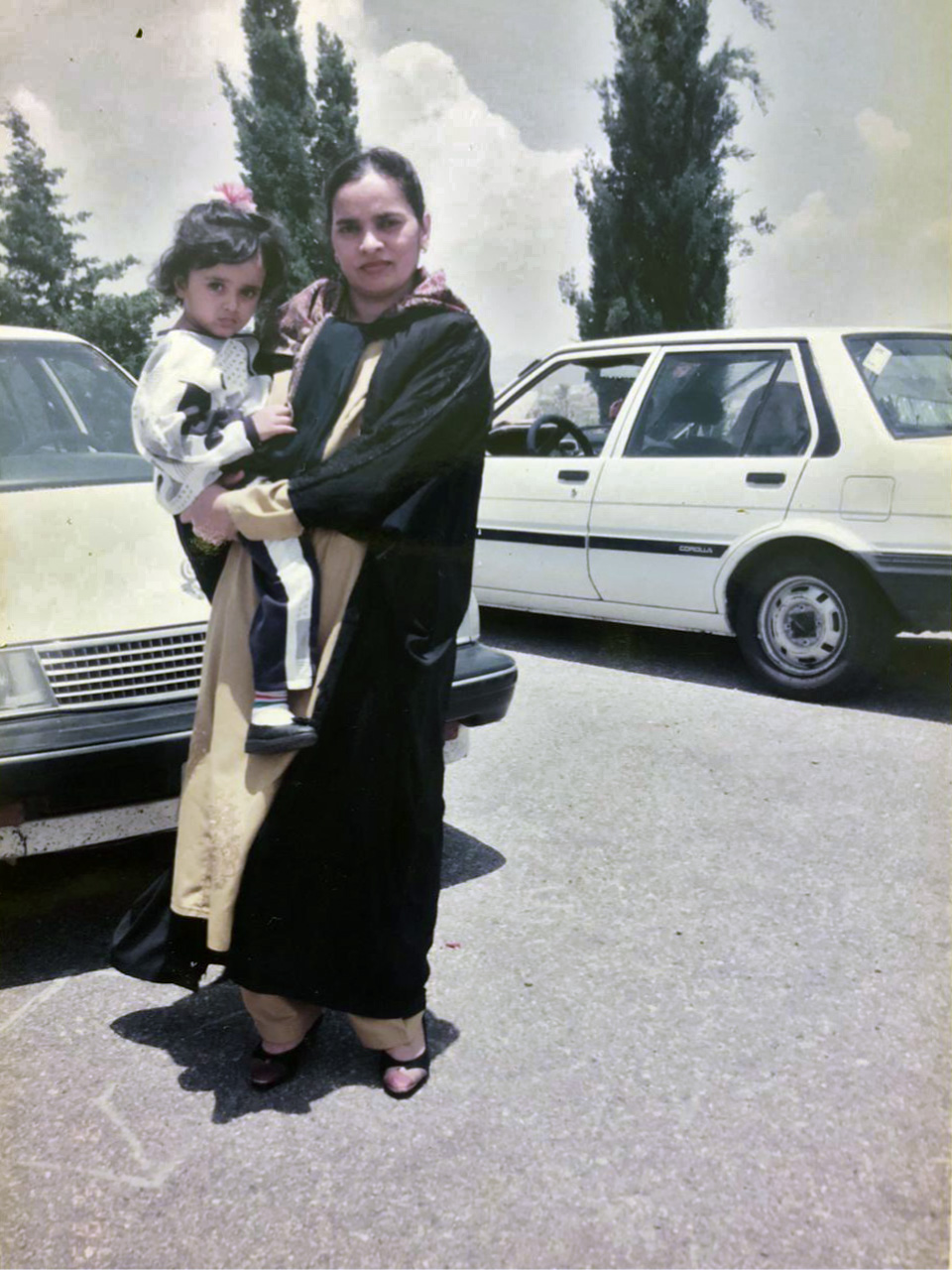


Atikah Gardezi and her mother on a road trip to Abha, Saudi Arabia in November 1995. (Photo courtesy: Atikah Gardezi)

But she says she remembers her Saudi childhood as diverse and inclusive: "My favorite thing about growing up in Saudi was the diaspora community we built in the building I grew up in."
This sense of community is what she is struggling to find in Pakistan.
"What was different when I first moved here is the lack of community. Moving here I realized things like your position in society mattered a great deal to the culture here, what you wore and who you were friends with. For me personally, that was not the case in Makkah."

Top Pakistani clerics warn government against sending troops to Gaza to disarm Hamas

Updated 21 sec ago
Follow

Top Pakistani clerics warn government against sending troops to Gaza to disarm Hamas

  • Pakistani clerics raise alarm over reports of pressure on Muslim nations to provide troops for Gaza stabilization force under Trump peace plan
  • Islamabad has previously said that it is willing to join the international stabilization force but ‘not ready’ to play any role in disarming Hamas

ISLAMABAD: A group of Pakistan’s top religious and political leaders on Monday warned the government against sending Pakistani troops to Gaza to disarm Palestinian group Hamas, amid discussions over a proposed International Stabilization Force (ISF) for the Palestinian territory.

The representative gathering, chaired by prominent scholar Mufti Taqi Usmani, brought together leaders from Deobandi, Barelvi, Ahl-e-Hadees and Shia schools of thought, alongside leaders of the country’s main religio-political parties, Jamiat Ulema-e-Islam-Fazl (JUI-F) and Jamaat-e-Islami (JI).

The international stabilization force, which is to be composed of troops from Muslim countries, is the cornerstone of President Donald Trump’s peace plan for Gaza announced in Sept. Islamabad has previously said it is willing to join the ISF but “not ready” to play any role in disarming Hamas. Hamas’s Gaza chief Khalil Al-Hayya said this month the group had a “legitimate right” to hold weapons, while Israel has repeatedly insisted that Hamas be disarmed.

In a joint statement issued after the meeting in the port city of Karachi on Monday, Pakistani clerics raised alarm over reports that international pressure is mounting on Muslim-majority nations to provide troops for the transitional security force in Gaza, following Israel-Hamas ceasefire.

“In such circumstances, demands are being made to Muslim countries that they send their forces there to disarm Hamas,” the statement said. “Several Muslim governments have already refused this, and pressure is being increased on Pakistan.”

Last month, the United Nations Security Council approved Washington’s plan, which called for a yet-to-be-established Board of Peace as a transitional authority that Trump would head, and the stabilization force, which would be empowered to oversee borders, provide security and demilitarize the territory.

The gathering of Pakistani clerics urged Islamabad to resist any diplomatic overtures from Washington regarding troop deployment.

“This gathering, with full emphasis, demands the Government of Pakistan refrain from sending its forces to disarm Hamas and that it should not yield to any pressure in this regard,” the statement said.

The assembly expressed complete support for the liberation of Palestine and described the effort as a “duty of every Muslim.”

It said that Pakistan’s armed forces are “imbued with the spirit of jihad” and that the “notion of placing them against any sacred struggle for the liberation of Baitul Muqaddas or Palestine is impossible for the nation to accept.”

The religious leaders characterized the proposal as a “conspiracy” from which the government must “protect the country.”

Pakistani foreign office spokesperson Tahir Andrabi and the prime minister’s spokesperson for foreign media, Mosharraf Zaidi, did not respond to Arab News requests for comment on the statement.

Washington reportedly views Pakistan as a prime candidate for the ISF, given its experience in high-intensity border conflicts and internal counter-insurgency operations.

Last week, Pakistan’s foreign office said that Islamabad had not taken any decision on joining the proposed stabilization force for Gaza and had received no formal request from the US or any other country in this regard.

“I am not aware of any specific request made to Pakistan. We will inform you about any development if it takes place,” Andrabi told reporters.

He also sought to distance the government from rumors of a pending visit by Pakistan’s defense forces chief, Field Marshal Asim Munir, to the US to meet President Trump.