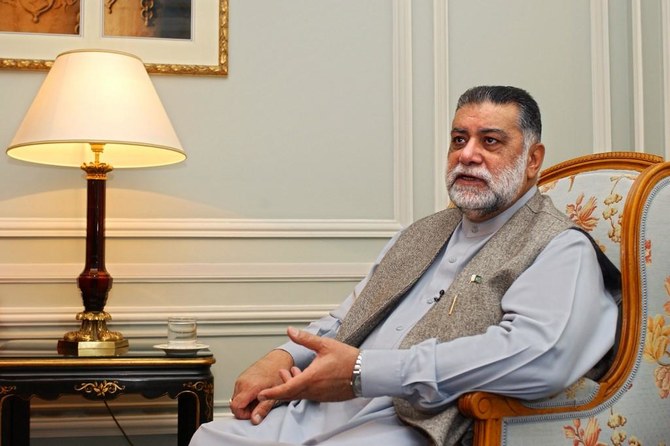
Pakistan’s former prime minister Zafarullah Khan Jamali dies

Zafarullah Khan Jamali died on Wednesday at a hospital in the garrison city of Rawalpindi. (File/AFP)
Short Url
Updated 02 December 2020
Follow

Pakistan’s former prime minister Zafarullah Khan Jamali dies

  • Even after his resignation, the soft-spoken Jamali known for his decency in politics, never spoke against Musharraf
  • During his political career, he was associated with various parties, including Pakistan People’s Party and Pakistan Muslim League

ISLAMABAD: Zafarullah Khan Jamali, a veteran Pakistani politician who served as the country’s prime minister from 2002 to 2004 died on Wednesday at a hospital in the garrison city of Rawalpindi, days after he suffered a heart attack at the age of 76.
Jamali served as prime minister during the tenure of ex-dictator Pervez Musharraf. He resigned over differences on several political issues with Musharraf, who is currently living in self-imposed exiled in Dubai.
Musharraf was forced to resign in 2008 when politicians backing him lost parliamentary elections. He seized power in 1999 when he ousted the government of former Prime Minister Nawaz Sharif in a military coup.
Even after his resignation, the soft-spoken Jamali known for his decency in politics, never spoke against Musharraf.
Jamali was born in 1944 in Pakistan’s southwestern Baluchistan province. He entered politics in 1960s and remained active until a few months ago.
During his political career, he was associated with various parties, including Pakistan People’s Party and Sharif’s Pakistan Muslim League, as well as one of its factions.
Pakistani Prime Minister Imran Khan and several other politicians conveyed their condolences to Jamali’s family over his passing.


Zimbabwe opposition says constitutional ‘coup’ under way

Updated 5 sec ago
Follow

Zimbabwe opposition says constitutional ‘coup’ under way

  • The accusations came after the cabinet approved amendments that would allow President Emmerson Mnangagwa to extend his term in office
HARARE: Leading Zimbabwe opposition figures accused the government Wednesday of a constitutional “coup” after the cabinet approved amendments that would allow President Emmerson Mnangagwa to extend his term in office.
Sweeping changes to the constitution accepted by the cabinet Tuesday include extending the presidential term to seven years and follow a decision by the ruling Zanu-PF that Mnangagwa should stay in office beyond the end of his second term in 2028.
The amendments will be presented to parliament, which is weighted in favor of the Zanu-PF, but the opposition insists they also need to be put to a national referendum.
“The process that is currently happening in Zimbabwe is a coup by the incumbent to extend his term of office against the will of the people,” opposition politician and fierce government critic Job Sikhala told AFP.
“We have got an incumbent who wants to railroad himself, using the tyrannical and dictatorial tendencies of his rule, into another two years to 2030,” he said.
He said his National Democratic Working Group had asked the African Union to intervene.
Mnangagwa came to power in 2017 in a military-backed coup that ousted Robert Mugabe, who ruled the southern African country for 37 years.
He was elected to a five-year term in 2018 and again in 2023 but has been accused of allowing rampant corruption to the benefit of the Zanu-PF — which has been in power since independence in 1980 — while eroding democratic rights.
Sikhala, a former lawmaker with the Citizens Coalition for Change (CCC) party, was arrested in South Africa last year for alleged possession of explosives. He says they were planted in his vehicle in an apparent assassination attempt.
“What is unfolding in Zimbabwe is not constitutional reform. It is a constitutional coup,” Jameson Timba, a CCC leader who has established a group called the Defend the Constitution Platform (DCP), said in a statement on X.
The president and his party are using “formal processes” such as cabinet decisions “to entrench power without the free and direct consent of the people,” he said.