ISLAMABAD: Pakistan’s former prime minister Mir Zafarullah Khan Jamali passed away at the Armed Forces Institute of Cardiology in Rawalpindi on Wednesday, Dhani Bux Jamali, a close relative, confirmed while talking to Arab News.
The 76-year-old politician was rushed to the hospital after he suffered a cardiac arrest nine days ago.
According to the local media, he was on ventilator for the last four days but could not recover despite the medical treatment.
“His funeral will be offered at his native town Rojhan Jamali in Jaffarabad district in Balochistan,” said Dhani Bux Jamali.
The former prime minister belonged to the southwestern province and began his political career from there in the 1970s.
He also served as Balochistan’s chief minister twice during his career.
Jamali was counted among the top Pakistan Muslim League-Nawaz leaders, though he left the party after the 1999 military coup by General (r) Pervez Musharraf and became prime minister after winning his constituency in the 2002 general elections.
Pakistan’s army chief General Qamar Javed Bajwa and several political figures expressed their condolences at the ex-prime minister’s death.
https://twitter.com/OfficialDGISPR/status/1334190322918825984?s=20

Former prime minister Mir Zafarullah Khan Jamali passes away in Rawalpindi
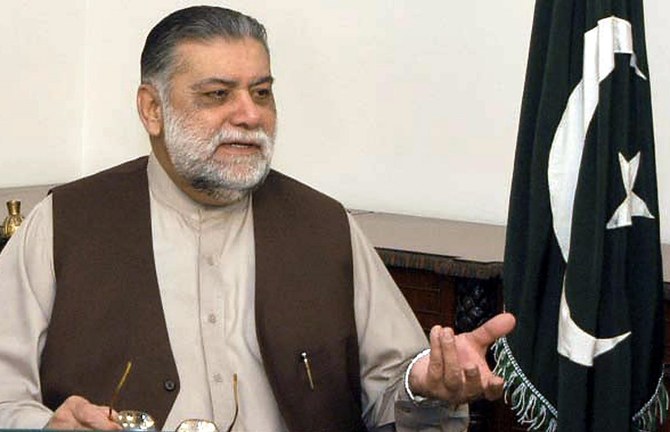
https://arab.news/4jgy3
Former prime minister Mir Zafarullah Khan Jamali passes away in Rawalpindi
- The 76-year-old politician began his career from Balochistan and twice served the province as chief minister
- Jamali suffered a cardiac arrest nine days ago and was taken to a leading medical facility for treatment
UN experts slam Pakistan lawyer convictions
- Imaan Mazari, husband Hadi Ali Chattha were sentenced to 10 years last month for “anti-state” social media posts
- Five UN special rapporteurs say couple jailed for exercising rights guaranteed by international human rights law
GENEVA, Switzerland: Five UN special rapporteurs on Wednesday condemned the conviction and lengthy jail sentences imposed on a prominent rights activist and her fellow lawyer husband in Pakistan over “anti-state” social media posts.
Imaan Mazari, a 32-year-old lawyer and vocal critic of Pakistan’s military, “disseminated highly offensive” content on X, according to an Islamabad court.
She and her husband Hadi Ali Chattha were jailed on January 25, with a court statement saying they “will have to remain in jail for 10 years.”
The UN experts said they had been jailed for “simply exercising rights guaranteed by international human rights law.”
“Lawyers, like other individuals, are entitled to freedom of expression. The exercise of this right should never be conflated with criminal conduct, especially not terrorism,” they said in a joint statement.
“Doing so risks undermining and criminalizing the work of lawyers and human rights defenders across Pakistan and has a chilling effect on civil society in the country.”
Mazari shot to prominence tackling some of Pakistan’s most sensitive topics while defending ethnic minorities, journalists facing defamation charges and clients branded blasphemers.
As a pro bono lawyer, Mazari has worked on some of the most sensitive cases in Pakistan, including the enforced disappearances of ethnic Balochs, as well as defending the community’s top activist, Mahrang Baloch.
Mazari and her husband have been the subject of multiple prosecutions in the past, but have never previously been convicted of wrongdoing.
“This pattern of prosecutions suggests an arbitrary use of the legal system as an instrument of harassment and intimidation in order to punish them for their work advocating for victims of alleged human rights violations,” the UN experts said.
“States must ensure lawyers are not subject to prosecution for any professional action, and that lawyers are not identified with their clients.”
The statement’s signatories included the special rapporteurs on human rights defenders, the independence of judges, freedom of opinion, freedom of association and on protecting rights while countering terrorism.
UN special rapporteurs are independent experts mandated by the UN Human Rights Council to report their findings. They do not speak in the name of the United Nations itself.
The UN experts have put their concerns to Islamabad.


