BEIRUT: Lebanon’s economy is sinking into a “deliberate depression,” the World Bank said Tuesday in a damning report stressing the authorities’ failure to tackle the crisis.
The fall 2020 edition of the Lebanon Economic Monitor predicted the economy will have contracted by 19.2 percent this year and projected a debt-to-GDP ratio of 194 percent next year.
“A year into Lebanon’s severe economic crisis, deliberate lack of effective policy action by authorities has subjected the economy to an arduous and prolonged depression,” a World Bank statement said.
Lebanon’s economy started collapsing last year as a result of years of corrupt practices and mismanagement.
The crisis was made worse by a nationwide wave of anti-government protests that paralyzed the country late last year and the Covid-19 pandemic this year.
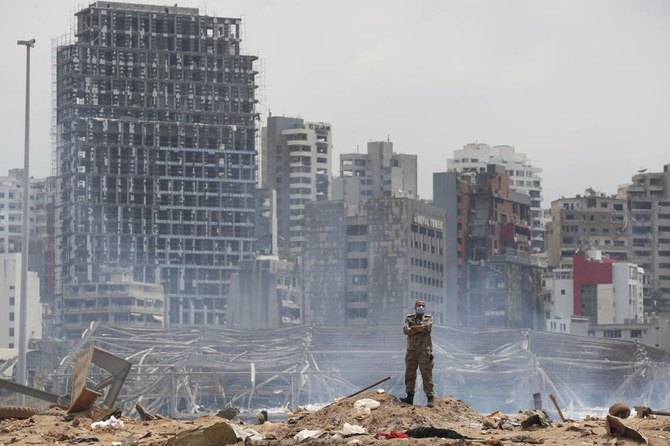
The August 4 Beirut port blast, one of the largest non-nuclear explosions in history, brought the country to its knees and further fueled public distrust.
“Lebanon is suffering from a dangerous depletion of resources, including human capital, with brain drain becoming an increasingly desperate option,” the World Bank warned.
In 2020, Lebanon defaulted on its debt, banks imposed capital controls and inflation has reached triple-digit rates, dragging the country into its worst ever economic crisis.
Instead of taking emergency measures to rescue the economy, Lebanon’s political elite has continued to dither and bicker.
The previous government headed by Hassan Diab failed to adopt ambitious policies to tackle the crisis. It resigned under pressure over the blast nearly four months ago and a new cabinet has yet to be formed.
“Lack of political consensus on national priorities severely impedes Lebanon’s ability to implement long-term and visionary development policies,” said Saroj Kumar Jha, World Bank regional director.
He called for the quick formation of a new government capable of implementing short-term emergency measures and addressing long-term structural challenges.
“This is imperative to restore the confidence of the people of Lebanon,” he said.
An annual index compiled by Gallup that tracks people’s experience of stress and sadness said “no other country in the world saw negative experiences skyrocket across the board as much as Lebanon.”
The Negative Experience Index’s data was collected before the Beirut port blast, Lebanon’s worst ever peace time disaster.

Lebanon plunged into ‘deliberate depression’: World Bank
https://arab.news/jsjk8
Lebanon plunged into ‘deliberate depression’: World Bank
- The fall 2020 edition of the Lebanon Economic Monitor predicted the economy will have contracted by 19.2 percent this year
- Lebanon’s economy started collapsing last year as a result of years of corrupt practices and mismanagement
PIF-backed AviLease achieves revenue of $664m and 19% growth in 2025
RIYADH: Saudi Arabia’s Public Investment Fund-backed AviLease achieved exceptional performance and sustainable business growth during 2025, supported by the strategic expansion of its global platform.
According to its financial results for 2025, AviLease recorded total revenues of $664 million, an annual increase of 19 percent, driven by disciplined growth in its asset portfolio and strong performance in aircraft remarketing amid sustained global demand for modern, fuel-efficient aircraft, the Saudi Press Agency reported.
Profit before tax doubled compared to the previous year, reaching $122 million. The year witnessed an expansion in AviLease’s portfolio, reaching 202 owned and managed aircraft, leased to over 50 airline companies in more than 30 countries.
The total value of the company’s assets stabilized at $9.3 billion. AviLease maintained a 100 percent fleet utilization rate, reflecting the resilience of its business model, the efficiency of its asset management, and the strength of its strategic relationships with airlines around the world.
AviLease concluded purchase agreements for aircraft from Airbus, including the A320neo family and A350F, and Boeing 737 aircraft, aiming to enhance its future asset portfolio with modern, fuel-efficient aircraft. This step will contribute to supporting future growth and meeting increasing customer demand for the latest aircraft, aligning with the Kingdom’s ambitions to become a leading global aviation hub.
AviLease strengthened its prestigious credit standing by obtaining a strong Baa2 credit ratings from Moody’s and BBB from Fitch, reflecting its financial solidity, managerial discipline, and efficiency in managing leverage. The company also successfully issued senior unsecured bonds worth $850 million last November under Regulation 144A/RegS. This issuance contributed to diversifying its funding sources and enhancing its financial flexibility.
Commenting on the results, AviLease CEO Edward O’Byrne said: “This exceptional performance reflects the quality of the company’s investment portfolio, the strength of its partnerships with airlines, and its strategic focus on responsibly deploying capital into highly sought-after, efficient, modern aircraft assets.”
He added: “As aviation markets continue to grow, AviLease is strategically positioned to continue its expansion plans and deliver sustainable long-term value for shareholders, contributing to the Kingdom’s ambitions.”
Throughout 2025, AviLease continued to play a pivotal role in the Kingdom’s growing aviation sector and contributed directly to the launch and scaling of the new national carrier, Riyadh Air, by completing a sale and leaseback transaction for a Boeing 787-9 aircraft, which thereby became the first aircraft to join the airline’s fleet.
AviLease also established a strategic partnership with Hassana Investment Co. This partnership aims to provide an opportunity for local and international investors to enter the aircraft financing asset class and benefit from AviLease’s technical expertise and operational capabilities to support partnership growth and enhance performance.
Hassana Investment Co. has agreed to acquire an initial portfolio of 10 modern aircraft from AviLease.