

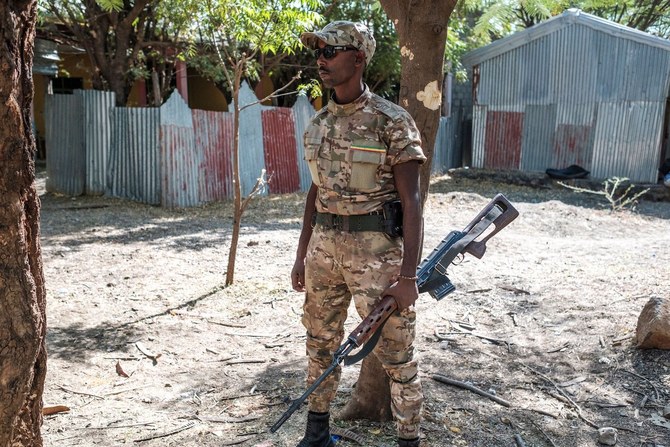

MEKELLE: Ethiopian Prime Minister Abiy Ahmed said Saturday that military operations in the country's northern Tigray region were "completed" after the army claimed control of the regional capital, declaring victory in a three-week-old conflict that has left thousands dead.
"I am pleased to share that we have completed and ceased the military operations in the #Tigray region," Abiy said in a Twitter post Saturday night.
Abiy, last year's Nobel Peace Prize winner, announced on November 4 he had ordered military operations against leaders of the Tigray People's Liberation Front (TPLF), the regional ruling party that dominated Ethiopian politics for nearly three decades before he came to power in 2018.
Tigray has been under a communications blackout ever since, making it impossible to know the full toll of fierce fighting that has included multiple rounds of air strikes and at least one massacre that killed hundreds of civilians.
After securing control of western Tigray and giving TPLF leaders a 72-hour ultimatum to surrender, Abiy announced on Thursday he had ordered a "final offensive" against pro-TPLF forces in the regional capital, Mekele, a city of half a million.
Global concern mounted over a possible bloodbath, and heavy shelling was reported in Mekele earlier Saturday.
But on Saturday night Gen Berhanu Jula, the army chief, said in a statement that his forces "completely controlled" Mekele.
A government statement specified that federal forces had been able to "take control of the airport, public institutions, the regional administration office and other critical facilities".
Berhanu said his troops were now "hunting for members of the TPLF junta that are in hiding".
There was no immediate response from the TPLF.
Ever since Abiy took office, TPLF leaders have complained of being sidelined from top positions, targeted in corruption prosecutions and broadly scapegoated for the country's woes.
Tensions rose dramatically after Abiy's government postponed national elections scheduled for August, citing the coronavirus pandemic.
Tigray held its own elections the following month and branded Abiy an illegitimate ruler.
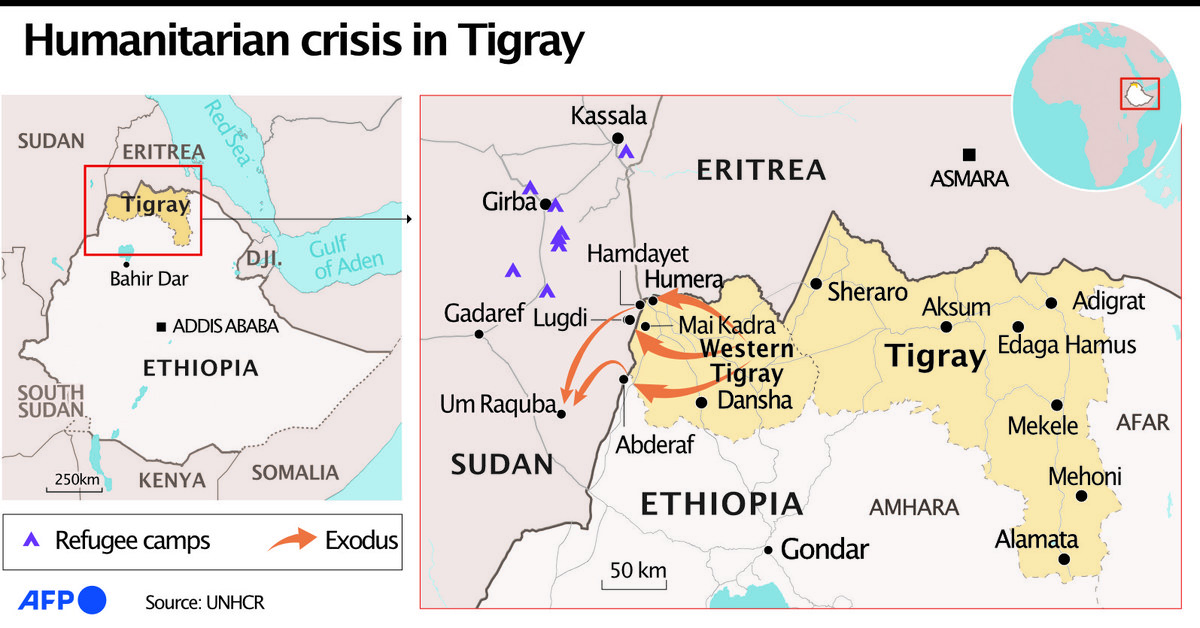
The military operations that began on November 4 were, in Abiy's telling, triggered by attacks by pro-TPLF forces on two federal army camps in Tigray -- one in Mekele and another in the town of Dansha.
On Saturday the government said it controlled the camp in Mekele and had secured the release of thousands of federal army officers held hostage there.
Despite Abiy's triumphant statement, it was not immediately clear fighting in Tigray would end right away.
Tigray has considerable military assets, and at the outset of the conflict analysts estimated the TPLF could mobilise some 200,000 troops.
"The key next issues are what intent and capabilities do the Tigrayan forces have to continue armed resistance as an insurgency, and how will people react to the provisional government that will be established," said William Davison, analyst for the International Crisis Group.


