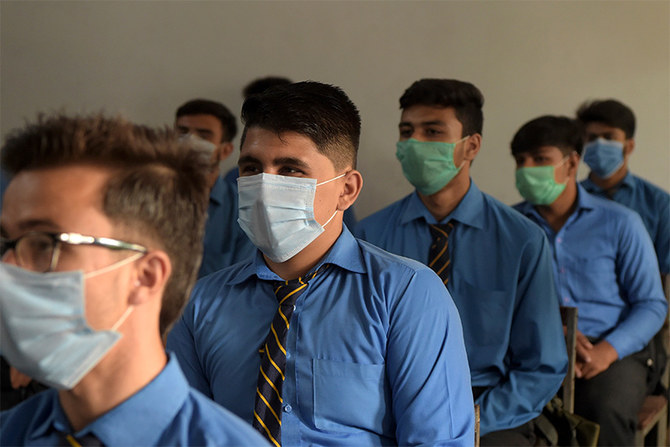
ISLAMABAD: All education institutions in Pakistan’s Khyber Pakhtunkhwa province can call in their students once a week to provide them learning material and teaching assistance, said a provincial minister on Wednesday, if these institutes lack necessary facilities to arrange online classes.
Addressing a news conference in Peshawar, KP’s education minister, Shahram Tarakai, said that the assignments given to students would be evaluated and count toward their final grade at the end of the academic year.
Pakistan decided to shut all education institutions earlier this week amid the rising number of coronavirus infections in the country.
The decision was taken in a meeting of education ministers that was arranged to decide the future strategy as the second wave of the pandemic sweeps the country.
Federal Minister for Education Shafqat Mahmood asked all education institutions to give their students “homework online,” though he added that the provincial administrations could decide their course of action wherever it was not possible.
KP’s provincial education minister said on Wednesday that schools would remain closed for students from November 26 to December 23, though school staff would remain available to facilitate home-based learning of their students.
He continued that all boarding schools would shift to online lessons, adding that a maximum of 30 percent students, who lack the facility to take online classes, would be accommodated by these institutions.
Tarakai maintained that schools that continued to offer boarding facility to their students would also be responsible to ensure strict adherence to officially prescribed safety measures to prevent the spread of the virus.


![]()

Khyber Pakhtunkhwa to hold weekly classes as schools shut across Pakistan over COVID-19 fears
Short Url
https://arab.news/zkvr8
Khyber Pakhtunkhwa to hold weekly classes as schools shut across Pakistan over COVID-19 fears
- The provision is meant for those institutes that cannot offer online classes, says the provincial education minister
- Students who cannot access online classes may continue to avail boarding facility
Latest updates


© 2026 SAUDI RESEARCH & PUBLISHING COMPANY, All Rights Reserved And subject to Terms of Use Agreement.