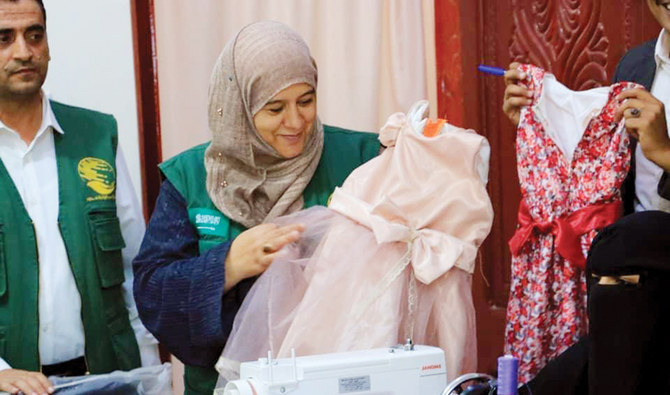
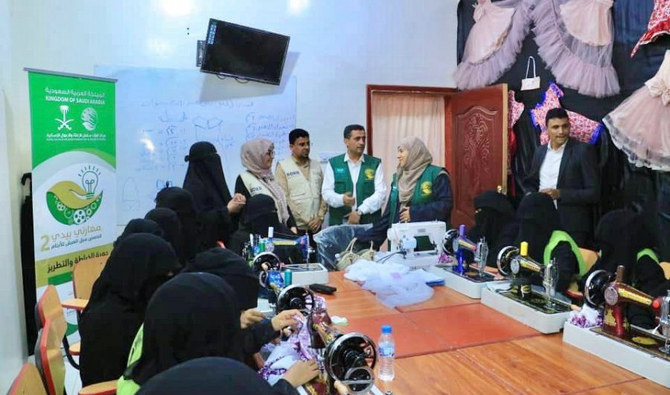
The King Salman Humanitarian Aid and Relief Center (KSrelief) launched training programs for the Maharati Biyadi project’s second edition as part of efforts to improve the livelihoods of orphans and family members in Yemen’s Marib governorate.
A KSrelief team reviewed the training methodology and plans, and was briefed by the project’s administration about the mechanism and implementation phases of the programs. The programs provide beneficiaries with basic vocational skills in sewing, embroidery, hairdressing, mobile maintenance, electrical installations, pastry making, veterinary, livestock and agriculture.
The second edition of Maharati Biyadi project comes in the context of early recovery projects. It targets 500 beneficiaries, who are expected to obtain a grant by the end of the training programs allowing them to establish their own small businesses.
KSrelief also distributed winter bags among displaced Yemenis in Taiz and Shabwa governorates. Bags included jackets, sweaters and blankets, helping thousands of families.
The distributed bags are part of Saudi Arabia’s efforts, represented by KSrelief, to alleviate the suffering of Yemenis in the war-torn country.
Meanwhile, the center also distributed food baskets to people affected by floods in Pakistan’s Sindh province, benefiting 9,378 individuals in the Badin, Tharparkar and Dadu districts.
KSrelief, which was established in 2015, has contributed to humanitarian projects worth nearly $4.8 billion in partnership with different global nonprofit organizations.
It has implemented more than 1,403 different projects in 54 countries, especially in conflict zones and tragedy-stricken areas.


![]()
![]()

Saudi aid center launches vocational training programs in Yemen to improve livelihoods of families
Short Url
https://arab.news/48yx5
Saudi aid center launches vocational training programs in Yemen to improve livelihoods of families
- The programs provide beneficiaries with basic vocational skills in sewing, embroidery, hairdressing, mobile maintenance, electrical installations, pastry making, veterinary, livestock and agriculture


Latest updates


Recommended


© 2026 SAUDI RESEARCH & PUBLISHING COMPANY, All Rights Reserved And subject to Terms of Use Agreement.