ISLAMABAD: Four ‘high-risk’ districts in Pakistan’s largest city, Karachi, have been marked by provincial authorities for coronavirus related lockdowns after over 850 people in the city tested positive for COVID-19 overnight on Saturday.
Pakistan has seen coronavirus infections rising to peak levels as the country comes in the grip of a second wave of the virus.
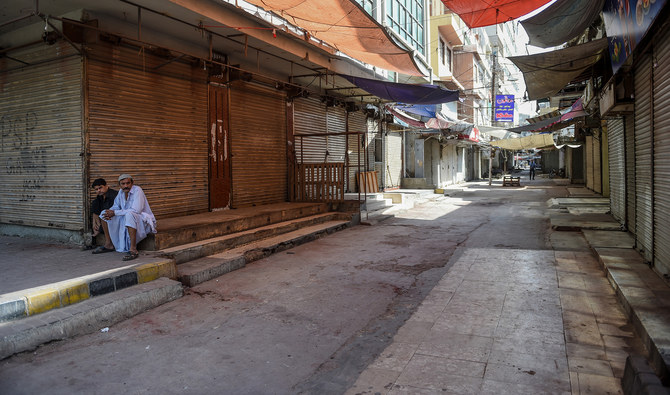
In what is dubbed a ‘smart lockdown,’ the deputy commissioners of the administrations of several districts in the seaside metropolis have imposed mobility restrictions, with smaller, ‘micro’ lockdowns also coming into effect in numerous streets and localities.
As part of restrictions, movements of residents in areas that have been earmarked as hotspots for COVID-19 will be restricted and will not be allowed gatherings in their homes. The districts in question are South District, West District, Korangi District and Central District.
Three days earlier, the National Coordination Committee spearheading coronavirus relief efforts, had imposed an immediate ban on large gatherings, including weddings.
The Karachi lockdowns came into effect Saturday morning and will last until Dec. 5.
Pakistan recorded 42 deaths in the last 24 hours-- the country’s highest fatality count since mid-July.

Karachi imposes lockdowns in four districts after surge in coronavirus cases
https://arab.news/6b4u3
Karachi imposes lockdowns in four districts after surge in coronavirus cases
- Over 850 people tested positive for COVID-19 in Karachi overnight on Saturday
- Three days earlier, the National Coordination Committee imposed an immediate ban on large gatherings
Pakistani, Bangladeshi officials discuss trade, investment and aviation as ties thaw
- Pakistan and Bangladesh were once one nation, but they split in 1971 as a result of a bloody civil war
- Ties between Pakistan, Bangladesh have warmed up since last year and both nations have resumed sea trade
ISLAMABAD: Pakistan's High Commissioner to Bangladesh Imran Haider on Sunday met Chief Adviser Muhammad Yunus in Dhaka, the latter's office said on, with the two figures discussing trade, investment and aviation.
Pakistan and Bangladesh were once one nation, but they split in 1971 as a result of a bloody civil war, which saw the part previously referred to as East Pakistan seceding to form the independent nation of Bangladesh.
Ties between Pakistan and Bangladesh have warmed up since former prime minister Sheikh Hasina’s ouster as a result of a student-led uprising in August 2024. Relations remain frosty between Dhaka and New Delhi over India’s decision to grant asylum to Hasina.
Pakistan has attempted to forge closer ties with Bangladesh in recent months and both South Asian nations last year began sea trade, followed by efforts to expand government-to-government commerce.
"During the meeting, both sides discussed ways to expand cooperation in trade, investment, and aviation as well as scaling up cultural, educational and medical exchanges to further strengthen bilateral relations between the two South Asian nations," Yunus's office said in a statement on X.
In 2023-24 Pakistan exported goods worth $661 million to Bangladesh, while its imports were only $57 million, according to the Trade Development Authority of Pakistan. In Aug. this year, the Pakistani and Bangladeshi commerce ministries signed a memorandum of understanding to establish a Joint Working Group on Trade, aiming to raise their bilateral trade volume to $1 billion in the financial year that began in July.
The Pakistani high commissioner noted that bilateral trade has recorded a 20 percent growth compared to last year, with business communities from both countries actively exploring new investment opportunities, according to the statement.
He highlighted a significant increase in cultural exchanges, adding that Bangladeshi students have shown strong interest in higher education opportunities in Pakistan, particularly in medical sciences, nanotechnology, and artificial intelligence. Haider also said that Dhaka-Karachi direct flights are expected to start in January.
"Chief Adviser Professor Muhammad Yunus welcomed the growing interactions between the two countries and emphasized the importance of increased visits as well as cultural, educational and people-to-people exchanges among SAARC (South Asian Association for Regional Cooperation) member states," the statement read.
"Professor Yunus also underscored the need to further boost Bangladesh–Pakistan trade and expressed hope that during Mr. Haider’s tenure, both countries would explore new avenues for investment and joint venture businesses."


