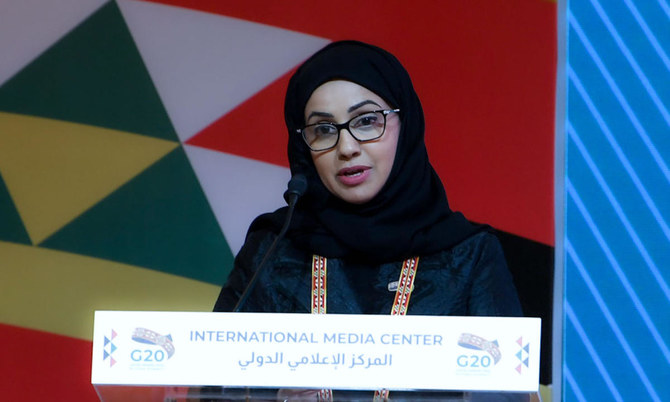
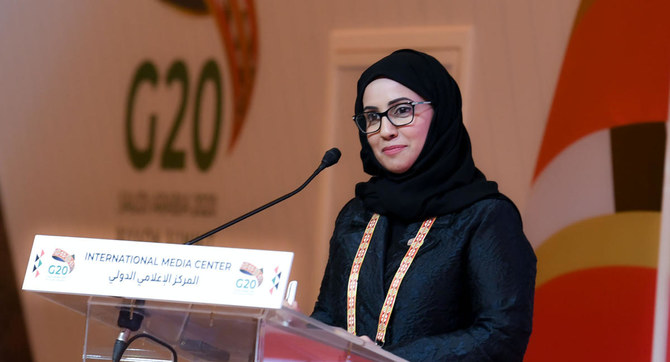
DUBAI: The Group of Twenty (G20) presidency of Saudi Arabia has empowered civil societies by creating a support group that is making sure they have access to crucial resources throughout the summit, a G20 Saudi Secretariat member said.
Reem Al-Faryan said the new department, the first of its kind, was created early in Saudi Arabia’s G20 presidency to allow engagement groups — from civil societies to private sectors — to maximize their participation.
“The role of our team was to provide them with access to information and meetings,” she added.
Al-Faryan, who spoke at a briefing ahead of the Leaders’ Summit in Riyadh, said the Saudi G20 presidency has placed a high value on providing engagement groups access to G20 discussions.
“If you want to empower them, give them access to the discussion table,” she said.
The engagement groups had over 200 interactions with the G20, which included top officials participating in meetings and events hosted by the groups, according to Al-Faryan.
She also noted the active participation of the engagement groups through a high volume of policy recommendations and public statements.
Al-Faryan said Saudi Arabia’s commitment to these engagement groups reflected the Kingdom’s vision to empower vulnerable sectors of society, including women and youth.
“This is how our leadership would like to see the people of Saudi Arabia — empowered,” she emphasized.


![]()
![]()

Saudi G20 presidency empowered civil societies, Secretariat member says
Short Url
https://arab.news/mfkjc
Saudi G20 presidency empowered civil societies, Secretariat member says
- Al-Faryan said the new department was created to allow engagement groups to maximize participation
- The engagement groups had over 200 interactions with the G20, she said


Latest updates


© 2026 SAUDI RESEARCH & PUBLISHING COMPANY, All Rights Reserved And subject to Terms of Use Agreement.