

Almost 790k pilgrims perform Umrah since resumption of rituals

Started on Nov.1, the third phase permitted pilgrims from abroad to perform the ritual alongside residents of the Kingdom. (SPA)
Short Url
Updated 11 November 2020
Follow

Almost 790k pilgrims perform Umrah since resumption of rituals

  • Strict health protocols have enabled a gradual increase in pilgrim numbers

MAKKAH: As the Kingdom is getting back on track after earlier lockdowns, plans to maintain services for pilgrims while adhering to strict health protocols are proving a success.

Saudi Arabia’s Ministry of Hajj and Umrah said that 788,038 people had performed Umrah in total since the gradual resumption of Umrah rituals began on Oct. 4. The third phase, which started on Nov. 1, permitted pilgrims from abroad to perform the ritual alongside residents of the Kingdom.

Saudi Arabia suspended Umrah in March and significantly downsized the Hajj pilgrimage in July by only allowing about 1,000 pilgrims, all in response to the COVID-19 pandemic.

In an interview with Arab News, Dr. Amr Al-Maddah, undersecretary at the Ministry for Hajj and Umrah, noted that all visas from abroad that have been filed through accredited agents and the offices of certified Umrah companies have been accepted, provided they fulfilled the necessary requirements.

He said that tourist offices abroad are following their contracts with the Ministry of Hajj and Umrah so that pilgrims can come to perform Umrah rituals.
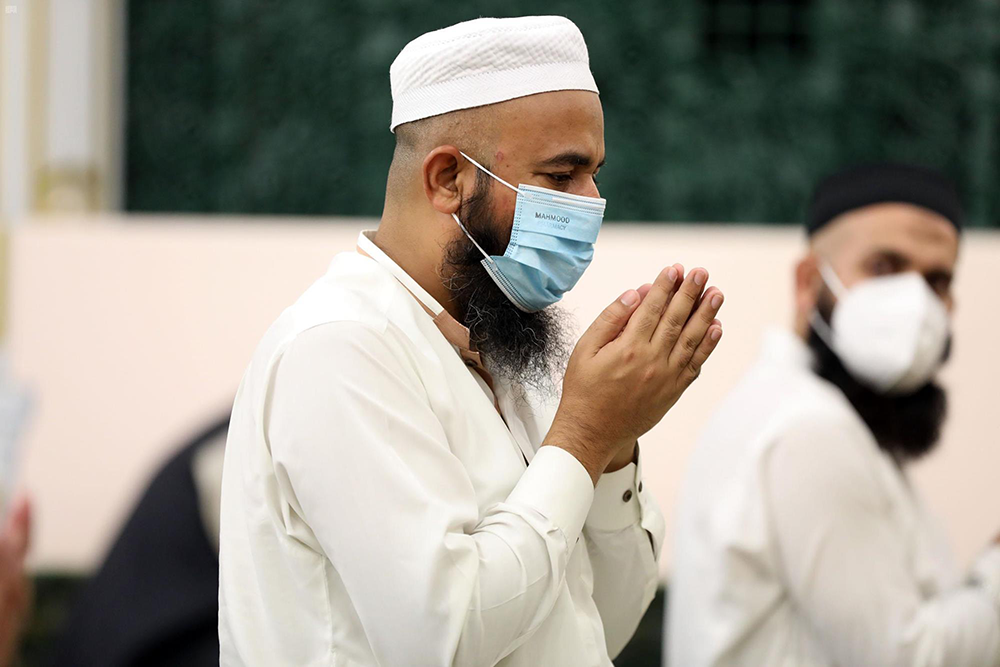
The undersecretary said in the first phase of Umrah, which lasted for 14 days, 84,000 pilgrims were received — 6,000 people per day. “210,000 pilgrims performed Umrah rituals during the second phase, which lasted for 14 days, at a 15,000-pilgrims capacity per day.” Last week Al-Maddah said, “four groups totaling nearly 1,000 pilgrims came from abroad.”

Meanwhile, Sheikh Abdulrahman Al-Sudais, president of the General Presidency for the Affairs of the Two Holy Mosques called for an increase in the number of paths around the Kaaba to accommodate the increased number of pilgrims performing Umrah and to allocate paths for the elderly and people with disabilities, as well as paths for those in wheelchairs.

Al-Maddah said that during the third phase, the regulatory protocols will be reviewed to streamline services for the pilgrims and assess any required changes.
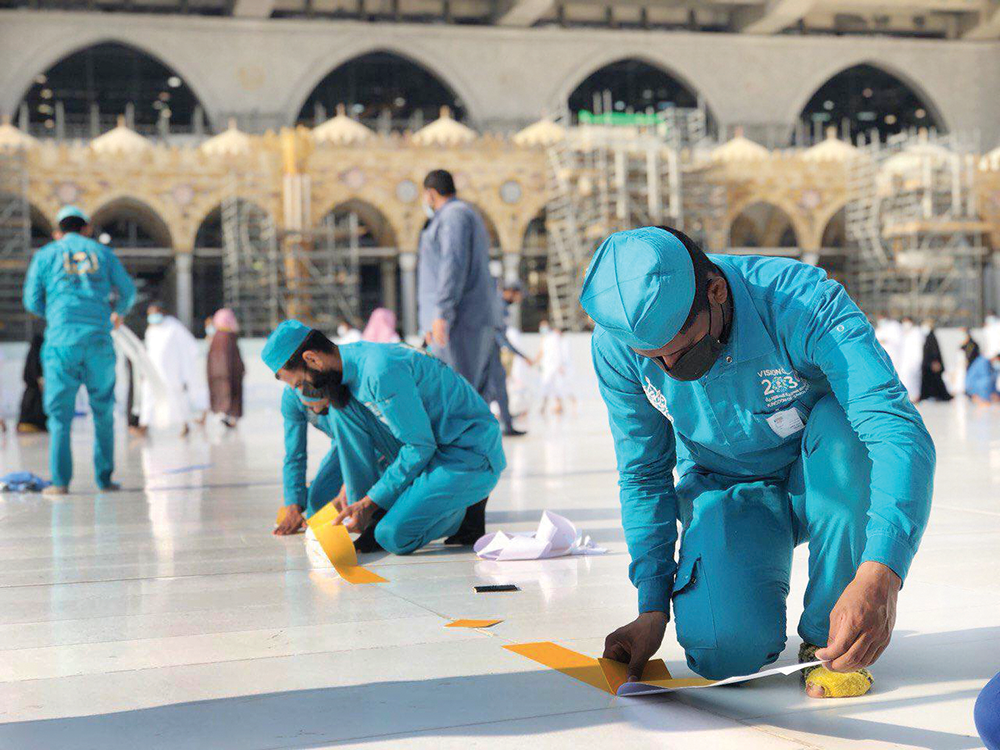
Those applying for Umrah from abroad must be between 18 and 50 years old, in accordance with the requirements of the Ministry of Health. They must also submit their COVID-19 negative RT-PCR test, issued by a reliable laboratory and taken 72 hours prior to leaving for Saudi Arabia.

Pilgrims must book through the Eatmarna application to perform Umrah, pray in the Grand Mosque, visit the Prophet’s Mosque and pray in the Prophet’s Sacred Chamber in the Prophet’s Mosque, in accordance with the regulations and available capacity. Each pilgrim must also have confirmed return air tickets.

Al-Maddah stressed: “Pilgrims who have booked only an appointment for prayer cannot perform Umrah because they will not be able to enter the Tawaf area.”


Japan consulate in Jeddah celebrates emperor’s birthday, highlights strong cultural and economic ties

Updated 8 sec ago
Follow

Japan consulate in Jeddah celebrates emperor’s birthday, highlights strong cultural and economic ties

  • In an exclusive interview with Arab News, Yamamoto highlighted the growing cultural exchange between the two nations

JEDDAH: The consulate general of Japan in Saudi Arabia celebrated the upcoming birthday of Japanese Emperor Naruhito with a reception at the residence of the consul general Daisuke Yamamoto in Jeddah on Thursday night. 

The event was attended by Prince Saud bin Abdullah bin Jalawi, governor of Jeddah; Farid bin Saad Al-Shehri, director general of the Ministry of Foreign Affairs in the Makkah Region; Saleh Ali Al-Turki, mayor of Jeddah; and other Saudi officials, diplomats, business leaders, and members of the local community.

In an exclusive interview with Arab News, Yamamoto highlighted the growing cultural exchange between the two nations.

“The relationship between Japan and Saudi Arabia is particularly strong in the cultural field. Saudi people are very fond of Japanese pop culture, especially anime and manga, and many are motivated to learn Japanese just to enjoy the original works,” he said.

Yamamoto noted that while enthusiasm is high, challenges remain in expanding language education. “Currently, we don’t have a dedicated Japanese language institute in Jeddah. Some institutes exist in Riyadh, but here people mostly study Japanese on their own, which is difficult without interacting with native speakers. Establishing a permanent institute is one of our goals, but we cannot do it alone; we need Saudi partners,” he explained.

During his speech at the reception, Yamamoto said: “Japan is Saudi Arabia’s third-largest trading partner. Bilateral trade reached $36 billion by the end of 2024, reflecting a 50-percent increase since 2016. Many Japanese companies are investing directly in the Kingdom, across sectors such as petrochemicals, energy, automobiles, electronics, and titanium production.” He also encouraged Saudi investors to explore opportunities in Japan’s market.

He also highlighted recent initiatives designed to strengthen cultural ties, including the three-day Hayy Matsuri Japanese cultural festival at Hayy Jameel, which welcomed more than 12,000 visitors, and a two-day Kabuki performance organized in partnership with the Historic Jeddah Project and teamLab. “These cultural exchanges offer a chance for Saudis to experience Japan firsthand, from traditional arts to contemporary innovations,” he said.

Yamamoto welcomed the Kingdom’s participation in upcoming international events in Japan, including the 2026 Asian and Paralympic Games in Nagoya and Aichi Prefecture, as well as the GREEN×EXPO 2027 in Yokohama.

The evening concluded with a ceremonial cake cutting alongside a showcase of Japanese cuisine.

Reflecting on the broader Japan–Saudi relationship, Yamamoto praised the enduring friendship between the two nations.

“Our countries share a history of partnership that spans generations. Celebrations like today not only honor the emperor’s birthday, but also reinforce the enduring collaboration and mutual respect between our peoples,” he said.

He expressed hope for continued growth in cultural, educational, and economic collaboration, emphasizing the strong foundations laid under the leadership of King Salman and Crown Prince Mohammed bin Salman.