

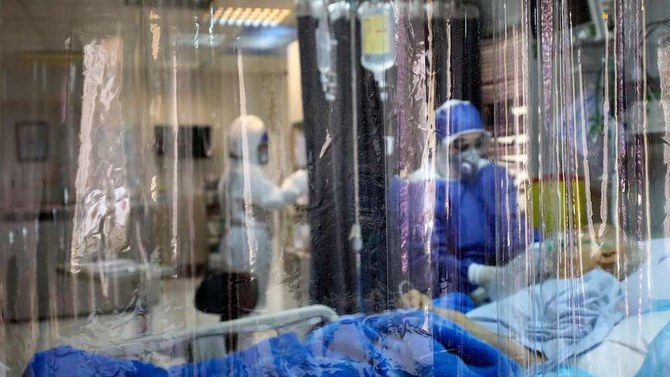

DUBAI: The UAE on Monday recorded 1,146 new COVID-19 cases and one death.
The Ministry of Health and Prevention said the total number of cases since the pandemic began reached 143,289, with the death toll standing at 515.
The ministry added that 668 people recovered from the virus over the previous 24 hours, bringing the total number of recoveries to 138,959.
The Dubai Health Authority, in cooperation with Dubai Police, announced that those who are not able to wear a face mask for health reasons must submit an application accompanied by a medical report.
The medical report should detail the health problems the applicant may be exposed to by wearing a mask, the authority said.
The authority’s medical committee will consider the request and the reasons according to specific conditions and controls. If approved, its validity will be permanent.
. @DHA_Dubai, in partnership with @DubaiPoliceHQ announced that residents with certain medical conditions can now apply for permits for exemption from wearing face masks through https://t.co/JVJ9AqH8xj.
— Dubai Media Office (@DXBMediaOffice) November 9, 2020
Requests can be made through the Dubai Police website.
Health reason exemptions include patients who suffer from fungal dermatitis, severe itching, scaling or bleeding of the skin, hives, herpes and other dermatological conditions.
It also exempts people who suffer from chronic sinus infections, acute suffocation and asthma.
The authority said that the decision took into account the health risks it may impose on others. It called on those who obtain a permit to commit to wearing a mask as much as possible, especially in public places.
Dubai Municipality closed five businesses and issued nine fines and 41 warnings to other commercial establishments for not adhering to anti-coronavirus measures.
#DubaiMunicipality closed 4 shisha cafes and 1 salon for failing to comply with the precautionary measures, violated 9 institutions, and issued 41 warnings against others. The number of institutions meeting the requirements reached 2,276 during 2,331 visits carried out on Nov 8. pic.twitter.com/tNYSNCU6wt
— بلدية دبي | Dubai Municipality (@DMunicipality) November 9, 2020
Inspection teams shut down four shisha cafes in International City and one salon in a residential area.
Elsewhere, Kuwait recorded 735 new COVID-19 cases, bringing the country’s total number of cases to 132,478. The death toll reached 816 after five new fatalities were registered.
تعلن #وزارة_الصحة عن تأكيد إصابة 735 حالة جديدة، وتسجيل 738 حالة شفاء، و 5 حالات وفاة جديدة بـ #فيروس_كورونا_المستجدّ COVID-19 ، ليصبح إجمالي عدد الحالات 132,478 حالة pic.twitter.com/gJwmacNOaT
— وزارة الصحة - الكويت (@KUWAIT_MOH) November 9, 2020
Oman’s health ministry confirmed 363 new cases and nine deaths, bringing the total to 118,503 and the death toll to 1,310 in the country.
#Statement No. 222
November 9. 2020 pic.twitter.com/g2RRyJvoi9— وزارة الصحة - عُمان (@OmaniMOH) November 9, 2020
In Bahrain, 176 new infected cases were confirmed, and the death toll stands at 329 after no deaths were reported for two consecutive days.
Out of 10299 COVID-19 tests carried out on 9 November 2020, 176 new cases have been detected among 44 expatriate workers, 115 new cases are contacts of active cases, and 17 are travel related. There were 225 recoveries from #COVID19, increasing total recoveries to 81225 pic.twitter.com/YnLZxbUkMi
— وزارة الصحة | مملكة البحرين (@MOH_Bahrain) November 9, 2020


