Saudi Arabia seeks to vitalize waste management sector

1 / 2
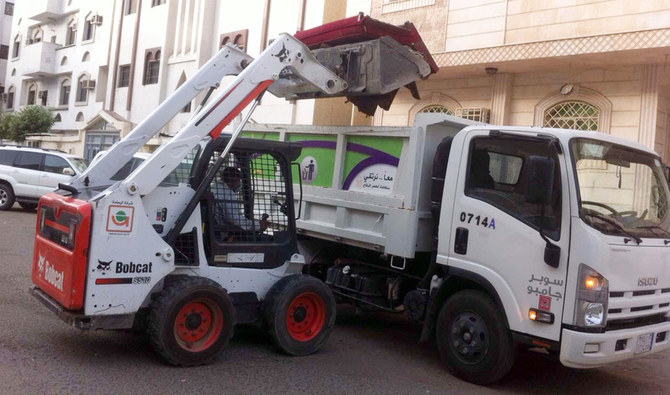
The Saudi waste sector is aiming to divert 82 percent of the total waste from landfills. (SPA)
2 / 2
The Saudi waste sector is aiming to divert 82 percent of the total waste from landfills. (SPA)
Short Url
Updated 10 November 2020
Follow

Saudi Arabia seeks to vitalize waste management sector

  • Ministries sign deal to seek new solutions, investments
  • Riyadh, Jeddah and Dammam produce nearly half of the Kingdom’s total waste

JEDDAH: Saudi Arabia’s ministries of investment, environment, water and agriculture and the National Center for Waste Management on Monday joined hands to seek new solutions and investments in the solid waste management sector.

As part of Vision 2030, the government wants to support development of recycling projects and increase water and energy preservation for sustainable development.

Investment Minister Khalid Al-Falih said with rapid industrialization and urban development, the Kingdom will witness a rise in the amount of solid waste produced annually that will ultimately lead to an increase in opportunities in the sector.

“To imagine the scope of what today’s agreement signing signifies and the scale of investment opportunities arising from it, we ought to know that initial estimates indicate that 53 million tons of waste come from the Kingdom (annually),” Al-Falih said.

Al-Falih said the agreement enforces the ministry’s interest in “attracting and developing investment in the waste management sector,” as well as strengthening strategic cooperation with the National Center for Waste Management, where both parties can work on removing obstacles investors face in the sector.

Under the Kingdom’s G20 presidency, several initiatives and projects have been launched to promote sustainability, including investment cycling, carbon cycling investment and the green hydrogen plant in NEOM.

HIGHLIGHTS

• Riyadh, Jeddah, and Dammam produce nearly half of the Kingdom’s total waste.

• The Saudi waste sector is aiming to divert 82 percent of the total waste from landfills.

• Authorities plan to raise recycling up by 42 percent.

Al-Falih said the Kingdom is working hard to catch up with the rest of the world in terms of sustainability, and will be soon setting standards for it as “protecting the Earth” is a central theme in its G20 presidency.

Nearly half of the total waste comes from three major cities in the Kingdom: 21 percent from Riyadh, 14 percent from Jeddah and 8 percent from Dammam, said Hasan Al-Sultan, director of waste management at the Ministry of Investment.

According to Jeroen Vincent, CEO of the Saudi Investment Recycling Co., most of the Kingdom’s waste is currently being landfilled at “a very low price,” with an average of SR7 per ton. He proposed that the private sector and regulators come together to “discourage this landfill,” in order to encourage investment.

The Saudi waste sector is aiming to divert 82 percent of the total waste from landfills, raise recycling up by 42 percent, 1,329 facilities to manage 106 million tons of waste, create 77,000 jobs and contribute SR120 million to the country’s gross domestic product by 2035.


Where We Are Going Today: Ana Starter Sourdough Factory in Dammam

Updated 25 February 2026
Follow

Where We Are Going Today: Ana Starter Sourdough Factory in Dammam

Since returning to live in the Kingdom after years abroad with the best bakeries at my fingertips, I have been on a mission to find suitable sourdough locally. I sampled many mediocre ones, but one would rise above the rest: Ana Starter Sourdough Factory.

I first met founder Aisha Al-Omair at the Juthoor Farmer’s Market and tried her bread then. I liked it immediately.

“Ana Starter Sourdough Factory started as a passion for creating and fermenting the healthiest bread and introducing it to the Saudi market,” she told me at the time.

It began as a personal mission then expanded — like the dough — to serve the community.

“For a long time, I’ve suffered feeding my kids proper bread. The breads that were available at the supermarkets or at local bakeries had instant yeast, that never really took time to ferment, and therefore, when you consume the average bread, you notice some stiffening, you notice indigestion, you notice bloating and heartburn.”

Indeed, I did not feel any bloating or heartburn after devouring a slice or a few so I recently went on a quest to find more.

I ventured to Dammam to find her factory shop. It is a tiny slither of a place — I almost missed it while driving past factories in the Industrial City.

The shop comes with a decadent whiff of delicious bread.

Upon entering, you will see fridges stocked with bread and goodies like jams and butters (from other brands) that complement the bread well.

The sourdough offerings include jalapeno cheddar, zataar, plain and about a dozen other flavors.

The hassawi sourdough, made with local dates from neighboring Al-Ahsa, quickly became my favorite. It has little bits of dates tucked inside like tiny treasures.

Each slice is separated with a sheet, making it easy to freeze and pull out what you need without slices sticking together.

Fluffy with a rustic crust, it is great for sandwiches, dipping in olive oil, or slathering with salted butter.

My freezer is now packed with loaves.

At around SR45 ($12) per loaf, the price is slightly steep for the local market, but the superior quality is worth the extra dough.

Each day, they post on Instagram Stories showing what is available for pickup — and the quantity of each item.

Ordering is easy: Send a DM to reserve a loaf, swing by the shop, or opt for delivery.

• For more details, check their Instagram @anaastarter.