



TUNIS: Tunisian businesswoman Iman Chaabane quit her high-flying corporate career in order to make a more meaningful societal impact, launching an e-commerce platform that champions local artisans and makers of all-natural goods.
Now stocking 360 items spanning organic food, cosmetics and personal grooming products, sales at Little Jenaina have soared since the coronavirus pandemic began, as movement restrictions spur Tunisians to try online shopping.
“E-commerce in penetration was very low, but since the lockdown started we’ve seen a big increase in demand and in April we doubled our sales,” said Chaabane, who also works as a consultant after many years as a chief financial officer and accounts auditor.
“When I left my last corporate job, I was tired of that environment and wanted to find something more meaningful,” added Chaabane, who also owns a small farm near Tunis.
“I was always interested in organic and natural products.”
Preparatory work on Little Jenaina began in early 2018 and included six months with a startup incubator in Tunis before its website launched in October that year. Chaabane bought out her co-founder in March 2020 and is now sole owner. She has one female employee who helps manage the company’s operations.
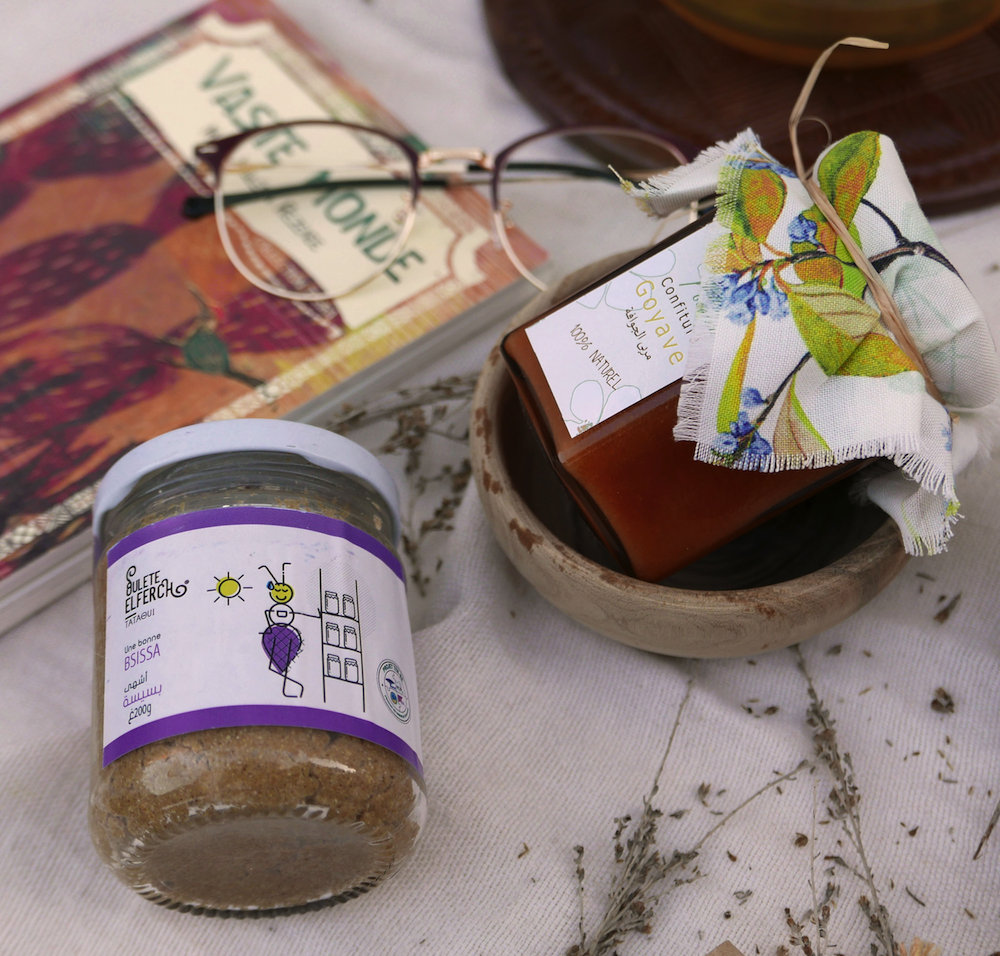
Preparatory work on Little Jenaina began in early 2018 and included six months with a startup incubator in Tunis before its website launched in October that year. (Supplied)
For Chaabane, every product has a story behind it. Among the most popular are honey, eco-friendly shampoos and vegetable oils for cosmetics.
“We not only select the products; the person who makes them is equally important. We work with people who are passionate about what they do and are environmentally conscious,” Chaabane said.
“We promote the artisans and small companies who supply our products — we use their brand names, not our own. What unifies our products are that they’re all healthy and nature conscious. We won’t sell products that have a negative environmental impact.”
THENUMBER
2%
Tunisia’s GDP growth rate in 2017.
All its products are natural, but not necessarily organic because of the difficulty and cost of obtaining organic certification in Tunisia. Sales are also currently restricted to Tunisia due to customs charges imposed on sales to the European Union and other regions.
Unlike some e-commerce platforms, Little Jenaina buys products from suppliers and then re-sells them for a small profit, rather than taking a commission.
Logistics are the biggest challenge, especially with online card payments still rare in Tunisia. Nearly all customers pay cash on delivery, with the courier collecting the money and passing it onto Little Jenaina.

Tunisian businesswoman Iman Chaabane quit her high-flying corporate career in order to make a more meaningful societal impact, launching an e-commerce platform that champions local artisans and makers of all-natural goods. (Supplied)
Meanwhile, Chaabane must pay her suppliers, so managing cash flow can be tricky. Also, cash-on-delivery can lead to sales falling through if the buyer is not home when the delivery arrives or if they change their mind in the meantime. Around 5-7 percent of Little Jenaina’s orders go unfulfilled.
“We always call clients when they order with us for the first time to check if the order is genuine and that they want to go through with the purchase to minimize these issues,” said Chaabane.
Little Jenaina’s customers are primarily women living in the capital, Tunis. “We have a big customer base and are starting to expand to Tunisia’s other cities where there’s less access to these kinds of all-natural products and so people are more comfortable to buy them online,” she said.
Sales revenue has increased 30 percent this year. And although the company has broken even, Chaabane has yet to pay herself a salary.
“I want to develop the business — I’d like to double or triple our sales within the next two years. There is room for that,” said Chaabane, who also plans to partner with companies in other markets to export abroad.
And why the name Little Jenaina? Chaabane says it has two meanings in Arabic. “It’s an old-fashioned name, like a grandma name, and it’s also a small garden,” she said.
“We wanted to have a name that reflected tradition because we have some traditionally-made products — it's as if your grandma was making them and also to show our connection to nature.”
---------------------
This report is being published by Arab News as a partner of the Middle East Exchange, which was launched by the Mohammed bin Rashid Al Maktoum Global Initiatives to reflect the vision of the UAE prime minister and ruler of Dubai to explore the possibility of changing the status of the Arab region.


