

Sultan bin Fahad explores spirituality in Rome exhibition

Sultan bin Fahad is a Saudi artist. (Supplied)
Short Url
Updated 05 November 2020
Follow

Sultan bin Fahad explores spirituality in Rome exhibition

  • The Saudi artist’s ‘Frequency’ exhibition is ‘a journey to the heart’

JEDDAH: Inside the ancient walls of the Palazzo Rhinoceros gallery in Rome, Italy, Saudi artist Sultan bin Fahad is staging his first solo exhibition in Europe, “Frequency,” a multisensory exploration of spirituality that runs until Dec. 10.

The Palazzo Rhinoceros is a 17th-century palace located at the center of what was once Imperial Rome. It has been transformed by French architect Jean Nouvel and is now a residential arts hub and the new seat of Alda Fendi’s arts foundation.

Bin Fahad’s exhibition is spread over two floors and consists of six installations, each of which is designed to resemble a spiritual journey in which both the environment and rituals evoke emotions in the individual.
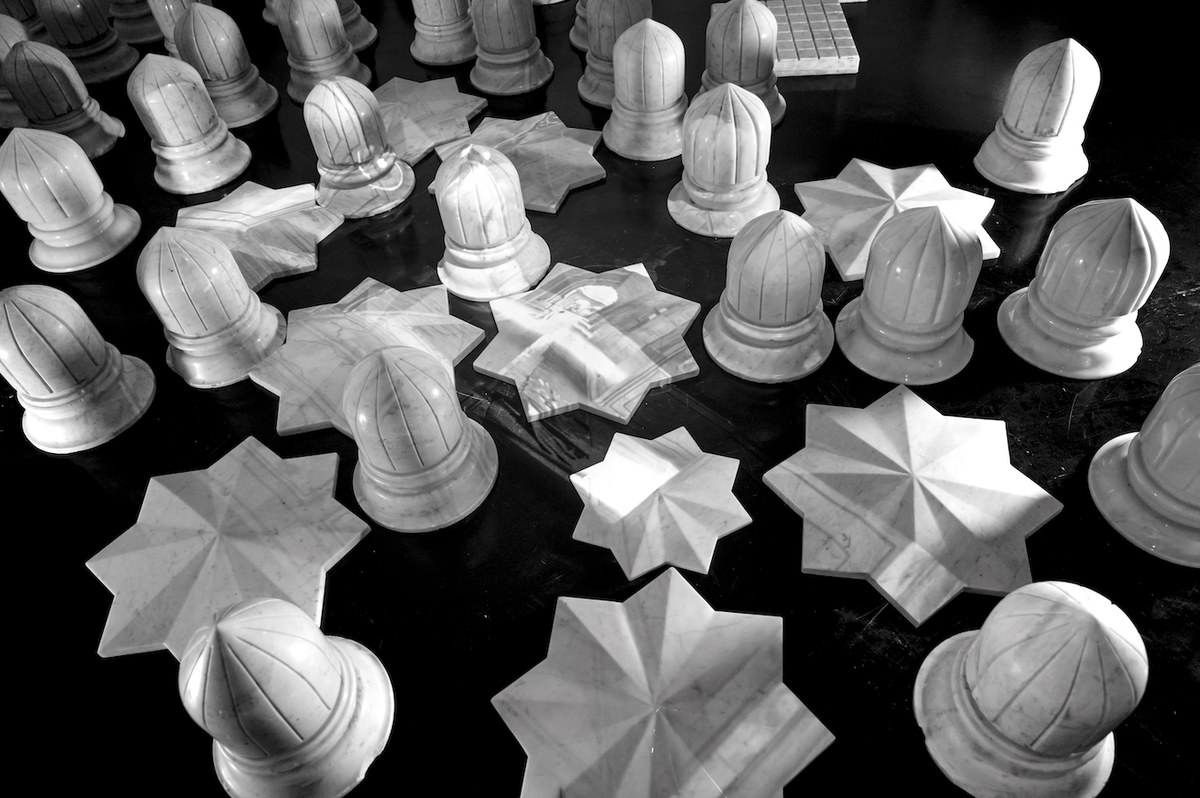


“If Stone Could Speak” is by Sultan bin Fahad. (Supplied)

The buzz of background voices; the scent of incense, perfume and smoke; the sound of water; flavors and gestures; all of this combines to draw you into bin Fahad’s work and envelope you in an atmosphere of sanctity and ritual and spark a connection to the divine.

Bin Fahad, born into the Saudi royal family in Riyadh in 1971, began his artistic journey as a painter, but has since adopted a more expansive practice. His works focus on material culture in Saudi Arabia and explore themes including Islam, and Saudi history and identity. He has participated in solo and group exhibitions in galleries worldwide, including the UAE, the US, Italy, Saudi Arabia, and Palestine.

He searches regularly for antiques and bric-a-brac in varied and unexpected places, including flea markets and abandoned buildings or ruins, reimagining these found objects into artworks.
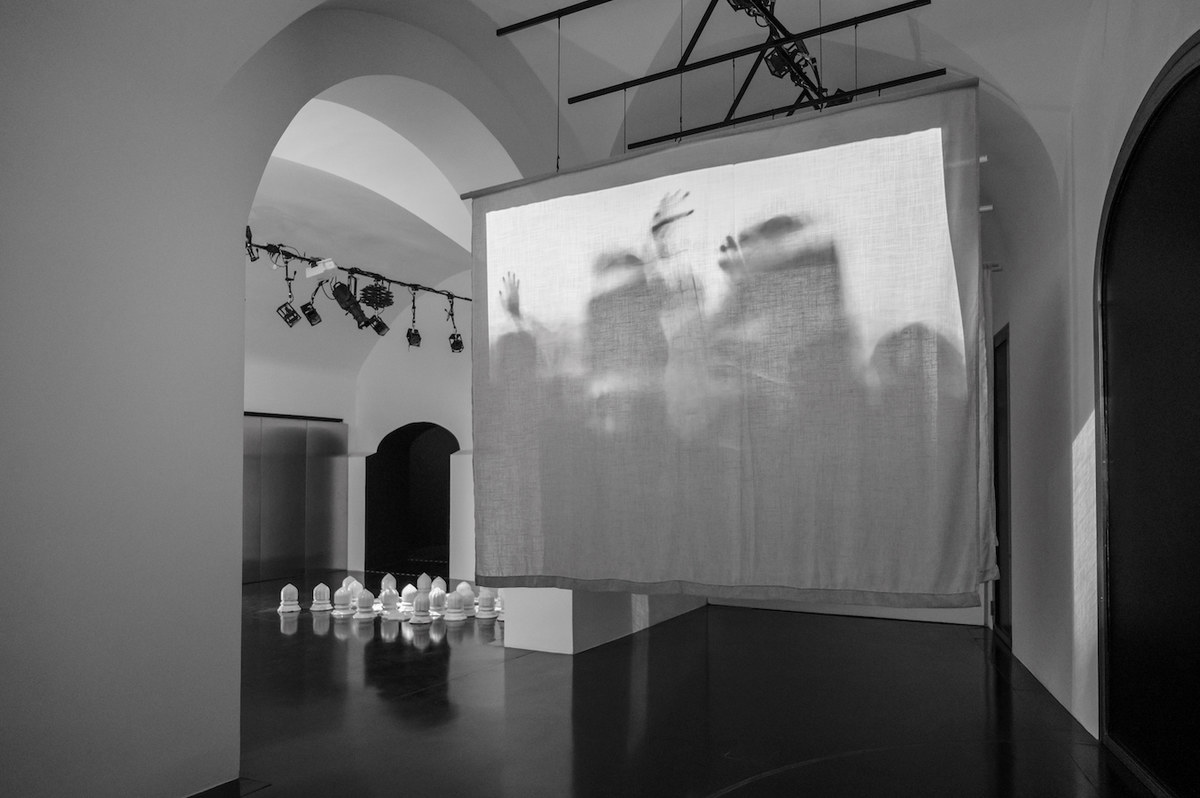


“Possession” is by Sultan bin Fahad. (Supplied)

“One man’s trash is another man’s treasure,” he said — a motto borne out by his “Red Palace” exhibition in Jeddah in 2019, which he described as “a series of critical material investigations of the region.”

During that exhibition, bin Fahad was approached by the Fendi foundation team and invited to represent Saudi Arabia in their unique centuries-old gallery in Rome, he explained to Arab News.

While researching both the history of the building and of Rome’s position as the home of the Catholic Church, bin Fahad began to look for a common link between himself and the city. So he decided to explore spirituality through his personal spiritual experience as a practicing Muslim, because that is what he is familiar with and that is what impacted him and his artistic practice.
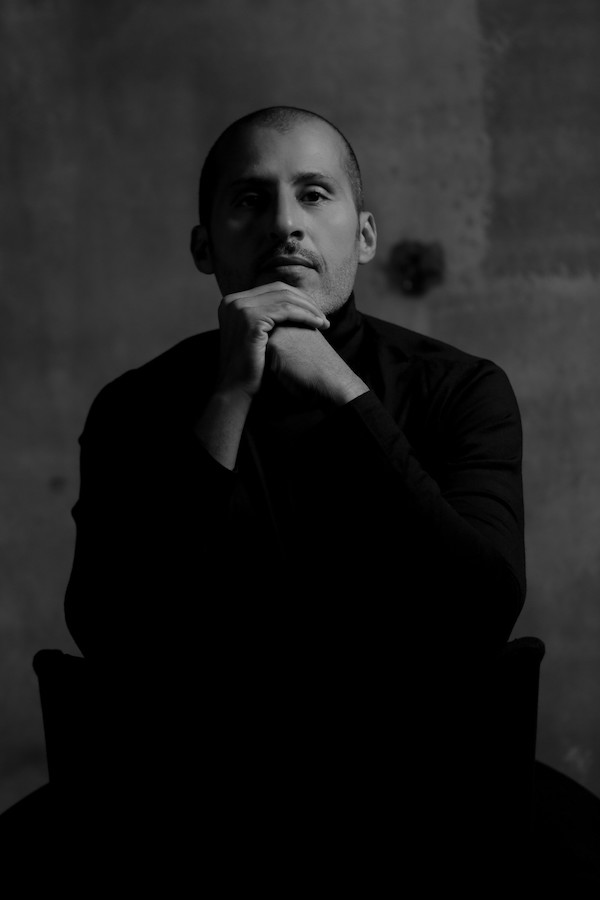


Sultan bin Fahad is staging his first solo exhibition in Europe, “Frequency.” (Supplied)

“The journey that I tell is the one to the heart: the temple of the deepest feelings,” bin Fahad told Arab News. “You do not see and feel what other people feel or see. You are alone with yourself, right at the moment that you are looking for the greatest feeling of humanity and belonging.”

The exhibition aims to imitate people’s experience when they visit religious sites and try to connect spiritually through all their senses. Visitors should be provoked by and engage with the exhibition’s journey, but without limitation or expectations. Bin Fahad does not seek to force a specific perspective onto them.

The six installations light up like candles in the dark thanks to the lights that shape the works in the dimness, and the video projectors that display words and images in concentric and continuous loops.
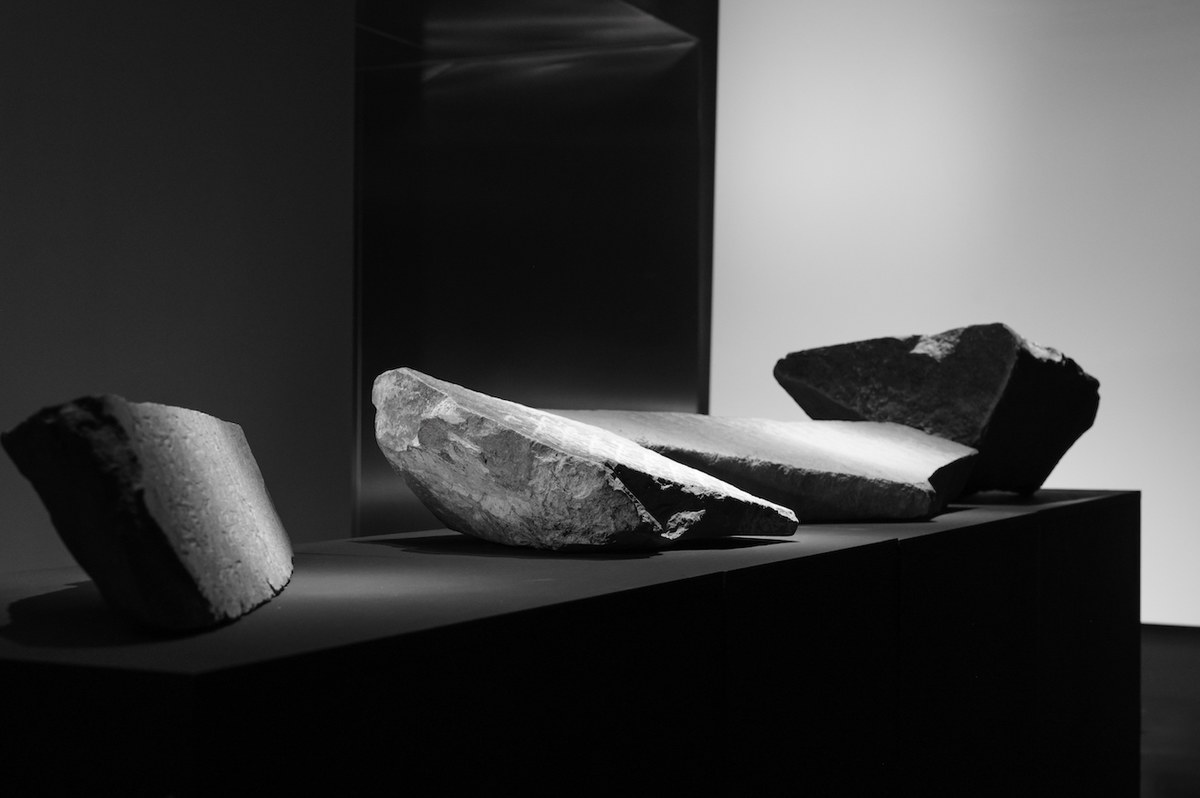


“Been There” is by Sultan bin Fahad. (Supplied)

The artist wanted to reconstruct a spiritual experience through distinct installations that tell the history of intimacy in each of us: the ritual, the sign, the voice, the hands, the water, the sounds. One of the pieces, “Possession,” consists of an image of hands trying to touch the tomb of Prophet Muhammad. “White Noise,” meanwhile, occupies two rooms in which recordings of pilgrims’ prayers in Makkah play. “If Stone Could Speak” is a video piece showing men and women praying.

He has blended religious antiques with new technologies and old gestures — rituals as vehicles of meaning — as well as syncretism, to take visitors on a journey that sparks curiosity and the questioning of personal beliefs, and an awareness of the inner-self and others.

“All the recordings I made in Madinah and Makkah, as well as the pieces used, are real and organic, they were not staged, everything is authentic,” bin Fahad pointed out. “I was witnessing how people behaved behind the curtains and picked up my phone and recorded that. In truth, it is the starting point for a timeless and placeless journey where people can find themselves united by the search for the root of their being and their existence.”
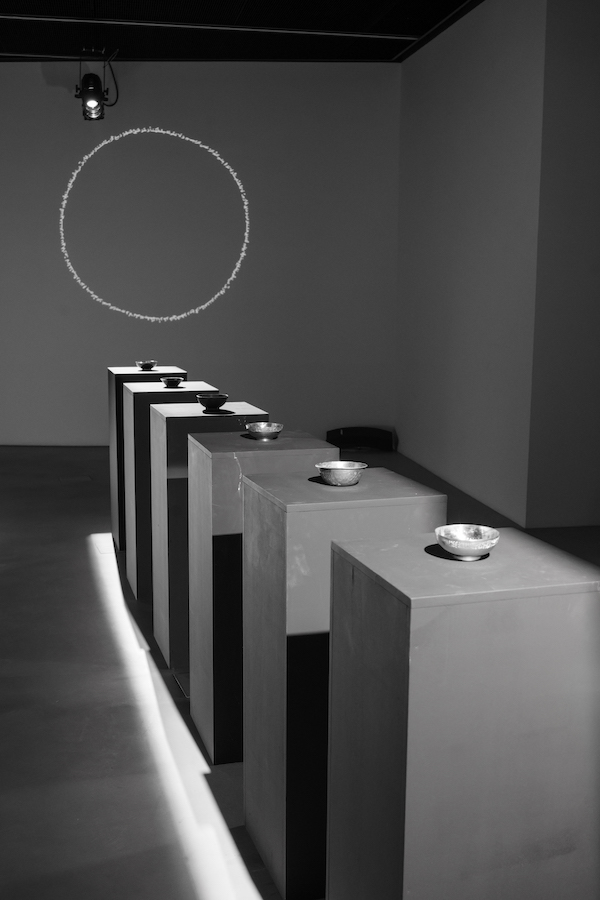


“The Verse of The Throne” is by Sultan bin Fahad. (Supplied)

The gallery itself helps reinforce the atmosphere of the exhibition. The architecture complements the pieces, and invokes a certain mood, while the flow of “Frequencies” creates a harmony between physical, sensory and mental planes.

As bin Fahad explained, “Frequencies” — like so many cultural events — was delayed by the COVID-19 pandemic. But in this case, he said, that delay actually proved to be a positive thing.

“The exhibition was meant to be in March, but the pandemic and lockdown canceled everything,” he said. “However, the development and the progress that led to the launch of the exhibition now has matured the experience into the right development, and I’m very happy with that.”
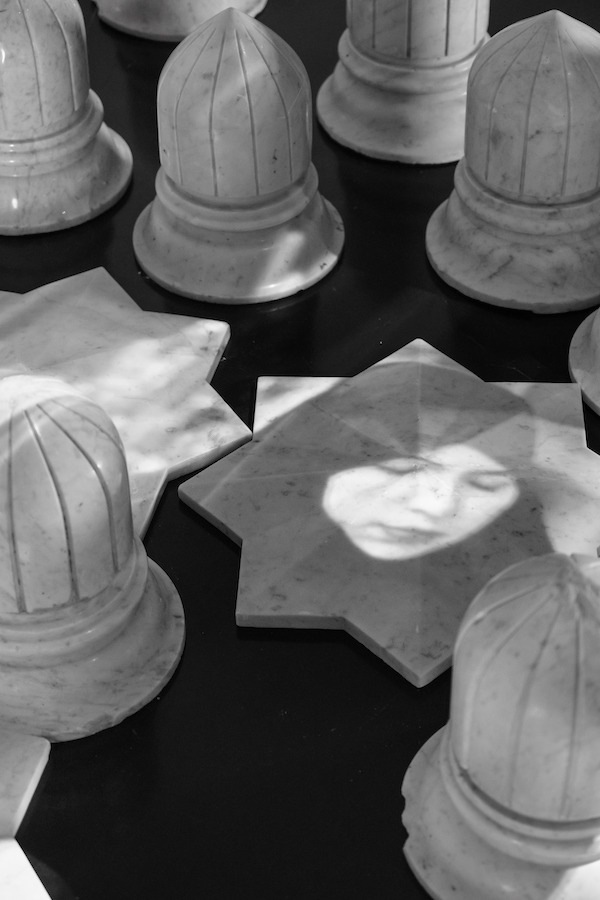


“If Stone Could Speak” is by Sultan bin Fahad. (Supplied)

He believes the exhibition is particularly appropriate at this time, after all that has happened in the world during 2020.

Bin Fahad told Arab News that the exhibition had received a lot of positive feedback so far, and that many people would like to see it recreated in Saudi Arabia, a possibility he is equally excited by.

For bin Fahad, art is a bridge between intangible memories and tangible cultures. In his practice, he reinterprets narratives by transforming objects — a contemporary means through which to assess and present his personal take on Saudi Arabia.


Ramadan routines around the Kingdom 

Updated 26 February 2026
Follow

Ramadan routines around the Kingdom 

RIYADH: Saudi Arabia is home to a diverse array of Ramadan customs, with each region boasting time-honored traditions. Here  is how the holy month is celebrated in various parts of Saudi Arabia.

NAJD 

One of the most significant Ramadan traditions in parts of Najd is Isha Al-Walidayn (the ‘parents’ dinner’), in which families prepare meals that are shared with relatives, neighbors and those in need. Often organized by neighborhood groups, the gatherings take place during iftar or after taraweeh. Families either invite relatives, neighbors and passersby to share the meal at home or send dishes to surrounding households and those in need. 

While rooted in charity, the tradition is equally about memory and community, offering a way to honor loved ones while strengthening social ties.  

In places including Qassim, the practice may be repeated several times throughout the month. The custom has been passed down through generations and remains part of Najd’s social fabric, reflecting the family-centered rhythm of Ramadan in the area.  

Hajar Alqusayer 

HIJAZ 

For more than a century, the chant of “Sidi Shaheen” has echoed through the narrow alleys of Madinah, marking the approach of Ramadan and signaling one of Hijaz’s most cherished folk traditions. Observed in the second half of Sha’ban — the month preceding Ramadan — the custom sees groups of boys walking through neighborhoods, singing traditional verses in celebration of the holy month’s imminent arrival. The practice remains particularly strong in Madinah, though it is also known across the wider Hijaz region. 

As part of the tradition, children carry a small container known as a quff, used to collect sweets, nuts and coins offered by households they visit. Moving from door to door, they chant in unison, their songs met with open doors and generous smiles. 

In preparation, families stock up on treats — particularly nuts and traditional sweets such as mushabak (pictured) — ensuring they are ready to share in the joy. 

Nada Hameed 

EASTERN PROVINCE 

Gargee’an is a traditional festival which is primarily celebrated mid-Ramadan in Gulf countries; specifically Kuwait, Bahrain, Iraq, the UAE, and in Saudi Arabia’s Eastern Province. It is not commonly observed in other parts of the Kingdom.  

Traditionally, boys in crisp white thobes and girls adorned in intricate jalabiyas go door-to-door in their neighborhoods and collect sweets and goodies in their handwoven baskets. It is a chance for them to reconnect with the community and spread colorful cheer. 

In recent years, however, the King Abdulaziz Center for World Culture (Ithra) in Dhahran has staged its own Gargee’an, providing candies for the kids as well as numerous indoor and outdoor activities for youngsters of all ages — including the young at heart — alongside performances of traditional folk songs and other live shows. 

The main plaza at Ithra, the Library and Energy Exhibit will each have Instagram-worthy moments. Entry to the center is free, though certain events — such as those at The Children’s Museum — require you to purchase tickets on the premises. 

Jasmine Bager 

JAZAN 

In Jazan, Ramadan is scented with wood smoke and freshly baked bread. Across villages and coastal towns, families still use the traditional mifa — a clay oven — to prepare corn and millet breads to eat at iftar. A staple of the season is mafalt (pictured), a creamy mixture of flour and milk often eaten at suhoor, valued for its simplicity and ability to sustain you through long fasting hours.  

Another distinctive feature of Ramadan in Jazan is the communal spirit of preparation. Neighbors exchange dishes before sunset, ensuring no table is without the region’s signature flavors. Evenings often extend into open-air gatherings where stories are shared and elders recount how Ramadan was observed generations ago. In Jazan, the holy month is less about extravagance and more about preserving culinary heritage and close-knit community bonds.  

Rahaf Jambi 

HAIL 

Since Ramadan this year is taking place while the weather in Hail is still relatively cool, it has been common to see dozens of people gathering along the banks and beds of nearby valleys — particularly in Mashar, Tuwaren, and Naqbin in the late afternoon, setting up seating and making arrangements for iftar. 

Coffee and tea are typically brewed over a fire, and participants often bring homemade dishes including lamb or chicken soups, vegetable or meat pastries, and Hail-style keubaiba —square-folded vine leaves filled with rice and a blend of spices, including cumin, black pepper, and dried lime. Sometimes, participants pool resources to buy a young lamb to eat. The liver is seasoned and cooked with onions, while the rest of the meat is prepared with rice for consumption at suhoor. 

Between iftar and suhoor, people socialize or play volleyball — a favorite activity for many Saudis during Ramadan. 

Hebshi Alshammari 

QATIF 

On the fifteenth night of Sha’ban, and again in the middle of Ramadan, children run through the streets of Qatif in traditional dress, going from house to house in celebration of Nasfa, a holiday celebrated in cities across the Arab world, but, in Saudi Arabia, only in Qatif (although it is practically identical to Gargee’an).  

“This celebration is not a fleeting ritual; it is a collective memory, a bridge connecting past to present,” Ismail Hejles, a Saudi researcher of traditional architecture from Qatif, told Arab News. “It teaches that religion was never meant to be stern, and that joy can be part of worship when it is pure.” 

Historians suggest the custom of children going door to door to receive gifts developed in tightly knit urban neighborhoods, where strong community bonds allowed the practice to flourish. And Nasfa is not just a distribution of sweets; it is a distribution of joy.  

“On that night, homes are equal,” Hejles said. “The rich give, and the poor give. The child is not asked who they are or which family they belong to.” 

Tamara Aboalsaud