DUBAI: The world’s largest dhow, Obaid, is soon going to set sail from Dubai for the Pakistani port of Karachi, in an Emirati man’s attempt to fulfill his late father’s dream.
The dhow was certified by the Guinness World Records on Wednesday as the biggest traditional lateen-rigged coastal Arab sailing vessel. It was named after Emirati shipbuilder Obaid Jumaa bin Majid Al-Falasi.
Al-Falsi’s son, Majid Obaid Al-Falasi, told Arab News on Sunday that he is planning to pursue his father’s dream and set sail for Karachi in two months to reach the port where his father built the first boat four decades ago.
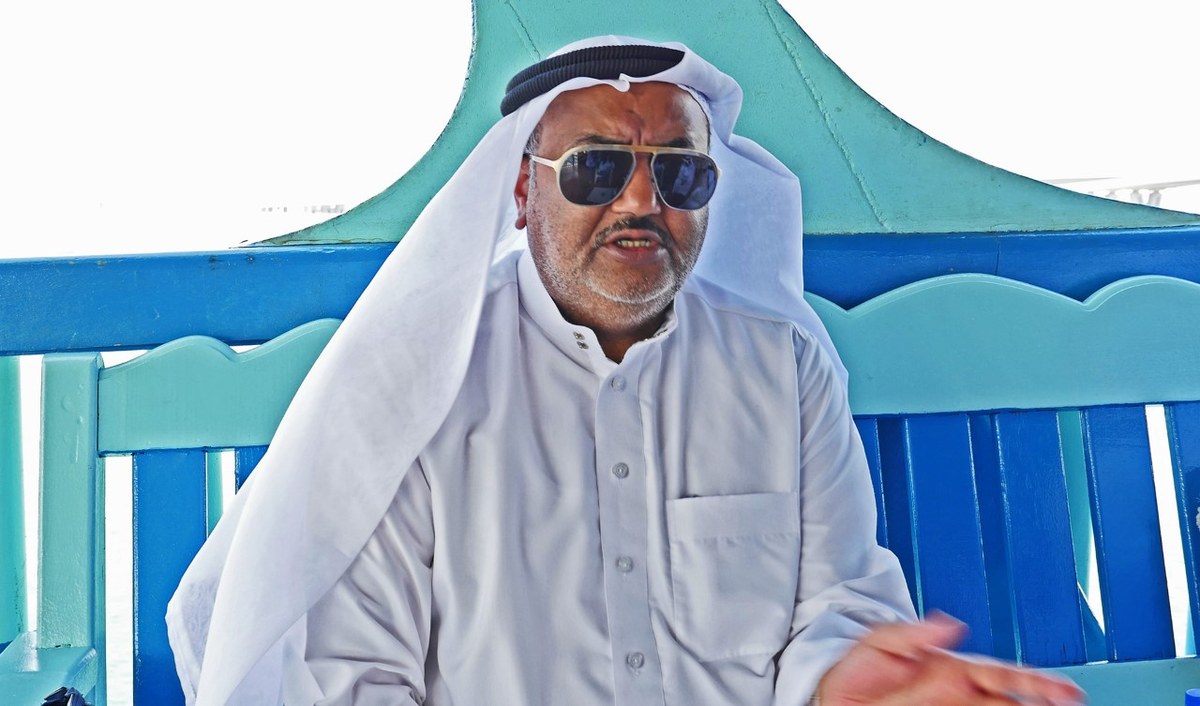
Majid Obaid Al-Falasi who built the world’s largest dhow talks to Arab News aboard the boat in Dubai on Nov. 1, 2020. (AN photo by Asma Ali Zain)
“In 1975 my father went to Karachi and built a boat there which was even then the biggest boat in Pakistan, and named it Al-Fateh,” said the chief executive of shipbuilding company Obaid bin Jumaa bin Suloom, which was founded by his father in 1972.
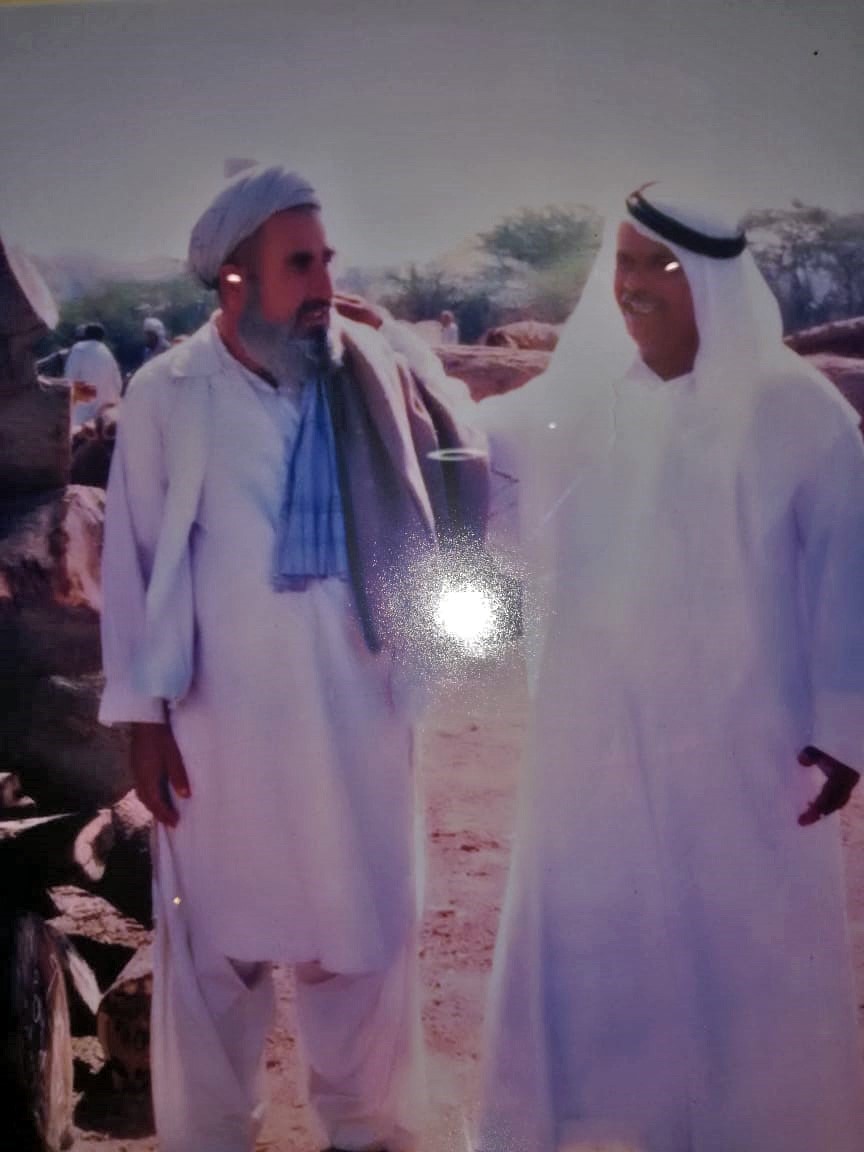
Obaid Jumaa bin Majid Al-Falasi during a visit to Karachi in 1992. (Photo courtesy: Majid Obaid Al-Falasi)
“It all started from Karachi after which my father started making dhows here in Dubai. He made over 2,500 dhows in his lifetime,” Al-Falasi said.
“My father was a dhow builder and did it as a business. He wished in the 70s to build the world’s largest boat. And here in the UAE we have a desert, not a forest so he used to visit Pakistan and India where all such material is available.”
Karachi-made Al-Fateh was completed in 1976, after which the pioneer shipbuilder returned to the UAE. Al-Falasi recalled how the boat bewildered everyone when it docked in Dubai.
“When he came back to the UAE, the biggest boat at that time weighed 180 tons and our boat, that was made in Pakistan, weighed 300 tons,” he said. “When he brought it to Dubai, the traditional people made fun and questioned as to how it will work.”
The Obaid, built in remembrance of Al-Falasi’s father, is several times bigger than Al-Fateh. Its construction started three and a half years ago.
The dhow stands at a height of 11.229 meters and weighs 2,500 tons, measuring 91.47 meters in length and is 20.41 meters wide — the length and almost half the width of a standard American football field. Balancing this huge structure on either its bow or stern vertically would make it almost as tall as the Big Ben in London.
It was constructed from material sourced both locally and abroad and will have an estimated load capacity of up to 6,000 tons. Around 1,700 tons of wood and 800 tons of steel were used to construct it. The wood was brought from Africa.
“We tried to get the longest pieces of log available. We are born as dhow builders, and can build dhows using other material, but wood keeps its identity,” Al-Falasi said.
With steel structure added, the dhow is stronger than a traditional one and will be able to carry four times more cargo. It is powered by two 1,850-horsepower engines.
“This achievement is just the inevitable continuation for building dhows in the world,” the shipbuilder explained.
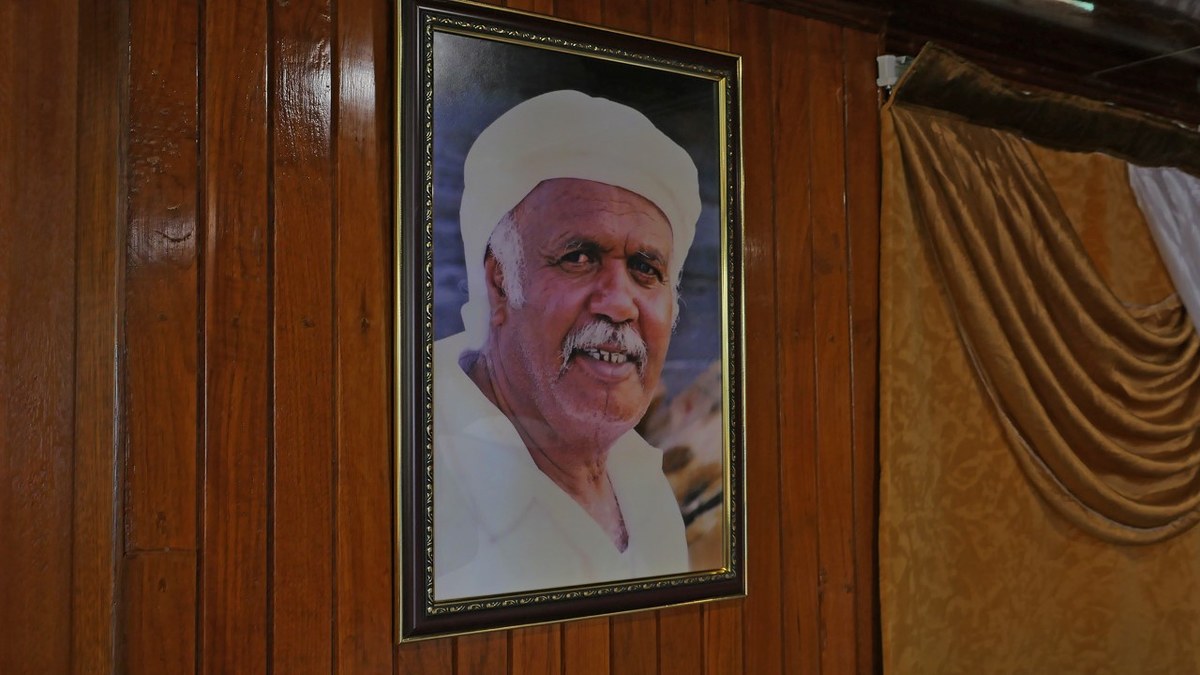
Obaid Jumaa bin Majid Al-Falasi's portrait hangs in a cabin in the world’s largest wooden Arabic dhow on Nov. 1, 2020. (AN photo by Asma Ali Zain)
Al-Falasi’s father passed away in 2009, but his legacy is alive and thriving in the family.
“I now see it in the eyes of my son. He is passionate about what I do, and what his grandfather used to do,” Al-Falasi said.
“This is what matters, for them to be able to continue the tradition and have it transferred to the next generation.”