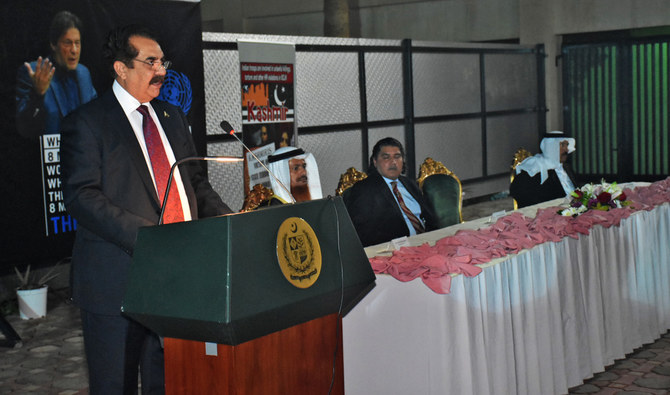

ISLAMABAD: Former Pakistan army chief Gen. Raheel Sharif said that Pakistan supports the Kashmiri cause with an "unflinching resolve."
The general's comment came during a seminar, "Human Rights Situation in Kashmir: Implications for Regional Peace and Stability," organized by the Pakistani embassy in Riyadh to observe Kashmir Black Day on Thursday.
"Let it be known that every citizen of Pakistan stands united with the people of Kashmir and supports their struggle for freedom with an unflinching resolve," said Gen. Raheel Sharif, who now leads the Islamic Military Counter Terrorism Coalition, a counterterrorist alliance of Muslim countries, which is headquartered in Saudi Arabia.
"The issue of Kashmir is very close to every Pakistani’s heart as we fully understand the cause and dynamics of this struggle right from the beginning. We have closely witnessed the sufferings of our Kashmiri brethren and appreciate their resolve and valor in pursuit of their goal and fundamental human rights."
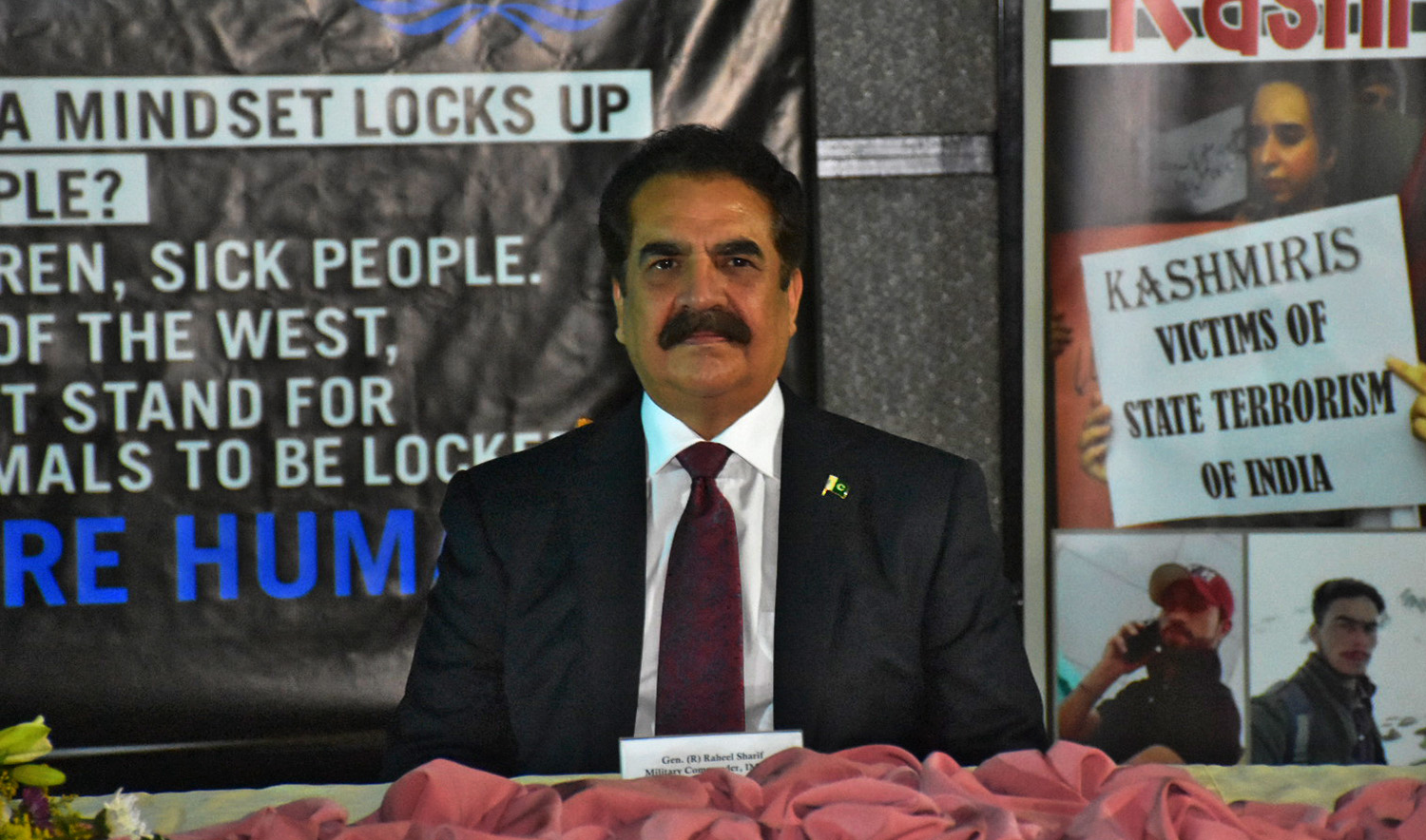
Former Pakistan army chief Gen. Raheel Sharif participates in a seminar organized in Riyadh by the Pakistani embassy to observe Kashmir Black Day on Thursday, Oct. 29, 2020. (Pakistan Embassy Riyadh via AN)
Kashmiri territory is divided between India and Pakistan, but both countries claim the region in its entirety. Crackdowns in the Indian-administered part have been escalating since August 2019, when New Delhi scrapped Articles 370 and 35A of the constitution, which gave Kashmiris limited autonomy and protected their domicile and employment rights.
If not reversed, the Indian regime's August move, Sharif said, will cause "further unrest in the region."
Saudi Arabia's former ambassador to Pakistan, Ali Awadh Asseri, who was one of speakers in the seminar, said that last year's change in Kashmir's status "through annexation and division of the internationally recognized disputed region," as well as subsequent lockdown and "enforced demographic shift currently underway" have aggravated the humanitarian crisis in the region.
"Kashmiri people are facing a more dangerous situation now as every passing day is marginalizing their political status and socio-economic space," he said during the seminar, as he recalled serving in Pakistan and leading Saudi relief efforts after an earthquake that devastated Kashmir in 2005.
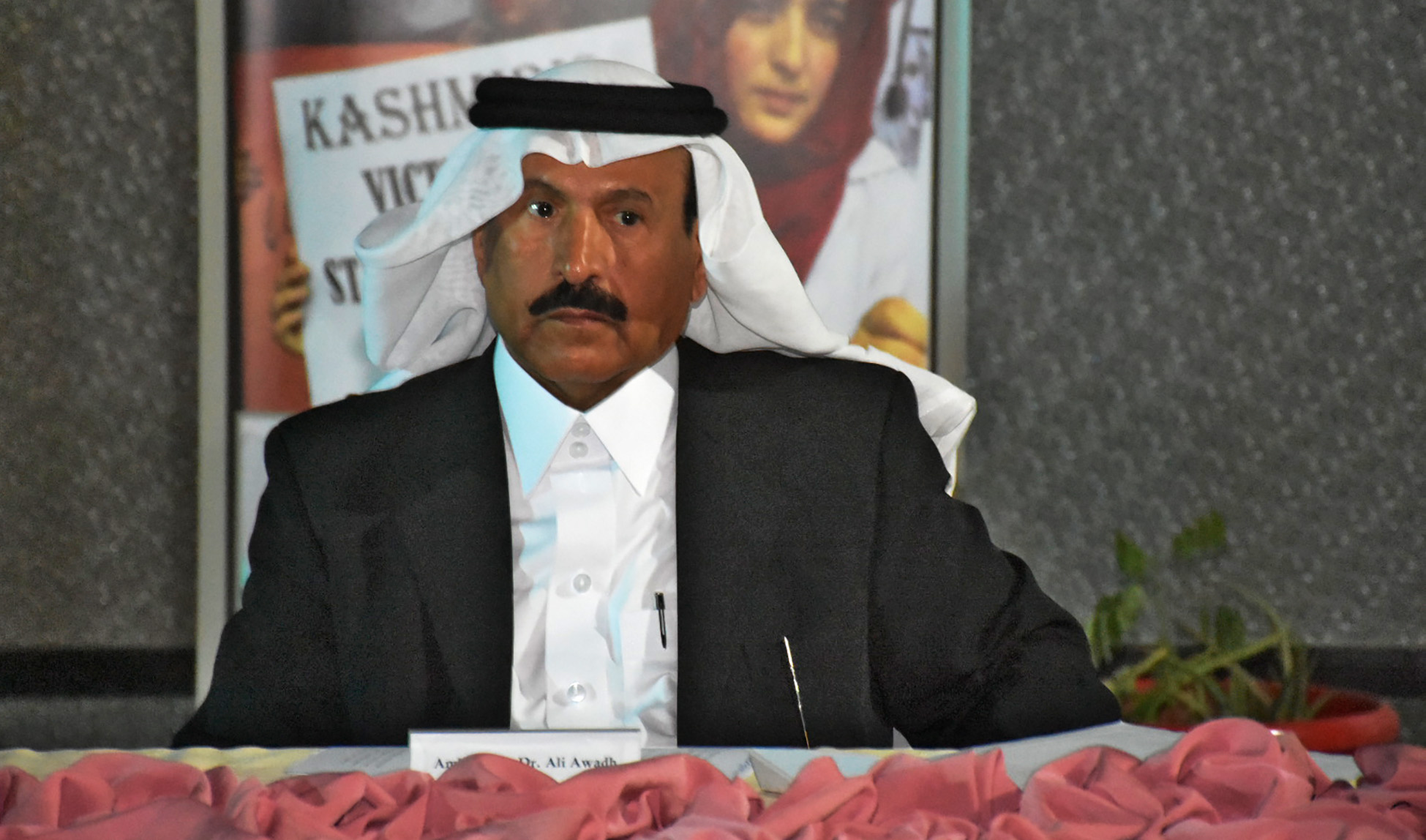
Saudi Arabia's former ambassador to Pakistan, Ali Awadh Asseri, participates in a seminar organized in Riyadh by the Pakistani embassy to observe Kashmir Black Day on Thursday, Oct. 29, 2020. (Pakistan Embassy Riyadh via AN)
He said the relief could not reach the Indian-administered part of the territory, as New Delhi did not grant access. "We remember that Kashmir on the other side of LOC also faced devastating effects of the earthquake but could not do much due to lack of access by the Indian authorities."
"Kashmiri people want to live their lives according to their free will and India has denied this basic right and instead chosen the path of repression," Asseri added.
"The Kashmiri demand of self-determination is not only the moral right but also legally justified under UN security council resolutions."
India on Wednesday notified new laws that allow non-Kashmiris to buy land in the disputed region, rising concerns that the new regulation would dilute the Muslim-majority character of the region.
"Contrary to Indian claims of bringing development to the Kashmir valley, the real motive remains altering the demographics of the Muslim-majority territory," Islamabad's ambassador to Saudi Arabia, Raja Ali Ejaz, told Arab News after the seminar.
He added that the Pakistani government remains "fully committed to the Kashmir cause."