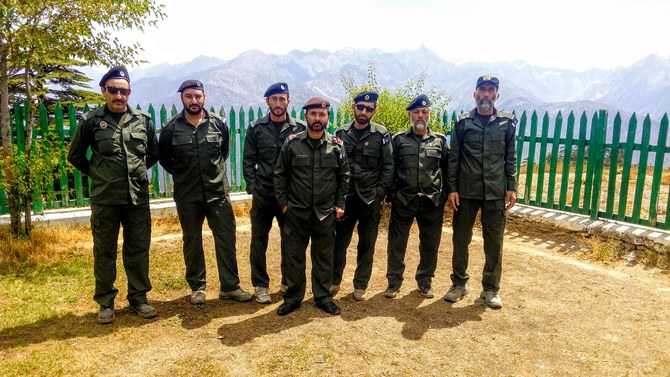

ISLAMABAD: Incidents of illegal logging and poaching of the endangered Kashmir markhor, Pakistan’s national animal, have been on the rise at the country’s largest reserve as watchmen have refused to show up for work at the wildlife sanctuary over unpaid salaries.
Chitral Gol National Park (CGNP) was established in 1984 and spreads over 77.5 square kilometers in Pakistan’s northwestern Khyber Pakhtunkhwa province. The sanctuary is home to the large markhor goat, snow leopards and other vulnerable species.
In 2000, the park began recruiting wildlife wardens from local communities to protect the reserve from poachers. The scheme worked well and in the past two decades the markhor population has increased manifold and illegal logging of the endemic evergreen Himalayan cedar tree (deodar) has also been kept in check.
“All the time I roamed around to keep an eye so that no one should harm markhor or cut deodar trees,” Bashir Khan, a watchman who has been working at the park for the past eight years, told Arab News.
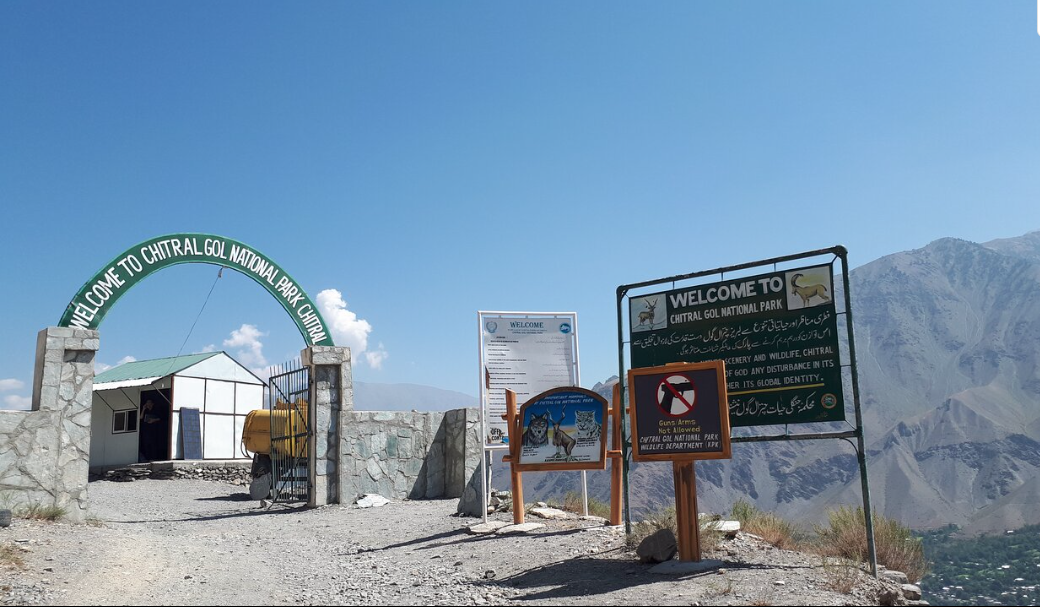
The entrance of Chitral Gol National Park on June 8, 2020. The park in Pakistan's Khyber Pakhtunkhwa province is home to the large goat, snow leopards and other vulnerable species. (Photo courtesy: Chitral Gol National Park)
But for a year now, Khan said, he and other wardens had not received their salaries, which had forced them to boycott work.
“Along with other 11 community watchmen I have not been paid for last one year,” he said. “My salary is Rs15,000 ($92) only, but still not paid.”
With the watchmen away, poaching incidents have become more frequent.
“We have arrested some people and also put heavy fines on others for illegal hunting during last few months in CGNP,” the CGNP’s divisional wildlife officer, Sarmad Hussain Shah, said. He said the markhor population in the Chitral Gol area had increased from 400 to 4,000 last year, with community watchmen playing a key role in protecting the threatened mountain goat from illegal hunting.
#LISTEN: CGNP’s divisional #wildlife officer, Sarmad Hussain, highlights the steps taken by govt. for conservation of specie of Kashmir #markhor & snow leopard in #Chitral || @DCLowerChitral #Pakistan #Poaching
-
Read special by @iSaimaShabbir: https://t.co/mt8LAU8vVN pic.twitter.com/NMTv9SnBk4— Arab News Pakistan (@arabnewspk) October 23, 2020
“We have around 45 people, including the community watchers, to look after this park.” Shah said. “They were very helpful in managing, conservation and protection in the park.
”The community participation program was launched under the Protected Areas Management Project (PAMP) in 2000, CGNP Association chairman Alamzeb Advocate told Arab News.
“PAMP ended in 2007 and to continue protection of the park, the federal government established an endowment fund, Fund for Protected Areas (FPA) with Rs220 million, in 2009,” he said.
But FPA has not released any funds for the last year, and so the watchmen have gone unpaid.
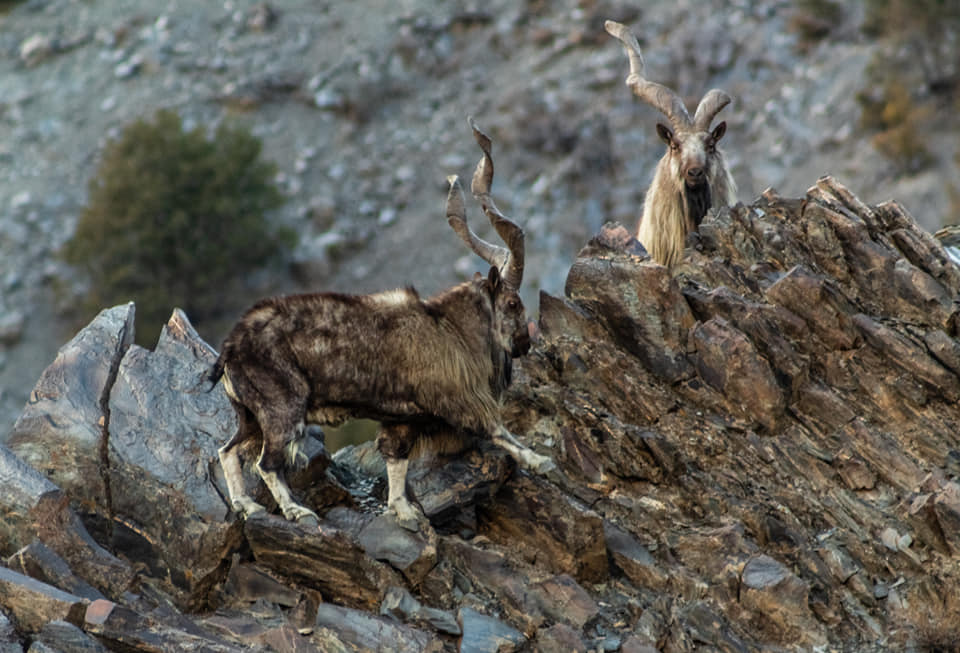
The nearly threatened Kashmir markhor, a large goat species native to Kashmir and northern Pakistan, is seen at Chitral Gol National Park (CGNP) in Khyber Pakhtunkhwa, Pakistan, on February 8, 2020. (Photo courtesy: Chitral Gol National Park)
Ironically, the negligence coincides with the introduction of Green Stimulus, a new government program approved in May, which aims to increase the coverage of protected areas in Pakistan from 12 to 15 percent and create jobs in the conservation sector.
“On the one hand, the government has expressed a commitment to increase protected areas as part of its Green Stimulus package, while on the other side they are creating hurdles in a successful project by freezing its funds,” FPA chairman and former provincial chief conservator Muhammad Mumtaz Malik told Arab News.
“The money is there in the bank, but federal government-appointed chief executive is not convening the meeting of FPA board, without which funds cannot be withdrawn,” he said.
Malik said the huge park had already been forced to reduce the number of community watchers from 28 to 11 despite the “amazing results” achieved by them.
“I have written to chief executive FPA and federal secretary climate change ministry, but they haven’t responded yet,” he said. “This was a landmark project, as for the very first time the management of national parks involved communities within and around the protected areas and it has produced amazing results.”
According to Muhammad Suleyman Khan Warraich, interim chief executive of the FPA, the salaries of wildlife wardens had been deferred due to issues at the Securities and Exchange Commission of Pakistan and other company-related matters.
“We are resolving it,” he said, “and soon it will be settled.”