

Saudi Arabia signs MoUs with IBM, Alibaba and Huawei on AI

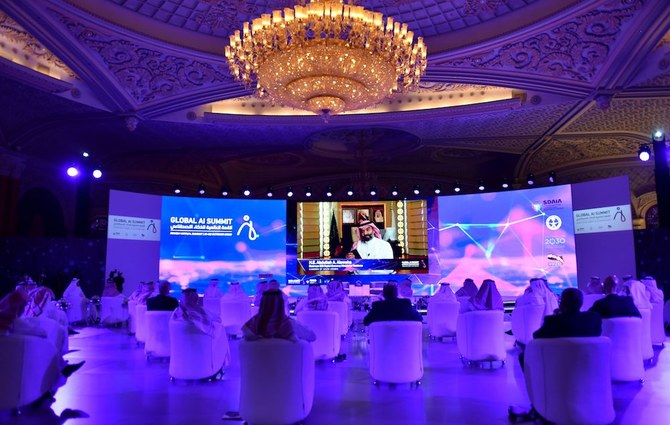
Guests attend the Global AI Summit in the Saudi capital Riyadh. (AFP)
Short Url
Updated 22 October 2020
Follow

Saudi Arabia signs MoUs with IBM, Alibaba and Huawei on AI

  • Deal with Alibaba cloud will 'help Saudi Arabia’s journey to develop world-class smart cities'

RIYADH: The Saudi Authority for Data and Artificial Intelligence (SDAIA) on Thursday signed memorandums of understanding (MoU) with IBM, Alibaba and Huawei in areas of artificial intelligence (AI) at a summit.

SDAIA and Alibaba Cloud announced an MoU to partner in supporting Saudi Arabia’s path to develop smart cities through AI. “Saudi Arabia’s Vision 2030 has clear goals to transform (the Kingdom’s) cities into smart ones by unlocking the value of city data as a national asset to realize Vision 2030 aspirations,” said Abdullah bin Sharaf Alghamdi, president of SDAIA.

SDAIA and Huawei signed an MoU to recognize the Arabic language and its characters using AI technology and with the help of researchers from the Kingdom and Huawei, according to SDAIA’s Twitter account.

SDAIA is seeking IBM’s help in developing “real use cases” of AI in areas of health, energy and other sectors, as well as training through a strategic relationship, it said.

Saudi Arabia wants to train 20,000 people over the next decade in the field of AI.

“The International Telecommunication Union (ITU) will share the best practices in the field of AI with the Kingdom. This will help in shedding light on how to sponsor and support emerging companies and new incubators in the national space, especially as there is no official framework that currently exists to support the AI readiness of countries and international cooperation,” Alghamdi said.

Mishari Almishari, deputy director of the National Information Center, told Arab News: “We need to have clear work procedures before we reach the phase of agreements that achieve the interests of the parties concerned. The development of AI research and innovation have really begun now.

“The summit was a resounding success and the participants were supposed to be physically present but we decided to organize it virtually and it came out well. We are proud of the speakers. Over 12,000 people attended virtually and over 60 speakers gave speeches.

“AI is replete with challenges and questions which need to be answered. Saudi Arabia organized this international dialogue so that initiatives and solutions come from here,” he added.

“The success of the first virtual summit gives us hope that the second one will succeed with physical presence of all participants and attendees. At SDAIA we look forward to AI global dialogue and enhancing Saudi Arabia’s position as a global AI hub. This is one of the reasons why we organized the event.”

Charles Yang, president of Huawei Middle East, said: “Huawei has adopted an ambitious long-term research and development strategy regarding AI, creating unprecedented opportunities through the synergy of AI with 5G connectivity, cloud, computing, and industry applications. In cooperation with SDAIA, we look forward to creating new value across these tech domains, collaborating with local AI developer and industry partners to transform the Kingdom into a leading data-driven economy.”

Houlin Zhao, ITU secretary-general, said: “AI is being used to tackle the world’s most pressing challenges, from climate change to the (coronavirus disease) COVID-19 pandemic. With only 10 years left to achieve the UN sustainable development goals, ITU looks forward to working with SDAIA to develop projects and initiatives that can accelerate the progress toward the SDGs and promote AI as a force for good for humanity and the planet.”

The Global AI Summit is an international showcase for the Kingdom of Saudi Arabia to help achieve the objectives of Vision 2030, strengthen the nation’s role and spearhead global efforts in AI.

It is a unique annual platform that encourages discussions, collaborations and networking opportunities between thought leaders, innovators and decision-makers from all over the world, with the aim of mapping the future of AI.


How KAUST is transforming waste into wealth

Updated 6 sec ago
Follow

How KAUST is transforming waste into wealth

  • Researchers target $275m market with waste-to-value algae innovation

RIYADH: Turning food waste into a valuable industrial product may sound improbable, but scientists at King Abdullah University of Science and Technology are proving it is possible — using algae that has existed for millions of years. 

Last month, researchers at the university unveiled a sustainable method that harnesses an ancient red microalga to reduce food waste in the Kingdom while producing a high-demand natural pigment.

The study was led by bioengineering student Mauricio Masson, with support from Michael Fox, assistant professor of marine science, alongside researchers from KAUST and the Arizona Center for Algae Technology and Innovation. The international team included Kyle Lauersen, KAUST associate professor and lead author of the study.

Scientists at King Abdullah University of Science and Technology (KAUST) developed a sustainable method to use an ancient type of algae while reducing food waste in the kingdom. (Supplied)

The research highlights a “sustainable bioprocessing” approach, demonstrating how an aquatic plant can convert chocolate factory waste into C-phycocyanin — a blue pigment with a global market expected to reach $275 million over the next four years.

“Our research focused on an extremophilic red alga that can thrive in harsh conditions and efficiently consume sugars and nutrients found in food waste streams,” said Lauersen.

Lauersen is an associate professor and chair of the bioscience and bioengineering programs in the Biological and Environmental Sciences and Engineering Division at KAUST. He explained that a key objective of the study was to show that food waste — often discarded or sent to landfills — can be repurposed as a feedstock for producing high-value compounds, including natural pigments and proteins, through algae-based bioprocesses.

“Our main goal was to develop an environmentally friendly approach to turn waste into useful products that have the potential to be scaled,” Lauersen told Arab News.

FASTFACT

Did you know?

• By 2030, the global market for C-phycocyanin is projected to exceed $275 million, reflecting growing demand across food, health, and industrial sectors.

• C-phycocyanin has demonstrated potential benefits in antioxidation, inflammation, cancer research, antimicrobial activity, neurodegeneration, diabetes management, and wound healing.

• As a natural pigment, C-phycocyanin offers a healthier alternative to synthetic food colorants and is approved by the US FDA for use in food products.

He added: “Algae are especially well suited for this because they grow quickly, require relatively few resources, and can metabolize a wide range of organic compounds.”

The red microalga Galdieria yellowstonensis feeds on chocolate waste rich in residual sugars, producing a protein-dense biomass that contains C-phycocyanin, according to KAUST. The pigment is widely used as a natural food coloring — found in products such as ice cream and blue-colored beverages — as well as in cosmetics and pharmaceuticals.

Beyond the study’s original goals, researchers also discovered that elevated levels of carbon dioxide significantly enhance algae growth, even though CO₂ is typically considered a byproduct of microbial sugar consumption.

Another major outcome of the research is its potential to reduce land pollution by transforming food waste into a nutrient source for algae, offering a sustainable alternative to disposal. 

Galdieria yellowstonensis feeds on chocolate waste containing residual sugar, producing a protein-packed biomass that includes C-phycocyanin. (Supplied)

KAUST believes the findings could positively impact Saudi Arabia’s economy by helping food manufacturers lower production costs while addressing environmental concerns.

“The species we studied can grow on waste streams that are unsuitable for conventional crops or microorganisms,” said Lauersen.

“This makes algae an attractive platform for circular economy solutions, where waste is transformed directly into valuable materials rather than being treated as a disposal problem.”

The research effort is ongoing. Scientists at KAUST are currently collecting chocolate waste locally and plan to scale up the process using other industrial waste streams available across the Kingdom. The initiative aims to support companies in transitioning toward a circular carbon economy while contributing to Saudi Arabia’s green agenda.

“Food waste is a major global challenge, contributing to greenhouse gas emissions, resource inefficiency, and environmental degradation,” said Lauersen.

“By recycling waste into useful products, we can reduce pressure on landfills, lower emissions, and make better use of existing resources.”

“These types of solutions are essential as industries worldwide face growing demands to become more sustainable and climate resilient, especially in the Middle East, which relies on heavily on imports.”