

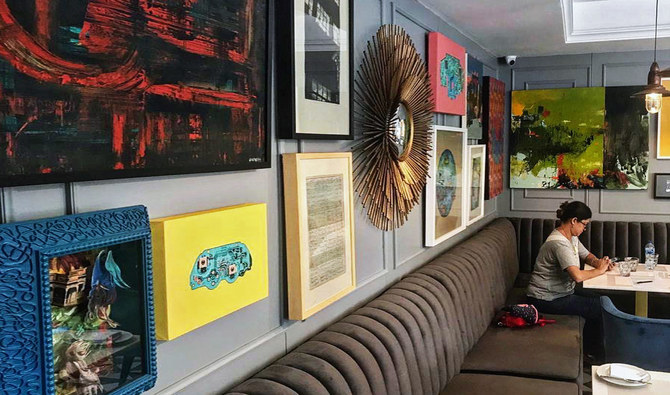

RAWALPINDI: A colonial-style building with the letters “Ambiance” affixed to its front in Lahore’s lively Gulberg area betrays nothing of what awaits you inside. A chocolatey grey set of stairs leads to slim wood and glass doors of a newly opened boutique hotel — a space that is much more than just a place to stay. Once you enter, you will live, breathe, and find yourself immersed in contemporary art.
One can look up at any wall and come face to face with some of the most talented Pakistani artists such as Atif Khan, Hussain Jamil, and Beygumbano. Each piece has been selected by Kasim Kasuri, the hotel’s owner for whom contemporary art has been a life-long attraction.
“I thought that like me there are people who would appreciate a smaller scale space that is built around experiences conversations about art — all kinds of art, and design,” he told Arab News on Friday, when the hotel officially opened for bookings.
A “serial art buyer,” Kasuri made his first art purchase when he was 16 or 17 years old. While his resume shows decades of work as an educationist, in recent years he began pondering how through his love of design and art he could connect with others who share the same passion. Boutique hotels, usually known for their interesting design, was his thought.
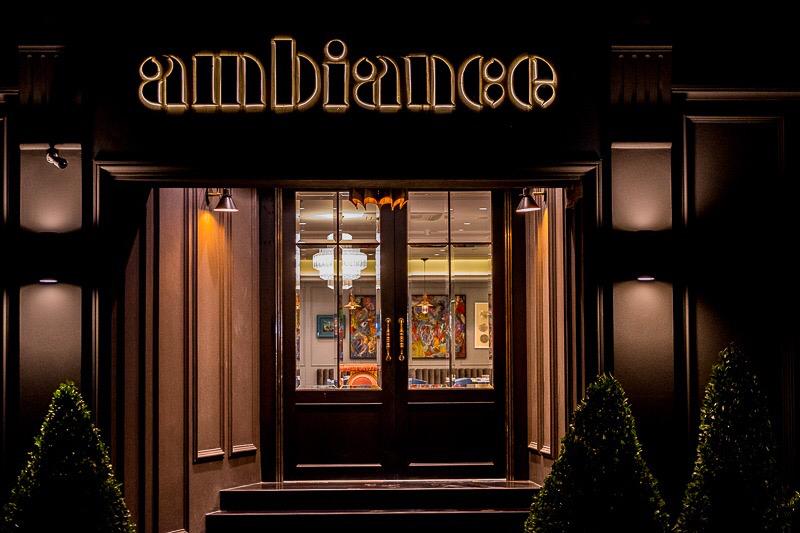
Artworks by Pakistani artists are on display in the dining space on Ambiance Hotel in Lahore on Oct. 10, 2020 (Photo courtesy: Ambiance Hotels)
The minimalist renovation done to the outside of the hotel building, which in its former life served as a bank, plays as bait and switch to the maximalist interiors that showcase a well-coordinated dance of eclectic and colonial inspirations — a case study in modern Lahore sensibilities.
“We wanted to create spaces that had you wanting to experience what was around you, through touch, feel, and even smell,” said Shireen Waheed who with architect Omar Hassan crafted for the hotel what they call is a mix of “earthy soulful meets dramatic” and “colonial eclecticism” architecture. “It is a representation of modern Lahore.”
The hotel is meant to be transformative, it somehow both evokes a hotel on a hidden street in a quaint European town through the materials and design choices decorating its interiors, and what is Lahore aesthetics — a love of the old and embracing of the new. Walls, floors, furniture and decorations were all crafted by local artisans.
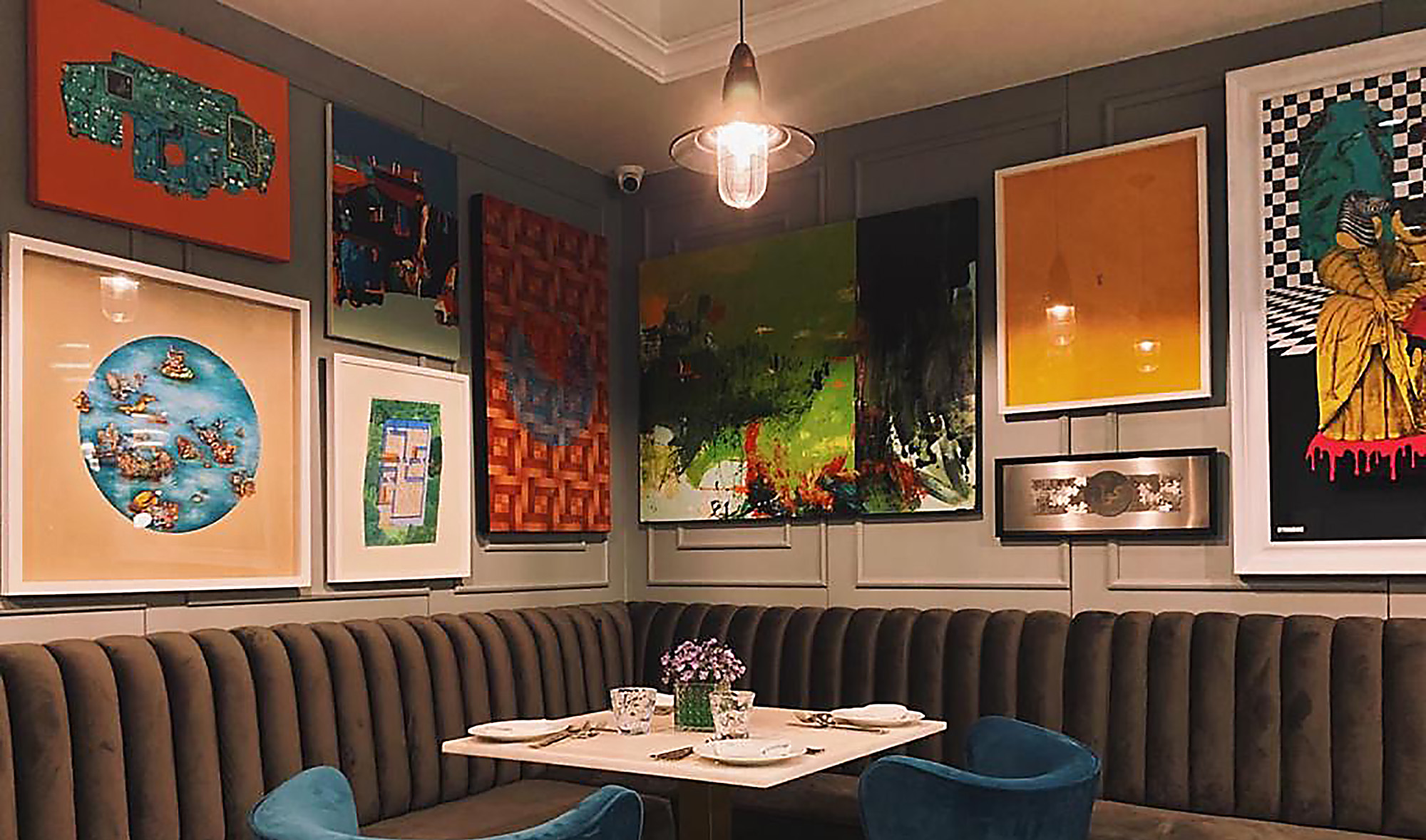
Artworks by Pakistani artists are on display in the dining space on Ambiance Hotel in Lahore on Oct. 10, 2020 (Photo courtesy: Ambiance Hotels)
In curating the collection, Kasuri is supported by a team of art experts, including former National College of Arts principals Salima Hashmi and Naazish Ata Ullah. Over 50 artworks were purchased from some 28 Pakistani artists are filling the space.
They are paintings, bright digital prints, line works, sculptural pieces, lighting and video installations, like a memorable one by Anusha Novlani with a playful approach to the “hear no evil” adage.
“They have curated a variety of alternative thoughts and perceptions about our identity and culture,” Eemaan Bano, the artist known as Beygumbano, told Arab News. Her works featuring women clad in burqas layered with unexpected details like giraffes, are also seen throughout the space.
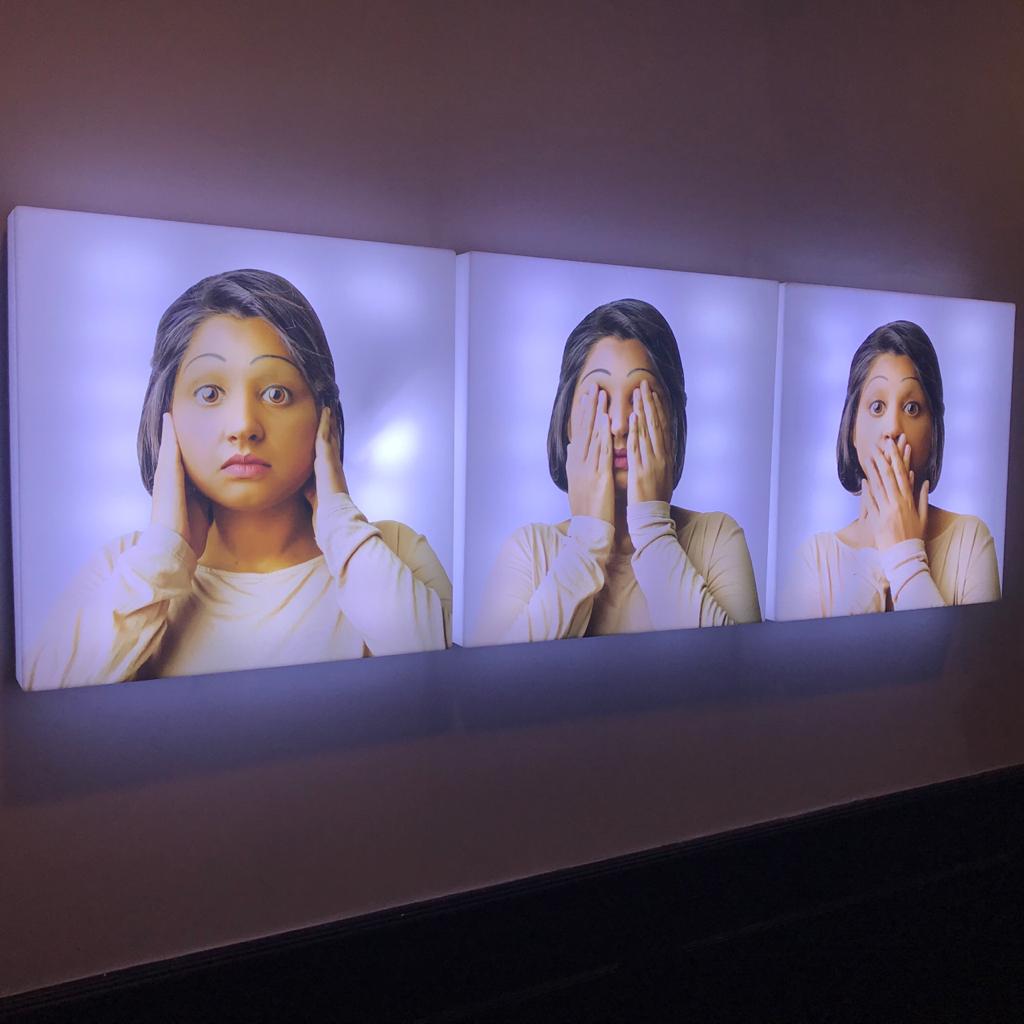
Lightboxes by Anusha Novlani on display at Ambiance Hotel in Lahore, Pakistan on Oct. 10, 2020 (Photo courtesy: Ambiance Hotels)
Ambiance has already tapped into what Kasuri hoped it would do: inspire conversation and promote art.
“I’ve been inundated by requests from friends and family trying to find out about who made what and how they can get in touch with artists,” he said. “It’s already having an impact and I am excited for the future spaces we have.”


