Second phase of Umrah return set to begin on Sunday

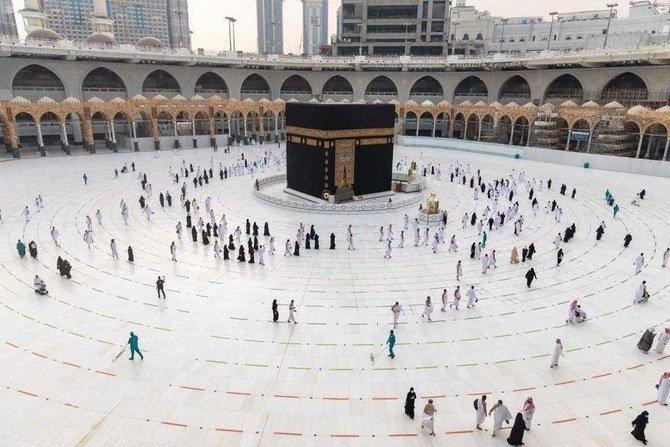
The second phase of Umrah will resume on Sunday with 15,000 pilgrims allowed to perform rituals and 40,000 worshippers offering daily obligatory prayers in the Grand Mosque in Makkah. (File/SPA)
Short Url
Updated 14 October 2020
Follow

Second phase of Umrah return set to begin on Sunday

  • The first stage allowed Umrah for Saudis and expats residing in the Kingdom
  • The decision to allow foreign pilgrims to perform the pilgrimage will be taken after reviewing the pandemic situation

JEDDAH: The second phase of Umrah will resume on Sunday with 15,000 pilgrims allowed to perform rituals and 40,000 worshippers offering daily obligatory prayers in the Grand Mosque in Makkah.
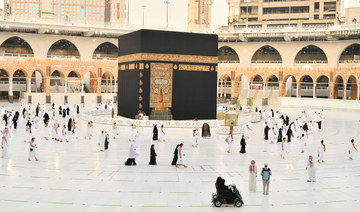
The operations at the Grand Mosque will be held amid strict social distancing measures aimed at stopping the spread of the coronavirus disease (COVID-19) outbreak.
Umrah pilgrimages were suspended on March 1 in the wake of the COVID-19 pandemic but last month the Saudi Ministry of Hajj and Umrah agreed to a phased return of Umrah operations starting on Oct. 4.
The first stage allowed Umrah for Saudis and expats residing in the Kingdom, before expanding to greater capacity and ultimately allowing pilgrims from outside of Saudi Arabia.
However, the decision to allow foreign pilgrims will be taken after reviewing the pandemic situation and the number of cases around the world.
The ministry has launched a smartphone app called Eatmarna to issue Umrah permits to prospective pilgrims. Users must ensure they are registered with the Ministry of Health’s Tawakkalna app to allow authorities to check on their health status and eligibility to perform Umrah rituals.
A new set of permits was added for pilgrims in the app on Tuesday.
“The new permits include one for prayers in the Grand Mosque, one for prayers in the Prophet’s Sacred Chamber in the Prophet’s Mosque, and one for greeting the Prophet,” a ministry official said.


Saudi Cabinet hopes UAE forces will withdraw within 24 hours in accordance with Yemeni request

Saudi Arabia’s King Salman chairs Tuesday’s Cabinet session. (SPA)
Updated 30 December 2025
Follow

Saudi Cabinet hopes UAE forces will withdraw within 24 hours in accordance with Yemeni request

  • Cabinet said it hoped the UAE will cease any military or financial support to the STC and any other party within Yemen

RIYADH: Saudi Arabia’s Cabinet, chaired by King Salman, on Tuesday expressed hope that Emirati forces will withdraw from Yemen within 24 hours in accordance with a Yemeni request, Saudi Press Agency reported.

The Cabinet also said it hoped the UAE will cease any military or financial support to the Southern Transitional Council and any other party within Yemen, SPA added.

The Cabinet said it also hoped that the UAE will take the necessary steps to preserve Saudi-Emirati relations which the Kingdom is keen to strengthen, and said it looks forward to working together toward everything that will enhance the prosperity and stability of countries of the region.

The Cabinet expressed its regret over the outcome of de-escalation efforts that the Kingdom has been keen to pursue, which have been met with an unjustified escalation that contradicts the principles upon which the Coalition to Support Legitimacy in Yemen was founded, undermines its efforts to achieve security and stability in Yemen, and is inconsistent with all the promises the Kingdom received from the UAE.

The Cabinet appreciates the role of the Coalition to Support Legitimacy in Yemen in protecting civilians in the governorates of Hadramaut and Al-Mahra in response to the request of the President of the Yemeni Presidential Leadership Council Rashad Al-Alimi, and in reducing escalation in order to achieve security and stability and preventing the expansion of the conflict.

The Cabinet reaffirmed that the Kingdom will not hesitate to take necessary steps and measures to confront any infringement or threat to its national security, and its commitment to the security, stability and sovereignty of Yemen, and its full support for Al-Alimi and his government.

In other regional affairs, the Cabinet reaffirmed the Kingdom’s support for the sovereignty, territorial integrity and safety of Somalia, and rejects the declaration of mutual recognition between Israel and Somaliland as it enshrines unilateral separatist measures that violate international law.