UK’s MI5 spy chief: Overall threat from Iran, Russia and China is growing in severity

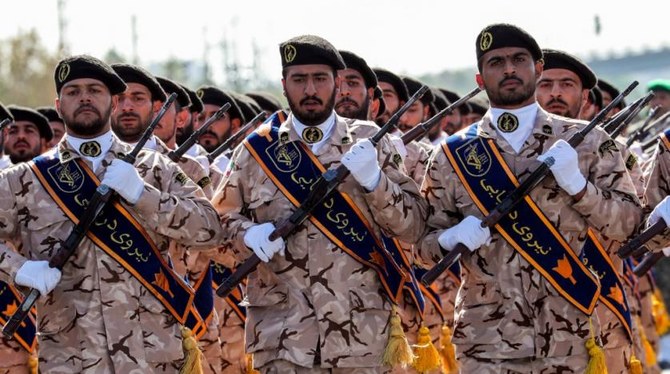
Members of the Iranian Revolutionary Guards Corps. (AFP)
Short Url
Updated 14 October 2020
Follow

UK’s MI5 spy chief: Overall threat from Iran, Russia and China is growing in severity

LONDON: The overall threat from Russia, China and Iran is growing in severity and complexity, the UK’s MI5 spy chief Ken McCallum said on Wednesday. 

McCallum, in his first major remarks since being named as the new boss of MI5 in March when Britain was under national lockdown, said terrorist threats also persist.

"One of the toughest challenges facing MI5 and indeed government is that the differing national security challenges presented by Russian, Chinese, Iranian and other actors are growing in severity and in complexity – while terrorist threats persist at scale,” he said.  

The head of MI5 added that British spies are trying to defend COVID-19 vaccine work against hostile powers that seek to steal or sabotage research data in the race to find a jab providing immunity.


Venezuela advances amnesty bill that could lead to mass release of political prisoners

Updated 06 February 2026
Follow

Venezuela advances amnesty bill that could lead to mass release of political prisoners

  • Such an amnesty is a central demand of the country’s opposition and human rights organizations with backing from the United States

CARACAS: Venezuela’s legislature on Thursday advanced an amnesty bill proposed by acting President Delcy Rodríguez that could lead to the release of hundreds of opposition leaders, journalists and human rights activists detained for political reasons.
Such an amnesty is a central demand of the country’s opposition and human rights organizations with backing from the United States. But the contents of the bill have not been released publicly, and rights groups have so far reacted with cautious optimism — and with demands for more information.
The bill, introduced just weeks after the US military captured then-President Nicolás Maduro, still requires a second debate that has yet to be scheduled. Once approved, it must be signed by Rodríguez before it can go into effect.
In announcing the bill late last month, Rodríguez told a gathering of justices, magistrates, ministers, military brass and other government leaders that the ruling party-controlled National Assembly would take up the legislation with urgency.
“May this law serve to heal the wounds left by the political confrontation fueled by violence and extremism,” she said in a pre-taped televised event. “May it serve to redirect justice in our country, and may it serve to redirect coexistence among Venezuelans.”
Rights groups, fearing some political detainees will be excluded, want more details about the requirements for amnesty before any final vote.
The Venezuelan Program for Education-Action in Human Rights, or PROVEA, issued a statement emphasizing that the bill must be made public urgently due to its potential impact on victims’ rights and broader Venezuelan society.
Based on what is known so far about the legislation, the amnesty would cover a broad timeline, spanning the administration of the late Hugo Chávez from 1999 to 2013 and that of his political heir, Maduro, until this year. It would exclude people convicted of murder, drug trafficking, and serious human rights violations, reports indicate.