

With bionic arm, Pakistani guitarist gets second lease on life

Muaaz Zahid poses with his bionic arm at NED University of Engineering and Technology, Karachi, Pakistan on October 10, 2020. (AN Photo)
Short Url
Updated 12 October 2020
Follow

With bionic arm, Pakistani guitarist gets second lease on life

  • A freak electrocution accident led to the amputation of half of Muaaz Zahid's playing arm in July
  • Karachi-based startup BIONIKS created a specially designed prosthetic stroker for the musician and engineer

KARACHI:  Muaaz Zahid was at a rooftop celebration in the Pakistani city of Faisalabad in July this year when his right hand accidentally touched a high-tension wire, sending 11,000 watts of electricity surging through his arm and driving the chemical count in his body to critical levels. 

By the time the 26-year-old engineer and guitarist was moved to a hospital in his hometown of Lahore 24 hours later, doctors said the only way to save his life was to amputate his arm below the elbow.
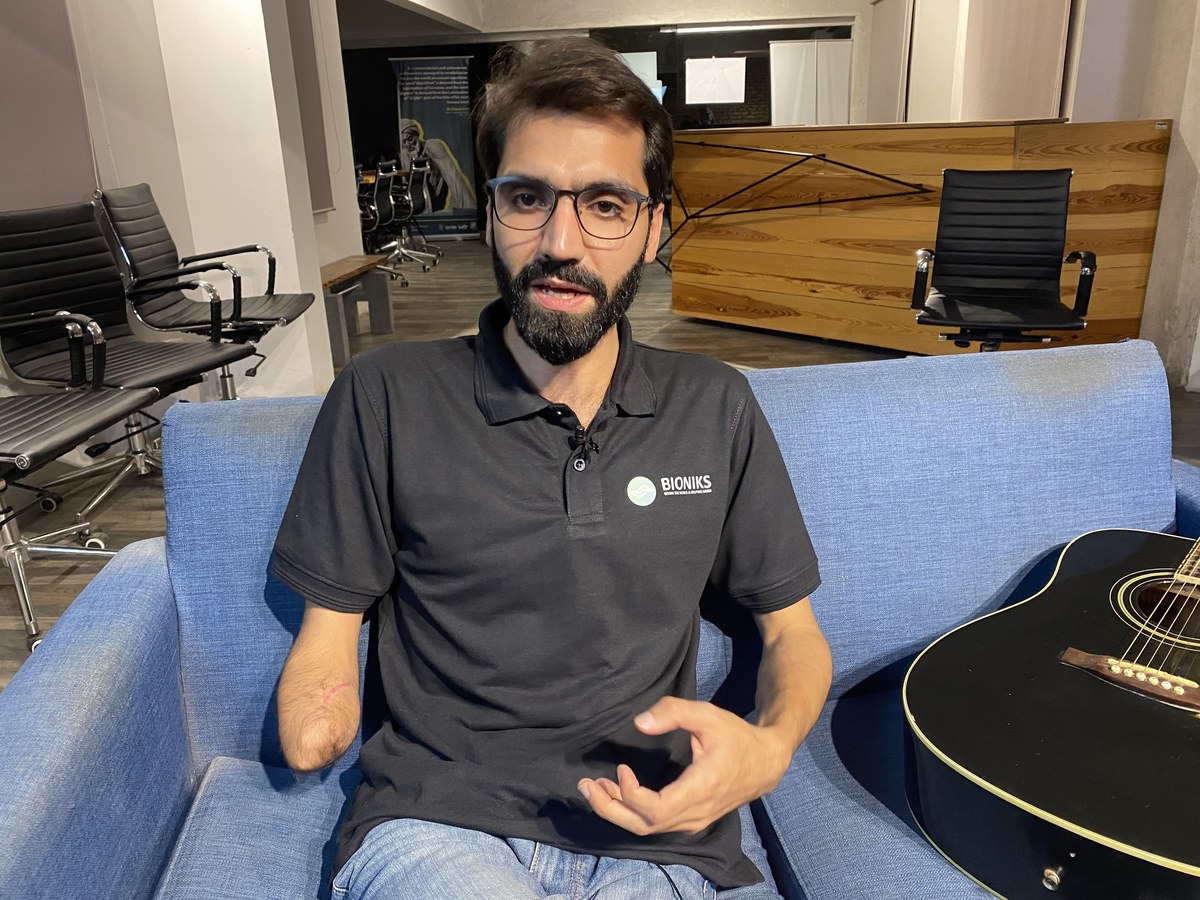


Muaaz Zahid, a software engineer and guitarist, speaks to Arab News at NED University of Engineering and Technology, Karachi, Pakistan, on October 10, 2020. (AN Photo) 

At the time, few believed Zahid would ever play the guitar again. 
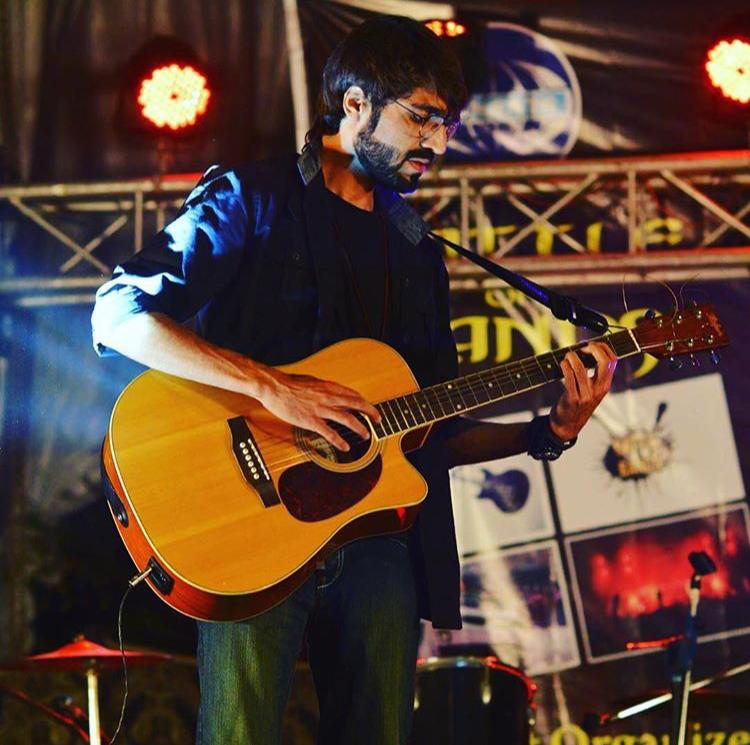


In this undated photo, Muaaz Zahid performs at a concert in Lahore before an accident on July 4, 2020, in Faisalabad, Pakistan. (Photo Courtesy:  Muaaz Zahid) 

But barely three months after the accident that nearly cost him his life, Zahid, who teaches at the prestigious Lahore Institute of Management Sciences, played his first chord last week, after a startup called BIONIKS fitted him with a bionic arm and a customized stroker for guitar strings.  

“Immediately after the incident...I was hopeful,” Zahid told Arab News in Karachi last week. “I just thought... I’m alive. I’m healthy. My legs are moving, my brain is working, my eyes are okay, everything is fine.”
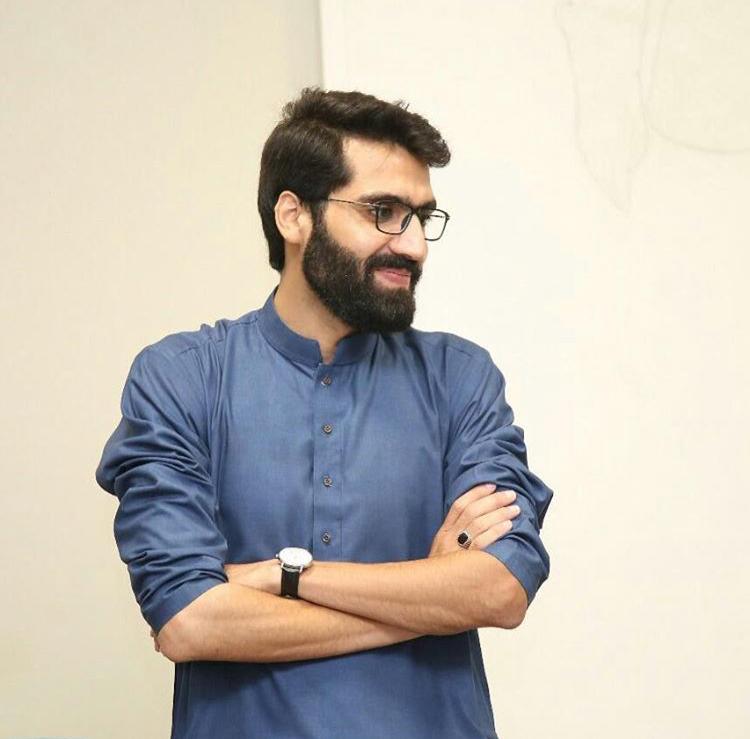


In this undated photo, Muaaz Zahid is seen in Lahore before an accident on July 4, 2020, in Faisalabad, Pakistan. (Photo Courtesy: Muaaz Zahid) 

“People wondered... Is he going to be able to play guitar again?" he said. "This was a question mark for others, but it was clear to me that I would play again one day.”

As he gently strummed his guitar with a specially designed stroker, he smiled and said: “And I am doing [it] right now.” 

A friend of Zahid’s, who worked in jewelry design, first helped make a band for his amputated arm, using which he was able to play his first few chords since the accident. 

“It sounded [right] and I have no words to express how I felt in that moment. It was amazing... just that first stroke,” he said. 

Ultimately, BIONIKS, which provides orthotics and prosthetics services in Karachi, found him a more permanent solution. 

“I shared my story with them... that I’m playing the guitar with my wrist. They said we can design a socket-type thing for you,” Zahid said. 

The result was a custom designed stroker for guitar strings and a new prosthetic arm. 
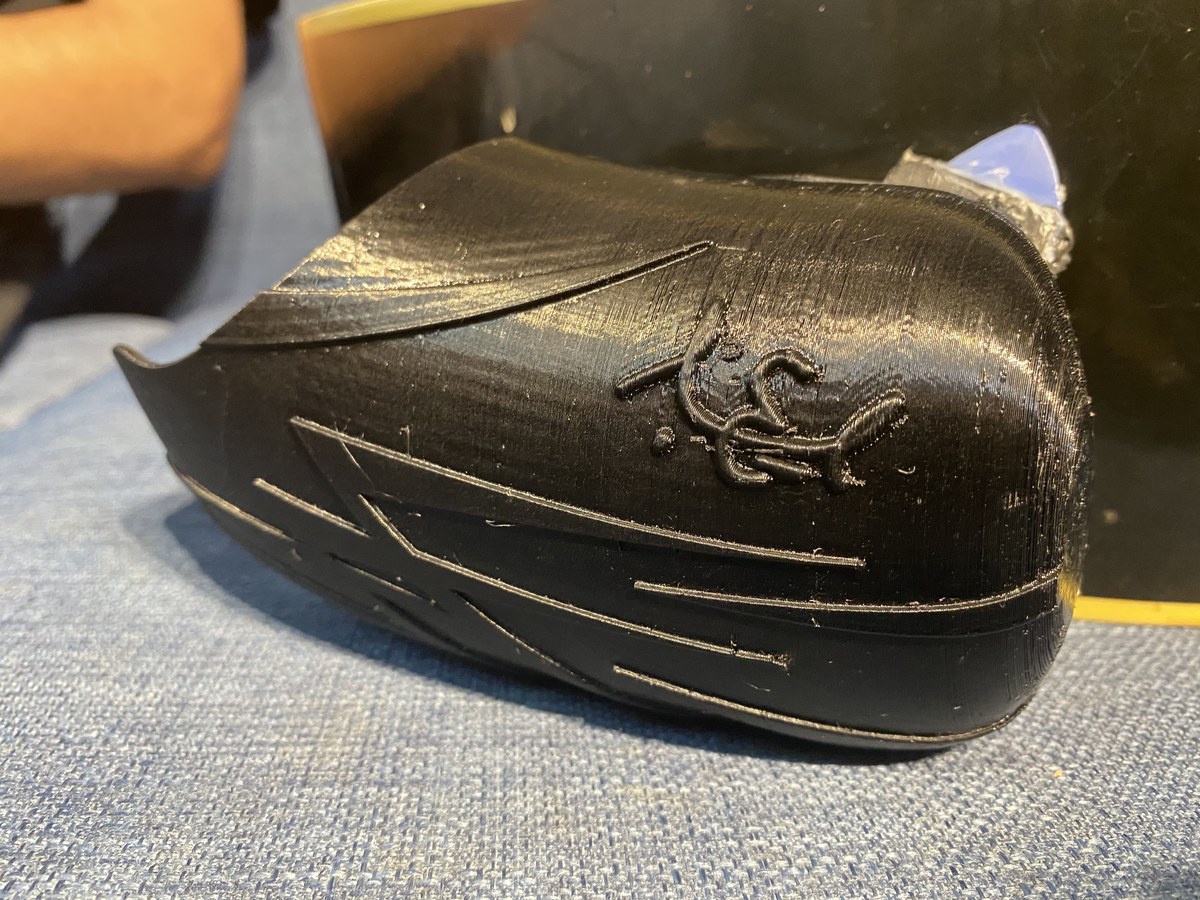


Photo of a stroker specially designed by Karachi startup Bioniks for Muaaz Zahid. October 10, 2020 (AN Photo)

"His [Zahid’s] courage and motivation is remarkable,” CEO of BIONIKS, Ovais Hussain Qureshi, said. “Recovering within three months of amputation and adoption of BIONIKS prosthesis is marvelous.”

“Seeing Muaaz ... moving his fingers right just from the very next second after popping his arm into the arm.. looking at his smile motivates us more,” Qureshi added. 

Now, Zahid said, he was just waiting for a gig he could play at. 

“But even if there is no gig or concert,” he said, as the weeping of his guitar filled the university room. “I will play... and I will play.”


Islamabad steps up vehicle checks to boost security as 166,000 cars get electronic tags

Updated 18 January 2026
Follow

Islamabad steps up vehicle checks to boost security as 166,000 cars get electronic tags

  • Authorities say over 3,000 vehicles registered in past 24 hours as enforcement intensifies
  • Extended service hours introduced to push full compliance with digital monitoring system

ISLAMABAD: Authorities in the Pakistani capital have intensified enforcement against vehicles without mandatory electronic tags with more than 166,000 cars now registered, according to data released on Sunday evening, as Islamabad moves to strengthen security and digital monitoring at key entry and exit points.

The Islamabad Capital Territory (ICT) administration introduced the electronic tagging system late last year as part of a broader effort to regulate traffic, improve record-keeping and enhance surveillance in a city that hosts the country’s main government institutions, foreign missions and diplomatic enclaves.

Under the system, vehicles are fitted with electronic tags that can be read automatically by scanners installed at checkpoints across the capital, allowing authorities to identify unregistered vehicles without manual inspections. Vehicles already equipped with a motorway tag, or m-tag, are exempt from the requirement.

“A total of 166,888 vehicles have successfully been issued M-Tags so far, including 3,130 vehicles in the last 24 hours,” the ICT administration said, according to the Excise Department.

Officials said readers installed at checkpoints across Islamabad are fully operational and are being used to stop vehicles still without tags, as enforcement teams carry out checks across the city.

To facilitate compliance, authorities have expanded installation facilities and extended operating hours. The Excise Department said m-tag installation is currently available at 17 booth locations, while select centers have begun operating beyond normal working hours.

According to Director General Excise Irfan Memon, m-tag centers at 26 Number Chungi and 18 Meel are providing services round the clock, while counters at Kachnar Park and F-9 Park remain open until midnight to accommodate motorists unable to visit during daytime hours.

Officials said the combination of enforcement and facilitation was aimed at achieving full compliance with minimal disruption, adding that operations would continue until all vehicles operating in the capital are brought into the system.

The enforcement drive builds on a wider push by the federal government to integrate traffic management, emergency response and security monitoring through technology-driven “safe city” initiatives. Last month, Interior Minister Mohsin Naqvi reviewed Islamabad’s surveillance infrastructure and said reforms in monitoring systems and the effective use of technology were the “need of the hour.”

Authorities have urged motorists to obtain electronic tags promptly to avoid delays and penalties at checkpoints as enforcement continues across the capital.