

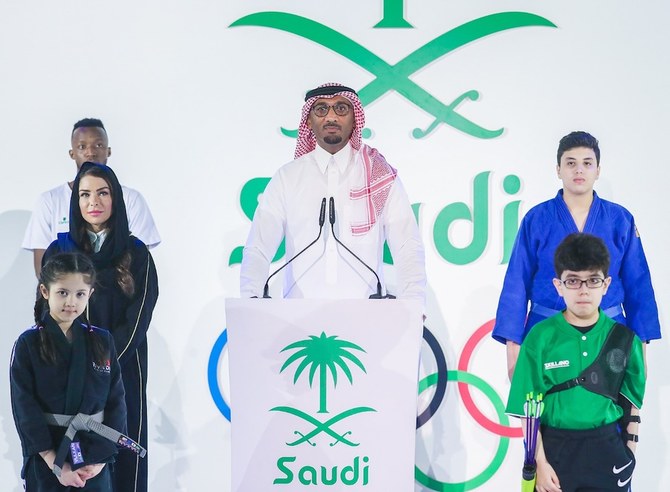

RIYADH: Saudi Arabia’s sports minister on Sunday launched the Kingdom’s official campaign to help secure enough votes from members of the Olympic Council of Asia (OCA) to host the 21st Asian Games in 2030.
Prince Abdul Aziz bin Turki Al-Faisal, who is also chairman of the Saudi Arabian Olympic Committee (SAOC), formally submitted the country’s application bid to the governing body, nominating Riyadh to stage the event.
Officials are due to decide on which city will host the games (known as the Asiad) when they meet for their 39th OCA General Assembly in Muscat, Oman on Dec. 16. The other city still in contention is the Qatari capital Doha.
"This bid is more than a bid. This bid is the dream of a nation."
HRH @AbdulazizTF, President of @saudiolympic has officially launched Riyadh's bid to host the 2030 Asian Gameshttps://t.co/phzQArqjef#Riyadh2030
pic.twitter.com/q7143Mobs2— #Riyadh2030 (@RiyadhAG2030) October 5, 2020
The prince said: “Hosting the 2030 Asian Games is a great honor and an opportunity to inspire a new generation of athletes across the Asian continent and reach the largest audience in the Kingdom’s sports hosting history.
“We are excited (at the chance) to host the first-ever Asian Games (in Saudi Arabia), in light of the support of the government of King Salman and the crown prince.”
He added that the Kingdom had recently hosted a number of high-profile international sporting events and that securing the Asiad would provide a golden opportunity to advance long-term sports, societal, and cultural changes for the nation.
#Qiddiya will provide facilities for the sports stars of the future and supports #SaudiVision2030 and the Kingdom’s bid to host the Riyadh Asian Games 2030 https://t.co/zMVlHpktHq
— Qiddiya | القدية (@qiddiya) October 5, 2020
The minister had been speaking at a ceremony also attended by Princess Reema bint Bandar, who is a member of the board of directors of the International Olympic Committee (IOC) and the Kingdom’s ambassador to the US, and other Saudi sports officials and athletes.
If Riyadh were to win its hosting bid, Prince Abdul Aziz said: “We promise to organize a successful tournament by all standards, in line with the Kingdom’s Vision 2030.”
Princess Reema said that Riyadh 2030 would be a vibrant and diverse event in a unique atmosphere, using pre-existing sporting venues along with purpose-built facilities, pointing out that it would “create a platform to highlight the power of the Olympic Games throughout the yellow continent (Asia), and consolidate its values.”
"Imagine the impact of the Asian Games in driving forward this transformation. Imagine the impact of our story on women’s sports development across all of Asia."
HRH @rbalsaud , IOC member @Olympics speaking at the event. #Riyadh2030 pic.twitter.com/fDssYl8xIt— #Riyadh2030 (@RiyadhAG2030) October 5, 2020
She added: “By working with the OCA, Riyadh 2030 would provide a legacy of diversity and participation across the nation, which would have a major impact in the coming decades.”
Prince Nawaf bin Faisal bin Fahad, honorary member of the IOC and former president of SAOC, said that raising the level of female participation in sports was a key goal of the Saudi Vision 2030 reform plan under its quality of life program.
HRH Prince Nawaf bin Faisal @nawafbinfaisal , IOC Honorary Member, talked also during the event and said: "We are all passionate about the role of sport in society. The Vision 2030 Quality of Life programme aims to achieve a 40% increase in weekly participation in sports." pic.twitter.com/e5s4PFagNm
— #Riyadh2030 (@RiyadhAG2030) October 5, 2020
He noted that the aim was to increase women’s involvement in sporting activities by 40 percent, in line with the Kingdom’s efforts to promote and support its elite athletes in becoming top medal winners in international competitions.
Meanwhile, Prince Fahd bin Jalawi bin Abdul Aziz, vice president of the SAOC, said that if the Saudi capital were named to host the Asiad, the main stadium would be located in Qiddiya along with a water sports center and cricket ground.
"We are fortunate to enjoy the support of a broad coalition of Government and institutional partners." HH Prince Fahad bin Jalawi, Executive Director of #Riyadh2030 pic.twitter.com/RtuPZVTEv6
— #Riyadh2030 (@RiyadhAG2030) October 5, 2020
“We are committed to supporting Olympic values and a shift toward more sustainable and socially responsible games,” he added.
Saudi runner Hadi Sawan, who won the first Saudi Olympic medal in 2000, said that the Kingdom’s dream was to host the 2030 Asian Games.
The first Saudi Arabian Olympic medalist Hadi Soaan @hadi400h
during the event:"20 years ago I accomplished my lifelong dream and won a medal at Sydney 2000, But Saudi Arabia has its own dream now, and that is the Asian Games in 2030". #Riyadh2030 pic.twitter.com/j7kfV3jbFJ— #Riyadh2030 (@RiyadhAG2030) October 5, 2020
And Saudi equestrian, Dalma Malhas, who won the bronze medal at the 2010 Youth Olympic Games, said that staging the sports festival at amazing and modern venues in Riyadh would provide a platform to meet the needs of the continent’s best athletes and allow them to shine.
Speaking at the event, @DalmaMalhas, the first Saudi Arabian woman to compete in an Olympic event said:
"This is a vision that I am proud to represent on behalf of future generations of Saudi Arabian daughters." #Riyadh2030 pic.twitter.com/QYu7QjOkFs— #Riyadh2030 (@RiyadhAG2030) October 5, 2020
The bid file submitted by Prince Abdul Aziz to the OCA included world-class venues and facilities connected to the latest environmentally friendly transportation systems.
It said the impact of the games would inspire the Asian Olympic movement throughout the continent by spreading sporting values and enhancing communication, not only in sport but socially and culturally too, the Saudi Press Agency reported.
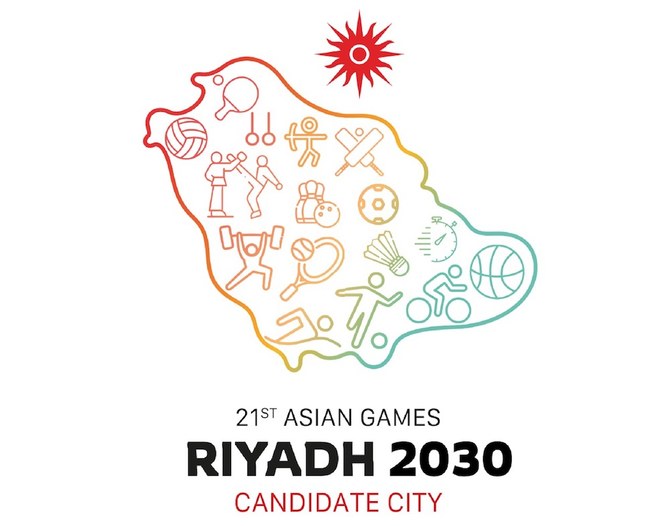
To mark the Saudi campaign launch, the Riyadh 2030 hosting committee released its official social media accounts under the name RiyadhAG2030.
Our logo represents #Riyadh2030's goals of inspiring new dreams, reaching new horizons and setting new standards for what it means to host the Asian Games #TransformingTheFuture pic.twitter.com/ZEJMI6TQo9
— #Riyadh2030 (@RiyadhAG2030) October 5, 2020


