UNITED NATIONS: The United Nations and Germany are co-chairing a ministerial meeting on Monday of world powers and other countries with interests in Libya’s long-running civil war in hopes of promoting a cease-fire between its rival governments.
Germany’s deputy UN ambassador Günter Sautter said Friday the virtual meeting is “an important follow-up” to a conference of the same parties in Berlin on Jan. 19 that approved a 55-point road map to peace in oil-rich Libya and agreed to respect a much-violated arms embargo, hold off on military support to the warring parties, and push them to reach a full cease-fire.
Stephanie Williams, the top UN official for Libya, warned last month that the conflict-torn North African country is at “a decisive turning point,” with foreign backers of its rival governments pouring in weapons — in violation of the Berlin agreement — and the misery of its people compounded by the coronavirus pandemic.
Sautter said Monday’s meeting “comes at a crucial moment.” He pointed to “some encouraging developments in Libya” including talks on security, “the long-term agreements on transition, and progress on the question of oil exports.”
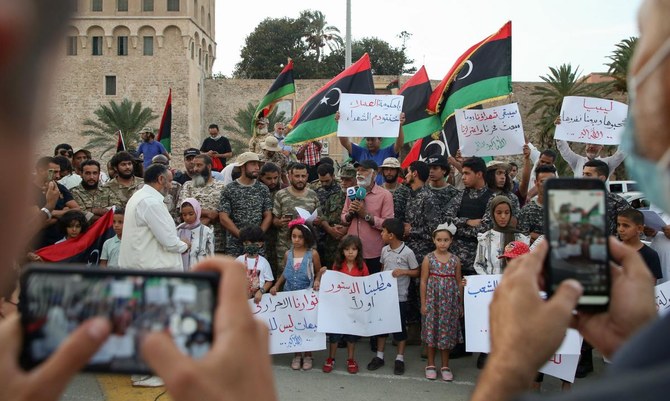
In the years after the 2011 uprising that toppled longtime autocrat Muammar Qaddafi, Libya has sunk further into turmoil and is now divided between two rival administrations, based in the country’s east and west, with an array of fighters and militias — backed by various foreign powers — allied with each side.
Tensions escalated further when east-based forces, under commander Khalifa Haftar, launched an offensive in April 2019 trying to capture the capital, Tripoli. But Haftar’s campaign collapsed in June when militias backing the UN-supported government in Tripoli, with Turkish support, gained the upper hand.
Sautter said Germany hopes participants in Monday’s meeting — co-chaired by UN Secretary-General Antonio Guterres and German Foreign Minister Heiko Maas — will renew their commitments to the Berlin road map and its implementation.
“We hope that they will call on the parties to accelerate efforts to achieve a cease-fire,” Sautter said. “We hope that continuing blatant violations of the arms embargo will end.”
UN experts monitoring sanctions against Libya said in a report, seen by The Associated Press last month, that the arms embargo was being violated by both sides and their foreign backers, and remains “totally ineffective.”
They said 11 companies also violated the arms embargo, including the Wagner Group, a private Russian security company that the panel said in May provided between 800 and 1,200 mercenaries to Haftar.
Sautter said Germany also hopes Monday’s meeting “will strengthen the United Nations as key facilitator of the political dialogue in Libya.”


![]()

Key players to meet virtually to push for Libya cease-fire
Short Url
https://arab.news/2c35d
Key players to meet virtually to push for Libya cease-fire
- ‘We hope that they will call on the parties to accelerate efforts to achieve a cease-fire’


Latest updates




© 2026 SAUDI RESEARCH & PUBLISHING COMPANY, All Rights Reserved And subject to Terms of Use Agreement.