


KARACHI: Last year, Nanak Ram, a Hindu, left his home in the village of Mirpur Mathela in southern Pakistan, never to return.
Ram is one of what officials estimate are hundreds of Pakistani Hindus who have migrated to India in the last year to benefit from a law that Prime Minister Narendra Modi’s Hindu nationalist government introduced in 2019 and which fast-tracks legal immigration for Hindu migrants coming from Pakistan, Afghanistan and Bangladesh.
But just weeks into living in a village in the state of Rajasthan, Ram knew that India was not the Hindu paradise him and his 13 family members had crossed the border to join. And so last month, he finally returned home to the Pakistani province of Sindh, where a majority of the country’s Hindus live.
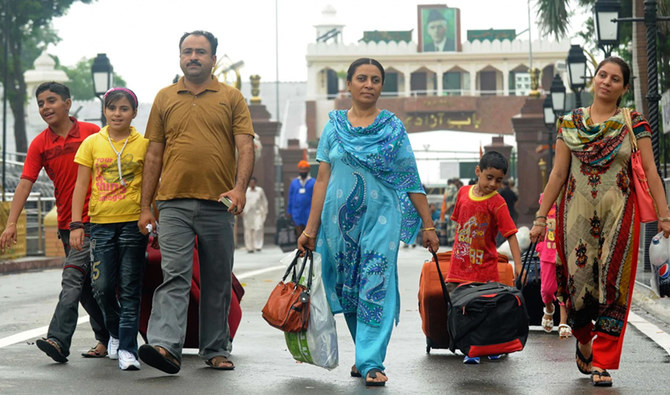
Pakistani Hindus board on a bus for Jodhpur after they arrived at the India-Pakistan Wagah border post, about 35 km from Amritsar on Feb. 14, 2020. (AFP/File)
“We were hated for being Pakistanis,” Ram said. What made matters worse, he said, was that he came from a family of Dalits who rank at the lowest end of India’s ancient caste hierarchy.
India banned caste-based discrimination in 1955, but centuries-old biases against lower-caste groups persist, making it harder for them to access education, jobs and homes.
Ram Devi, Ram’s wife, said the family had remained locked in a house for almost a year, with little access to food or water.
“It was like a life in jail,” she said. “It felt like being freed from prison, when we landed in Pakistan.”
Millions of Hindus stayed back in Pakistan when Britain carved out the state from united India to create a Muslim homeland in 1947. Comprising over 20 percent of the population at independence, Hindus now make up a little over one percent of Pakistan’s 220 million people. Rights groups say the community has little access to housing, jobs, and government welfare and has routinely faced violence.
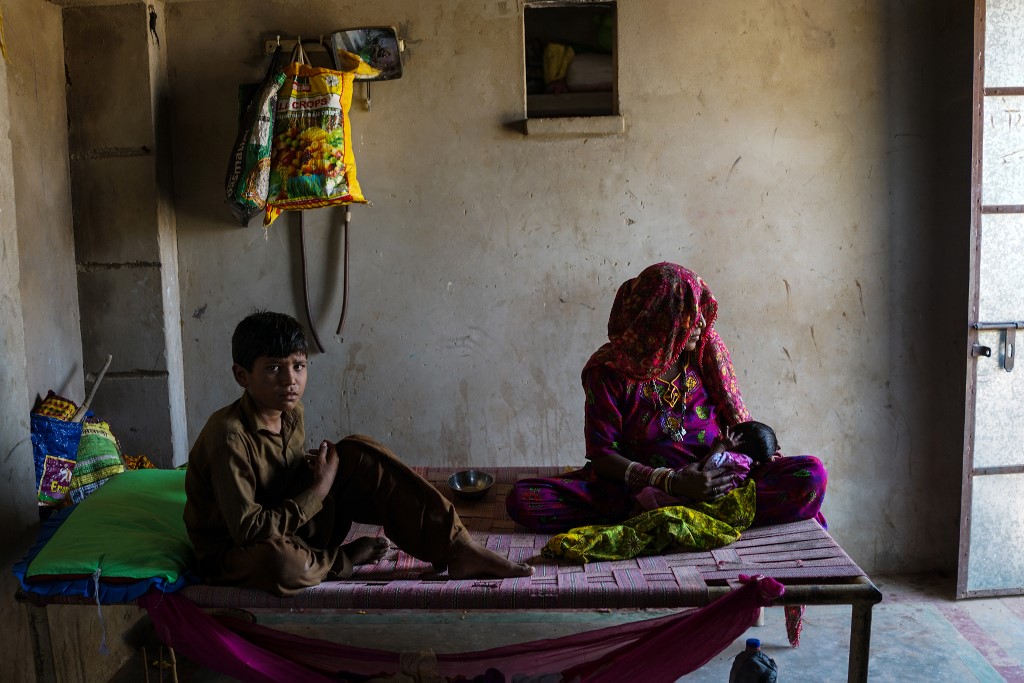
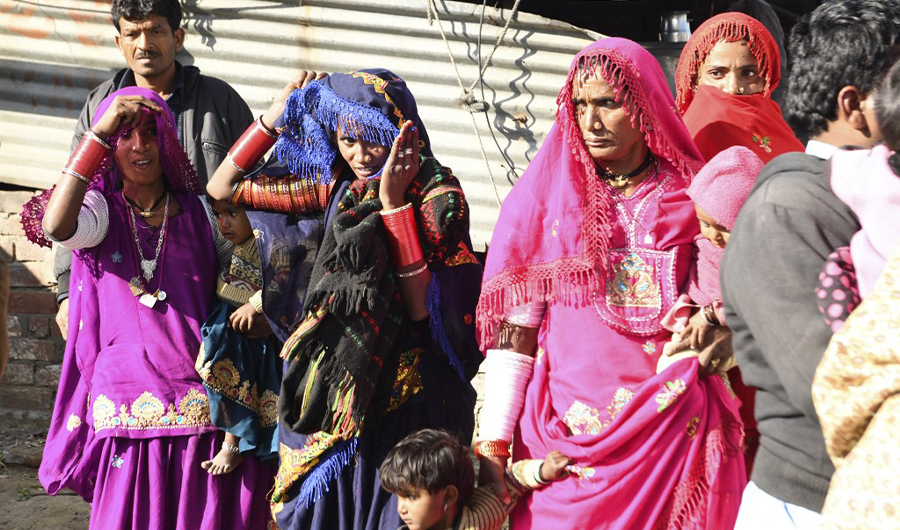
This photo taken on June 16, 2017 shows a Pakistani migrant family in a settlement for Pakistani Hindus in Jodhpur in India's western state of Rajasthan. (AFP/File)
Modi’s long-held commitment to providing refuge has thus drawn more and more Hindus across the border in recent years. While the Pakistani ministries of interior and foreign affairs and the Indian high commission in Islamabad declined to share figures, the Human Rights Commission of Pakistan estimates that around 8,000 people have migrated to India in the past five years alone.
Many have returned disappointed.
Prem Singh, a poor farmer from Gotki in Sindh province, said he had moved to India last year only to return after eight months.
“When people would come to know that we were Pakistani, their attitude would immediately change,” he said.
Ram Singh, a farmer from Diplo in Pakistan’s Tharparkar desert, who sold his land and moved to Morbi city in Indian Gujarat, had a similar tale.
“When I went [to India], we were locked in our homes, [we] couldn’t move to even see relatives in other parts of the state,” he said.
Singh too has since returned.
Asad Iqbal Butt, the Sindh chief of the Human Rights Commission of Pakistan said local police took away migrants’ passports and other travel documents upon their arrival in India.
“When they think to return, they don’t have documents to travel back,” he said. “When they apply for asylum, they fail and their savings are minted by lawyers.”
The mysterious deaths in India of 11 members of a Hindu migrant family, found dead at a farmhouse in India’s Jodhpur district in Rajasthan state in August, has also put the spotlight on the plight of migrants from Pakistan.
The dead migrants’ family has accused India’s secret service of poisoning them, which Indian authorities deny. Relatives have since held small rallies in Sindh but last week, for the first time, they took their demonstration to the country’s capital, vowing to stage a sit-in near the Indian Embassy.
“Look at the Jodhpur incident where 11 members of a Dalit family which immigrated from Pakistan were poisoned to death,” said Surender Valasai, a Hindu lawmaker from the Pakistan People’s Party, repeating allegations by the migrants’ families. “This indicates that India discourages Dalits from Pakistan from seeking asylum.”
The Indian high commission did not respond to text messages seeking comment.


