Bollywood legend asks fans for photos of his ancestral house as Pakistan vows to restore it

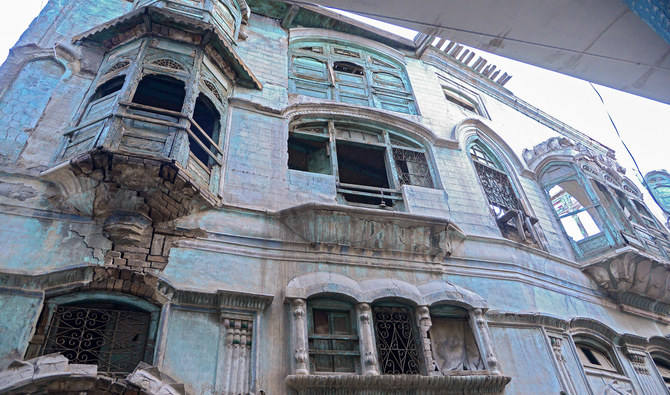
The facade of Raj Kapoor’s ancestral home in Peshawar, Khyber Pakhtunkhwa on Sept. 29, 2020. The provincial archaeology department has vowed to buy the mansion, restore it and convert into a museum. (AN photo)
Short Url
Updated 01 October 2020
Follow

Bollywood legend asks fans for photos of his ancestral house as Pakistan vows to restore it

  • Dilip Kumar and Raj Kapoor's houses in Peshawar, both more than 100 years old and dilapidated, will be turned into museums
  • Peshawar's rich cultural heritage has greatly suffered when the region became a hotbed of militancy and saw many historic buildings destroyed

PESHAWAR: Authorities in Peshawar, northwestern Pakistan are going to buy from the current owners the dilapidated ancestral homes of two Bollywood legends and turn them into museums, prompting one of them to ask netizens on Wednesday to share photographs of his family's old mansion.
The two houses next to Qissa Khwani — the city's oldest and most famous road, known as the "Street of Storytellers" — belonged to the families of Bollywood greats Raj Kapoor and Dilip Kumar who were born and raised there. They migrated to India before Pakistan was created from the British Raj in 1947.
Kumar, 97, who lives in Mumbai, turned to Twitter and requested those in Peshawar to share their photographs of the house.

"We will rebuild them to their old shape and preserve them,” said Dr. Abdul Samad, director of Khyber Pakhtunkhwa province's Archeology and Museums Department.
The department, he told Arab News on Tuesday, had sent a written request to the Peshawar commissioner to estimate the value of the houses so that it could buy it.
Some time ago, Samad said, the current owners were planning to demolish the houses and build commercial centers in their place. The archeology department stopped the process under the Antiquity Act 2016.
“We had to stop the demolition. Now the Khyber Pakhtunkhwa government has decided to purchase these houses under the land acquisition act.”
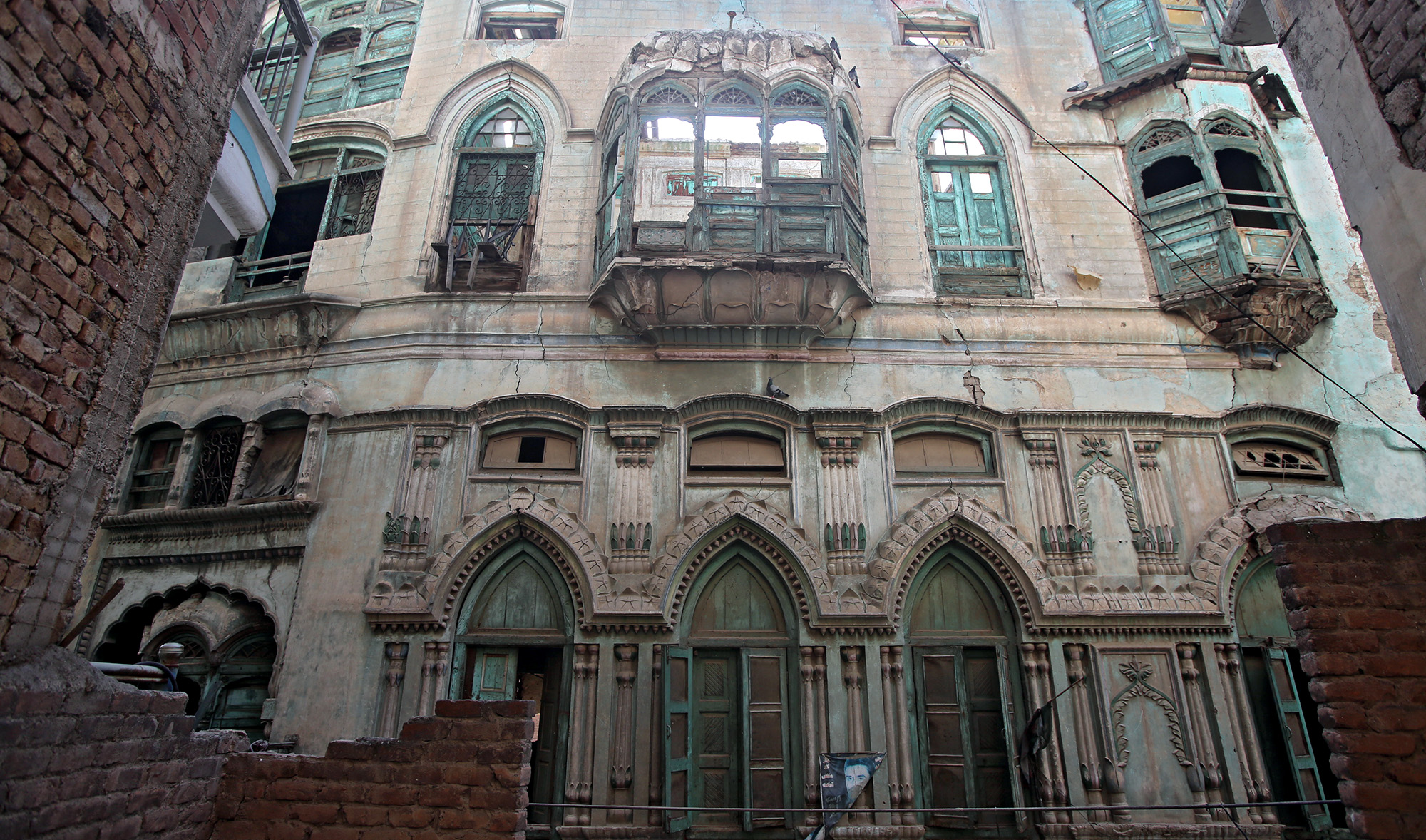


Bollywood legend Raj Kapoor's ancestral house in Peshawar, Khyber Pakhtunkhwa on Sept. 29, 2020. More than 100 years old, the haveli is now a ruin. (AN photo)

Peshawar's rich cultural heritage has greatly suffered in the past decades when the region became a hotbed of militancy and saw many historic buildings destroyed.
The current government, Samad said, has been planning to revive the city's cultural sites, including the two mansions, which are both more than 100 years old.
"Let me tell you that it is a part of the Peshawar revival plan,” he said.
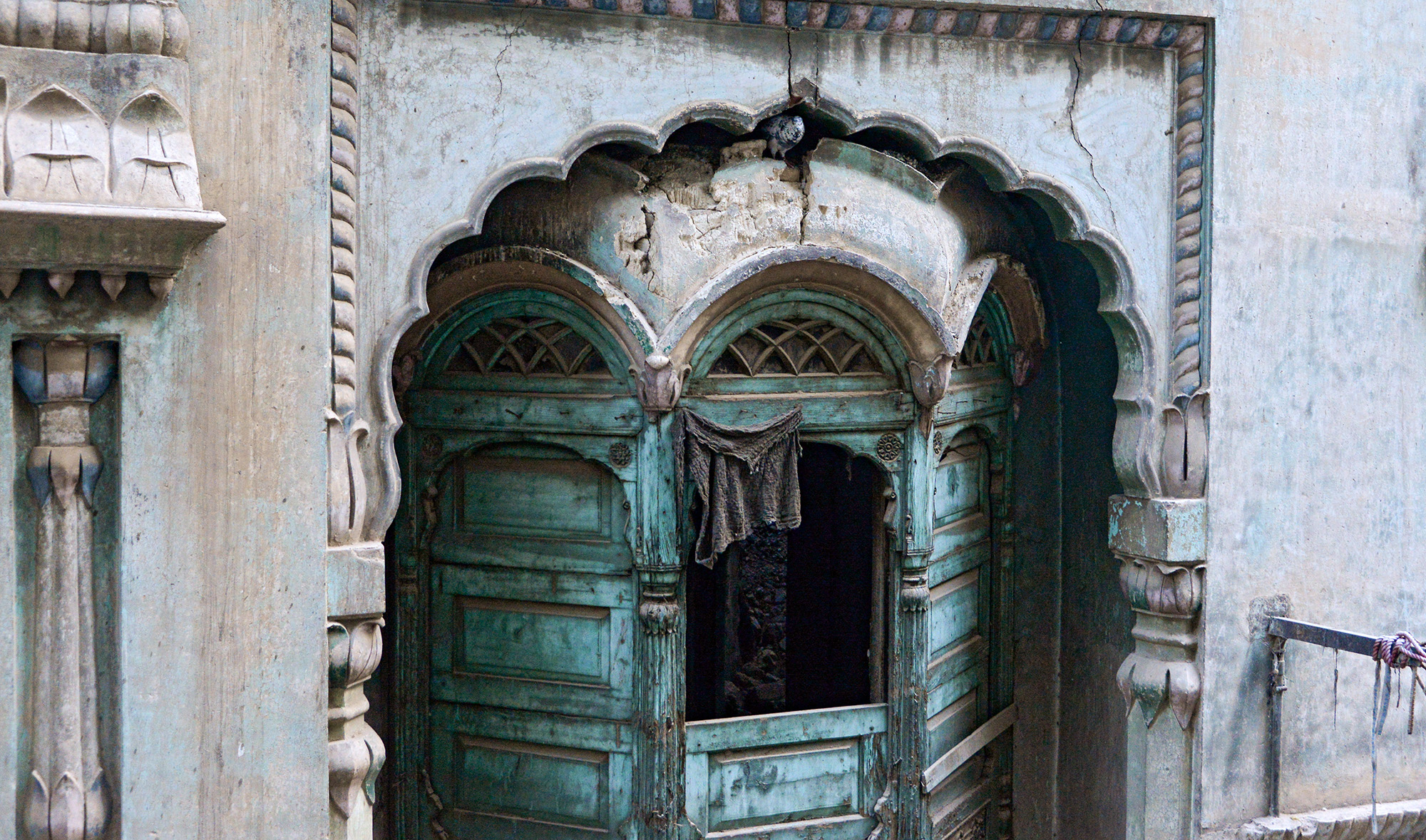


Peshawar locals say the Kapoor haveli, with its majestic facade and jharokhas — overhanging enclosed balconies — was built between 1916 and 1918 by Raj Kapoor's grandfather, Dewan Basheswarnath Singh Kapoor. (AN photo)

Amir Nawaz, an octogenarian goldsmith who resides in the congested Dhakki Munawar Shah area, next to Qissa Khwani, told Arab News that the Kapoor haveli, with its majestic facade and jharokhas — overhanging enclosed balconies — was built between 1916 and 1918 by Raj Kapoor's grandfather, Dewan Basheswarnath Singh Kapoor.
He said that during in the late 1980s, Raj Kapoor’s younger brother, Shashi Kapoor, and son Rishi visited Peshawar and took with some soil from their haveli, which was then laid into the foundation of the family's house in India. Kapoor died in 1988.
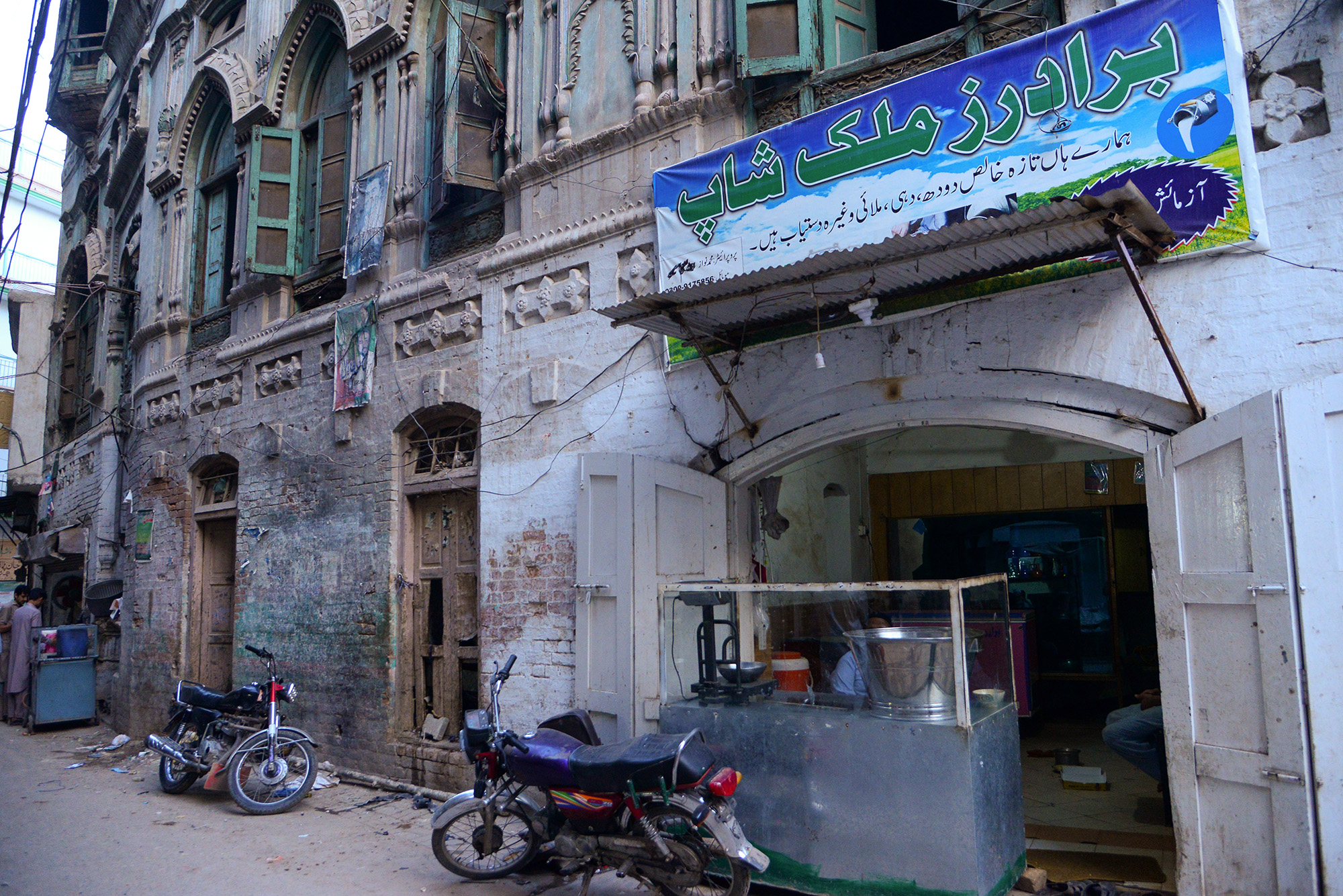


The facade of Raj Kapoor’s ancestral home in Peshawar, Khyber Pakhtunkhwa on Sept. 29, 2020. The provincial archaeology department has vowed to buy the mansion, restore it and convert into a museum. (AN photo)

Anwar Shah who owns a roadside eatery said that he has often seen foreign and local visitors coming to the area in search of the historic buildings.
“We have been waiting for this decision for years. Now it should be materialized without further delays because the mansions have already lost their splendor due to negligence."


IMF hails Pakistan privatization drive, calls PIA sale a ‘milestone’

Updated 52 min 54 sec ago
Follow

IMF hails Pakistan privatization drive, calls PIA sale a ‘milestone’

  • Fund backs sale of national airline as key step in divesting loss-making state firms
  • IMF has long urged Islamabad to reduce fiscal burden posed by state-owned entities

KARACHI: The International Monetary Fund (IMF) on Saturday welcomed Pakistan’s privatization efforts, describing the sale of the country’s national airline to a private consortium last month as a milestone that could help advance the divestment of loss-making state-owned enterprises (SOEs).

The comments follow the government’s sale of a 75 percent stake in Pakistan International Airlines (PIA) to a consortium led by the Arif Habib Group for Rs 135 billion ($486 million) after several rounds of bidding in a competitive process, marking Islamabad’s second attempt to privatize the carrier after a failed effort a year earlier.

Between the two privatization attempts, PIA resumed flight operations to several international destinations after aviation authorities in the European Union and Britain lifted restrictions nearly five years after the airline was grounded following a deadly Airbus A320 crash in Karachi in 2020 that killed 97 people.

“We welcome the authorities’ privatization efforts and the completion of the PIA privatization process, which was a commitment under the EFF,” Mahir Binici, the IMF’s resident representative in Pakistan, said in response to an Arab News query, referring to the $7 billion Extended Fund Facility.

“This privatization represents a milestone within the authorities’ reform agenda, aimed at decreasing governmental involvement in commercial sectors and attracting investments to promote economic growth in Pakistan,” he added.

The IMF has long urged Islamabad to reduce the fiscal burden posed by loss-making state firms, which have weighed public finances for years and required repeated government bailouts. Beyond PIA, the government has signaled plans to restructure or sell stakes in additional SOEs as part of broader reforms under the IMF program.

Privatization also remains politically sensitive in Pakistan, with critics warning of job losses and concerns over national assets, while supporters argue private sector management could improve efficiency and service delivery in chronically underperforming entities.

Pakistan’s Cabinet Committee on State-Owned Enterprises said on Friday that SOEs recorded a net loss of Rs 122.9 billion ($442 million) in the 2024–25 fiscal year, compared with a net loss of Rs 30.6 billion ($110 million) in the previous year.