BEIRUT: Lebanon’s top Christian cleric said on Sunday the nation faced “multiple dangers” that would be hard to weather without a government, speaking a day after the prime minister-designate quit following his failed bid to form a cabinet.
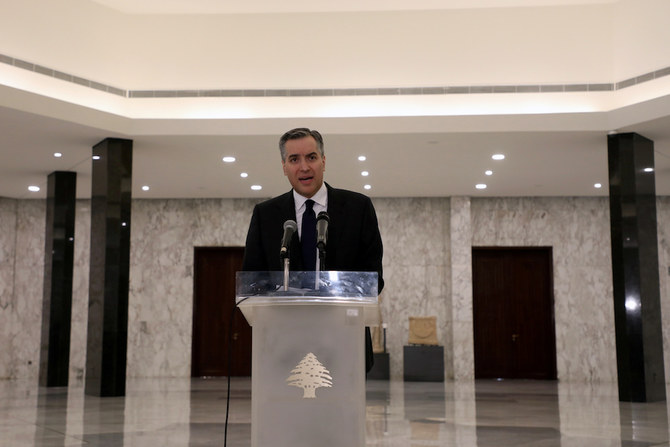
Mustapha Adib stepped down on Saturday after hitting a roadblock over how to make appointments in the sectarian system, striking a blow to a French initiative that aimed to haul the nation out of its deepest crisis since its 1975-1990 civil war.
French President Emmanuel Macron, who had pressed Lebanon’s fractious politicians to reach a consensus so that Adib was named on Aug. 31, is to due to speak about the crisis in a news conference in Paris later on Sunday.
Patriarch Bechara Boutros Al-Rai, leader of the Maronite church, Lebanon’s biggest Christian community, said Adib’s resignation had “disappointed citizens, especially the youth, who were betting on the start of change in the political class.”
Many top politicians, both Christian and Muslim, have held sway for years or even decades. Some are former warlords.
Rai said Lebanon now had to navigate “multiple dangers” without a government at the helm.
Rai’s comments were echoed on the streets of Beirut, where mass protests erupted in 2019 as years of mismanagement, corruption and mounting debts finally led to economic collapse, paralysing banks and sending the currency into freefall.
“There needs to be fundamental change. We need new people. We need new blood,” said 24-year-old Hassan Amer, serving coffee from a roadside cafe in the capital, which was hammered by a huge port blast on Aug. 4 that killed almost 200 people.
In nearby streets, walls were still plastered with graffiti from the protests, including the popular call for sweeping out the old guard: “All of them means all of them.”
Frustration at the failure of Adib, a Sunni Muslim, to form a government was voiced by many across Lebanon’s religious communities. Prime ministers under Lebanon’s sectarian power-sharing system must be Sunnis.
A senior Shiite Muslim cleric, Sheikh Ahmed Qabalan, said on Saturday Adib’s resignation as the economy collapsed could “be described as a disaster,” calling for national unity to deliver reforms, the state news agency reported.
The cabinet formation effort stumbled after Lebanon’s two main Shiite groups, Amal and the heavily armed Iran-backed Hezbollah, demanded they name several ministers, including finance, a key role as the nation draws up a rescue plan.
Saad Al-Hariri, a former prime minister and leading Sunni politician, said in a statement he would not be involved in naming any new premier and said the French plan was “the last and only opportunity to halt Lebanon’s collapse.”
A French roadmap laid out a reform program for a new government to help trigger billions of dollars of international aid.


![]()


Lebanese patriarch warns of crisis without a government after Adib steps down
Short Url
https://arab.news/2z5d7
Lebanese patriarch warns of crisis without a government after Adib steps down
- Al-Rai said Adib’s resignation had ‘disappointed citizens, especially the youth’
- Frustration at Adib’s failure to form government was voiced by Lebanon’s religious communities


Israel sees spike in PTSD and suicide among troops as war persists
JERUSALEM: Israel is grappling with a dramatic increase in post-traumatic stress disorder and suicide among its troops after its two-year assault on Gaza, precipitated by the October 7, 2023, Hamas attack on southern Israel.
Recent reports by the Defense Ministry and by health providers have detailed the military’s mental health crisis, which comes as fighting persists in Gaza and Lebanon and as tensions flare with Iran.
The Gaza war quickly expanded with cross-border fire between Israel and Lebanon’s Hezbollah, and saw hundreds of thousands of soldiers and reservists deployed across both fronts in some of the heaviest fighting in the country’s history.
Israeli forces have killed more than 71,000 Palestinians in Gaza and 4,400 in southern Lebanon, according to Gazan and Lebanese officials, and Israel says more than 1,100 service members have been killed since October 7.
The war has left much of Gaza destroyed and its 2 million people overwhelmingly lack proper shelter, food or access to medical and health services.
Palestinian mental health specialists have said Gazans are suffering “a volcano” of psychological trauma, with large numbers now seeking treatment, and children suffering symptoms such as night terrors and an inability to focus.
PTSD CASES AMONG ISRAELI SOLDIERS UP 40 percent SINCE 2023
Israeli studies show the war has taken its toll on the mental health of soldiers carrying out Israel’s stated war aims of eliminating Hamas in Gaza, retrieving hostages there and disarming Hezbollah.
Some soldiers who came under attack when their military bases were invaded by Hamas on October 7 are also struggling.
Israel’s Defense Ministry says it has recorded a nearly 40 percent increase in PTSD cases among its soldiers since September 2023, and predicts the figure will increase by 180 percent by 2028. Of the 22,300 troops or personnel being treated for war wounds, 60 percent suffer from post-trauma, the ministry says.
It has expanded the health care provided to those dealing with mental health issues, expanded the budget, and said there was an increase of about 50 percent in the use of alternative treatments.
The country’s second-largest health care provider, Maccabi, said in its 2025 annual report that 39 percent of Israeli military personnel under its treatment had sought mental health support while 26 percent had voiced concerns about depression.
Several Israeli organizations like NGO HaGal Sheli, which uses surfing as a therapy technique, have taken on hundreds of soldiers and reservists suffering from PTSD. Some former soldiers have therapy dogs.
MORAL INJURY OVER DEATHS OF INNOCENTS
Ronen Sidi, a clinical psychologist who directs combat veteran research at Emek Medical Center in northern Israel, said soldiers were generally grappling with two different sources of trauma.
One source was related to “deep experiences of fear” and “being afraid to die” while deployed in Gaza and Lebanon and even while at home in Israel. Many witnessed the Hamas assault on southern Israel — in which the militants also took around 250 hostages back into Gaza — and its aftermath firsthand.
Sidi said the second source is from moral injury, or the damage done to a person’s conscience or moral compass from something they did.
“A lot of (soldiers’) split-second decisions are good decisions,” which they take under fire, “but some of them are not, and then women and children are injured and killed by accident, and living with the feeling that you have killed innocent people... is a very difficult feeling and you can’t correct what you have done,” he said.
One reservist, Paul, a 28-year-old father of three, said he had to leave his job as a project manager with a global firm because “the whistles of the bullets” above his head lingered with him even after returning home.
Paul, who declined to give his last name over privacy concerns, said he deployed in combat roles in Gaza, Lebanon and Syria. Although fighting has abated in recent months, he says he lives in a constant state of alert.
“I live that way every day,” Paul said.
UNTREATED TRAUMA
A soldier seeking state support for their mental health must appear before a defense ministry assessment committee which determines the severity of their case and grants them official recognition. That process can take months and can deter soldiers from seeking help, some trauma professionals say.
Israel’s Defense Ministry says it provides some immediate help to soldiers once they start the evaluation process and has increased this effort since the war began.
An Israeli parliamentary committee found in October that 279 soldiers had attempted suicide in the period from January 2024 to July 2025, a sharp increase from previous years. The report found that combat soldiers comprised 78 percent of all suicide cases in Israel in 2024.
The risk of suicide or self-harm increases if trauma is untreated, said Sidi, the clinical psychologist.
“After October 7 and the war, the mental health institutions in Israel are overwhelmed completely, and a lot of people either can’t get therapy or don’t even understand the distress that they are feeling has to do with what they have experienced.”
For soldiers, the chance of seeing combat remains high. Israel’s military remains deployed in over half of Gaza and fighting has persisted there despite a US-backed truce in October, with more than 440 Palestinians and three Israeli soldiers killed.
Its troops still occupy parts of southern Lebanon, as the Lebanese army presses on with disarming Hezbollah under a separate US-brokered deal. In Syria, Israeli troops have occupied an expanded section of the country’s south since the ouster of former leader Bashar Assad.
As tensions flare with Iran and the US threatens to intervene, Israel could also find itself in another violent confrontation with Tehran, after last June’s 12-day war.
Recent reports by the Defense Ministry and by health providers have detailed the military’s mental health crisis, which comes as fighting persists in Gaza and Lebanon and as tensions flare with Iran.
The Gaza war quickly expanded with cross-border fire between Israel and Lebanon’s Hezbollah, and saw hundreds of thousands of soldiers and reservists deployed across both fronts in some of the heaviest fighting in the country’s history.
Israeli forces have killed more than 71,000 Palestinians in Gaza and 4,400 in southern Lebanon, according to Gazan and Lebanese officials, and Israel says more than 1,100 service members have been killed since October 7.
The war has left much of Gaza destroyed and its 2 million people overwhelmingly lack proper shelter, food or access to medical and health services.
Palestinian mental health specialists have said Gazans are suffering “a volcano” of psychological trauma, with large numbers now seeking treatment, and children suffering symptoms such as night terrors and an inability to focus.
PTSD CASES AMONG ISRAELI SOLDIERS UP 40 percent SINCE 2023
Israeli studies show the war has taken its toll on the mental health of soldiers carrying out Israel’s stated war aims of eliminating Hamas in Gaza, retrieving hostages there and disarming Hezbollah.
Some soldiers who came under attack when their military bases were invaded by Hamas on October 7 are also struggling.
Israel’s Defense Ministry says it has recorded a nearly 40 percent increase in PTSD cases among its soldiers since September 2023, and predicts the figure will increase by 180 percent by 2028. Of the 22,300 troops or personnel being treated for war wounds, 60 percent suffer from post-trauma, the ministry says.
It has expanded the health care provided to those dealing with mental health issues, expanded the budget, and said there was an increase of about 50 percent in the use of alternative treatments.
The country’s second-largest health care provider, Maccabi, said in its 2025 annual report that 39 percent of Israeli military personnel under its treatment had sought mental health support while 26 percent had voiced concerns about depression.
Several Israeli organizations like NGO HaGal Sheli, which uses surfing as a therapy technique, have taken on hundreds of soldiers and reservists suffering from PTSD. Some former soldiers have therapy dogs.
MORAL INJURY OVER DEATHS OF INNOCENTS
Ronen Sidi, a clinical psychologist who directs combat veteran research at Emek Medical Center in northern Israel, said soldiers were generally grappling with two different sources of trauma.
One source was related to “deep experiences of fear” and “being afraid to die” while deployed in Gaza and Lebanon and even while at home in Israel. Many witnessed the Hamas assault on southern Israel — in which the militants also took around 250 hostages back into Gaza — and its aftermath firsthand.
Sidi said the second source is from moral injury, or the damage done to a person’s conscience or moral compass from something they did.
“A lot of (soldiers’) split-second decisions are good decisions,” which they take under fire, “but some of them are not, and then women and children are injured and killed by accident, and living with the feeling that you have killed innocent people... is a very difficult feeling and you can’t correct what you have done,” he said.
One reservist, Paul, a 28-year-old father of three, said he had to leave his job as a project manager with a global firm because “the whistles of the bullets” above his head lingered with him even after returning home.
Paul, who declined to give his last name over privacy concerns, said he deployed in combat roles in Gaza, Lebanon and Syria. Although fighting has abated in recent months, he says he lives in a constant state of alert.
“I live that way every day,” Paul said.
UNTREATED TRAUMA
A soldier seeking state support for their mental health must appear before a defense ministry assessment committee which determines the severity of their case and grants them official recognition. That process can take months and can deter soldiers from seeking help, some trauma professionals say.
Israel’s Defense Ministry says it provides some immediate help to soldiers once they start the evaluation process and has increased this effort since the war began.
An Israeli parliamentary committee found in October that 279 soldiers had attempted suicide in the period from January 2024 to July 2025, a sharp increase from previous years. The report found that combat soldiers comprised 78 percent of all suicide cases in Israel in 2024.
The risk of suicide or self-harm increases if trauma is untreated, said Sidi, the clinical psychologist.
“After October 7 and the war, the mental health institutions in Israel are overwhelmed completely, and a lot of people either can’t get therapy or don’t even understand the distress that they are feeling has to do with what they have experienced.”
For soldiers, the chance of seeing combat remains high. Israel’s military remains deployed in over half of Gaza and fighting has persisted there despite a US-backed truce in October, with more than 440 Palestinians and three Israeli soldiers killed.
Its troops still occupy parts of southern Lebanon, as the Lebanese army presses on with disarming Hezbollah under a separate US-brokered deal. In Syria, Israeli troops have occupied an expanded section of the country’s south since the ouster of former leader Bashar Assad.
As tensions flare with Iran and the US threatens to intervene, Israel could also find itself in another violent confrontation with Tehran, after last June’s 12-day war.
Latest updates


© 2026 SAUDI RESEARCH & PUBLISHING COMPANY, All Rights Reserved And subject to Terms of Use Agreement.