

JEDDAH: Saudi film festival judges have revealed the winners of two $500,000 production grants.
“Sharshaf,” directed by Saudi filmmaker Hind Al-Fahhad, and Egyptian producer Mohammed Hammad’s “Bullets and Bread” scooped the Red Sea International Film Festival awards.
They were among 12 movie projects selected to take part in the first edition of the Red Sea Lodge script and feature development lab.
A jury composed of Russian producer and actress Nadia Turincev, German director, writer, and production manager Meinolf Zurhorst, and Egyptian filmmaker Yousry Nasrallah picked the winners.
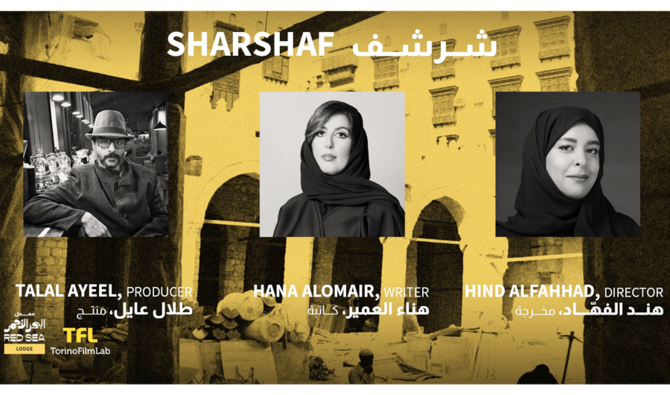
The Red Sea Lodge grant for a Saudi project went to Al-Fahhad’s “Sharshaf,” which was written by Saudi film director Hana Alomair and produced by Talal Ayel.
Jury members said they had been enamored by the “touching and strong female character, and the bonds in a relationship that can bring us together and tear us apart,” adding that it had been intriguingly set in “a period (1978) of Saudi Arabia’s history the world knows so little about, unveiled to us by Hind Al-Fahhad.”
The romantic drama tells the story of Haila, the daughter of a conservative imam who marries Mosa’ed, the son of a rich and well-known fabric-store owner. The young couple spend their honeymoon in Cairo and the film focuses on Haila as she discovers the magic of cinema only to see it challenged by extremism.
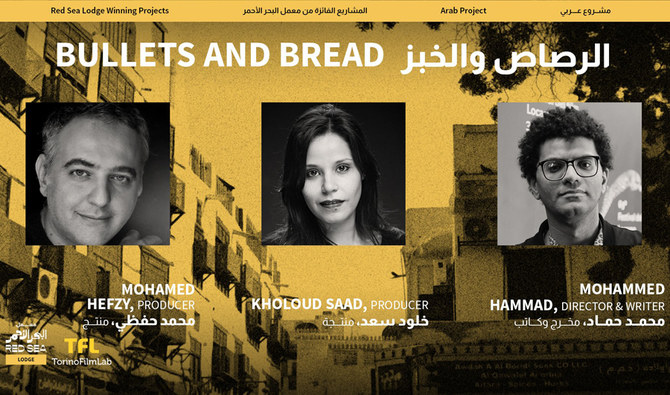
The award for an Arab project was given to Hammad’s “Bullets and Bread,” produced by Kholoud Saad and Mohamed Hefzy.
The movie follows Youssef, a conscript serving his compulsory military service on the Egyptian eastern desert border, who dreams of becoming a writer. When by chance he meets Awad, a dangerous bandit from a nomadic desert tribe looking to find a better life for his family in Cairo, an unlikely friendship develops between them.
The jury enjoyed the dynamic at the film’s heart which it described as, “soldier and gypsy; Laurel and Hardy; friendship and adversity. We can’t wait to be part of this road trip, this cinematic voyage.”
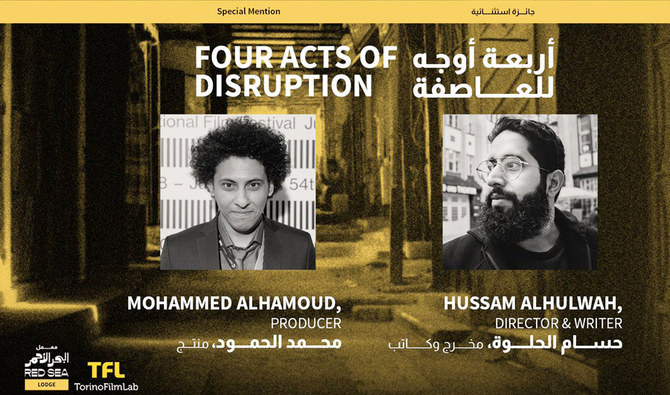
Special mention was made to the Saudi project “Four Acts of Disruption” directed by Hussam Al-Hulwah and produced by Mohammed Al-Hamoud, which will receive $25,000 for further development.
The story is set in the 1930s as the newly formed Kingdom of Saudi Arabia adjusts to the arrival of American oil prospectors. “The film has huge potential and we hope that Hussam Al-Hulwah and Mohammed Al-Hamoud can continue to develop the project and bring it to fruition,” the judges said.
The six Saudi projects selected for the inaugural Red Sea Lodge were “Basma” written by Fatima Al-Banawi and directed by Ali Al-Sumayin, “Practicing Polygamy” directed by Malak Qouta, “When the Star Goes Down” directed by Mohammed Salman, “Hejj to Disney” directed by Maha Al-Saati, “Sharshaf,” and “Four Acts of Disruption.”
The six Arab projects were “Scheherazade Goes Silent” directed by Amira Diab, “Inshallah It’s A Boy” directed by Amjad Al-Rasheed, “The Arabic Interpreter” directed by Ali Kareem, “The Basement Notes” directed by Hadi Ghandour, “I Am Arze” directed by Mira Shaib, and “Bullets and Bread.”
In collaboration with the TorinoFilmLab, the Red Sea Lodge hand-picked 12 emerging filmmakers, pairing each with an experienced mentor to support and enhance their work throughout the creative process.
The program was aimed at honing the visions of directors and producers, along with scriptwriters. Every stage of filmmaking was explored, from script consultations to working with experts in the fields of directing, cinematography, and sound, through to post-production as well as a commercial focus on financing, sales, and audience engagement.
Meanwhile, director Al-Saati’s “Hejj to Disney” was selected for the TIFF Filmmaker Lab talent development scheme, and for similar upcoming programs at the Malmo Arab Film Festival and El-Gouna Film Festival. Saudi director Al-Saati will also participate in the Hollywood Foreign Press Association residency program in 2021.