LONDON: Libya’s National Oil Company said it expected oil production to rise to 260,000 barrels per day (bpd) next week, as the OPEC member looks to revive its oil industry, crippled by a blockade since January.
Oil prices fell around 5 percent on Monday, partly due to the potential return of Libyan barrels to a market that’s already grappling with the prospect of collapsing demand from rising coronavirus cases.
Libya produced around 1.2 million bpd — over 1 percent of global production — before the blockade, which slashed the OPEC member’s output to around 100,000 bpd.
NOC, in a statement late on Monday, said it is preparing to resume exports from “secure ports” with oil tankers expected to begin arriving from Wednesday to load crude in storage over the next 72 hours.
As an initial step, exports are set to resume from the Marsa El Hariga and Brega oil terminals, it said.
The Marlin Shikoku tanker is making its way to Hariga where it is expected to load a cargo for trader Unipec, according to shipping data and traders.
Eastern Libyan commander Khalifa Haftar said last week his forces would lift their eight-month blockade of oil exports.
NOC insists it will only resume oil operations at facilities devoid of military presence.
Nearly a decade after rebel fighters backed by NATO air strikes overthrew dictator Muammar Qaddafi, Libya remains in chaos, with no central government.
The unrest has battered its oil industry, slashing production capacity down from 1.6 million bpd.
Goldman Sachs said Libya’s return should not derail the oil market’s recovery, with an upside risk to production likely to be offset by higher compliance with production cuts from other OPEC members.
“We see both logistical and political risks to a fast and sustainable increase in production,” the bank said. It expects a 400,000 bpd increase in Libyan production by December.
The Organization of the Petroleum Exporting Countries and allies led by Russia, are closely watching the Libya situation, waiting to see if this time Libya’s return to the oil market is sustainable, sources told Reuters.

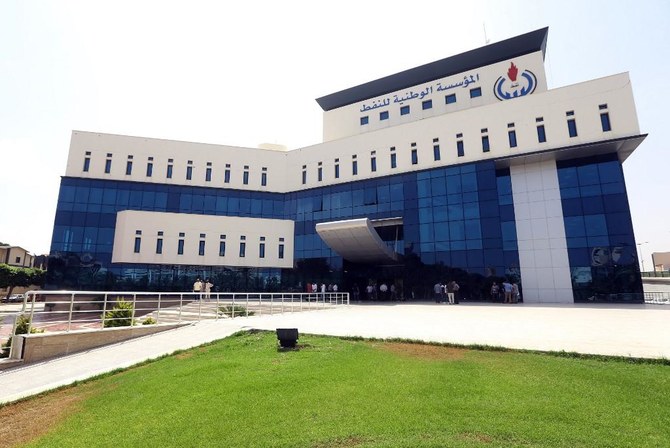
Libya’s NOC says production to rise as it seeks to revive oil industry
https://arab.news/g7kpd
Libya’s NOC says production to rise as it seeks to revive oil industry
- Libya produced around 1.2 million bpd – over 1 percent of global production – before the blockade
- Libya’s return to the oil market is sustainable
Industry leaders highlight Riyadh’s Metro, infrastructure as investment catalysts
RIYADH: Saudi Arabia’s capital, Riyadh, is experiencing a transformative phase in its real estate sector, with the construction market projected to reach approximately $100 billion in 2025, accompanied by an anticipated annual growth rate of 5.4 percent through 2029.
The Kingdom is simultaneously advancing its data center capacity at an accelerated pace, with an impressive 2.7 GW currently in the pipeline. This expansion underscores the critical role of strategic land and power planning in establishing national infrastructure as a cornerstone of economic growth.
These insights were shared by leading industry experts during JLL’s recent client event in Riyadh, which focused on the city’s macroeconomic landscape and emerging trends across office, residential, retail, hospitality, and pioneering sectors, including AI infrastructure and Transit-Oriented Development.
Saud Al-Sulaimani, Country Lead and Head of Capital Markets at JLL Saudi Arabia, commented: “Riyadh is positioned at the forefront of Saudi Arabia’s Vision 2030, offering unparalleled opportunities for both investors and developers. National priorities are continuously recalibrated to ensure strategic alignment of projects and foster deeper collaboration with the private sector.”
He added: “Recent regulatory developments, including the introduction of the White Land Tax and the rent freeze, are designed to stabilize the market and are expected to drive renewed focus on delivering premium-quality assets. This dynamic environment, coupled with evolving construction cost considerations in select segments, is fundamentally reshaping the market landscape while accelerating progress toward our national objectives.”
The event further underscored the transformative impact of infrastructure initiatives. Mireille Azzam Vidjen, Head of Consulting for the Middle East and Africa at JLL, highlighted Riyadh’s transit revolution. She detailed the Riyadh Metro, a $22.5 billion investment encompassing 176 kilometers, six lines, and 84 stations, providing extensive geographic coverage, with a depth of 9.8 km per 100 sq. km. This strategic development generates significant TOD opportunities, with properties in proximity potentially commanding a 20-30 percent premium. JLL emphasized the importance of implementing climate-responsive last-mile solutions to enhance mobility and accessibility, particularly given Riyadh’s extreme temperatures.
Gaurav Mathur, Head of Data Centers at JLL, emphasized the rapid expansion of the Kingdom’s AI infrastructure, signaling a critical area for technological investment and innovation.
Focusing on the construction sector, Maroun Deeb, Head of Projects and Development Services, KSA at JLL, explained that the industry is actively navigating complexities such as skilled labor availability, material costs, and supply chain dynamics.
He highlighted the adoption of Building Information Modeling as a key driver for enhancing operational efficiency and project delivery.