


BEIRUT: Lebanon is “going to hell” if it fails to form a government, the president warned on Monday.
A huge explosion on Aug. 4 at the Port of Beirut led to the resignation of Prime Minister Hassan Diab and his administration.
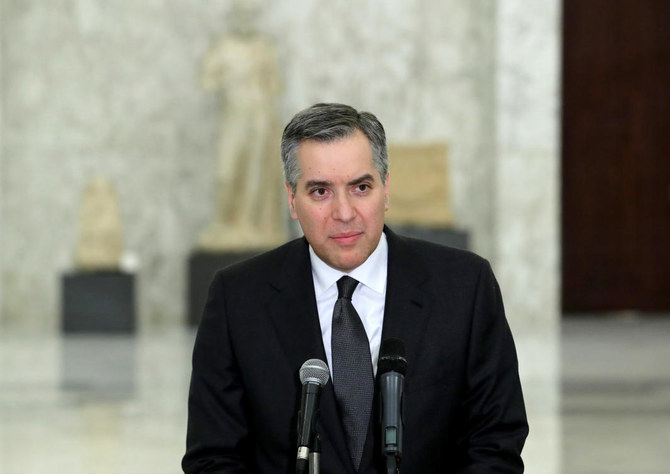
Mustapha Adib, the country’s 48-year old ambassador to Germany, was named as his replacement and tasked with assembling a new government.
However his mission has stalled, not least because of a dispute over who will lead the Ministry of Finance.
Hezbollah and its ally the Amal Movement want Shiite ministers in the cabinet, including the finance minister. The Free Patriotic Movement has objected to their demand and proposed naming ministers from small sects to assume key portfolios.
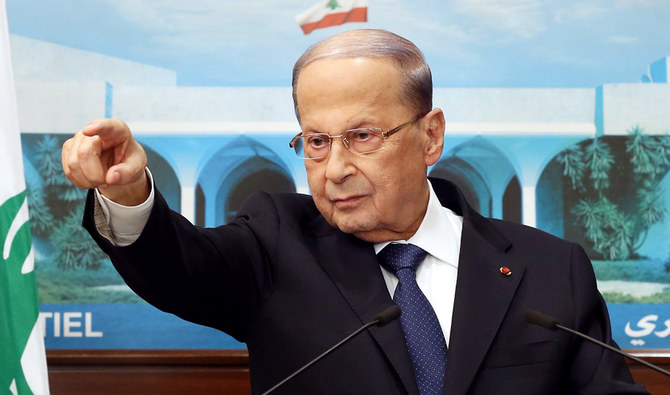
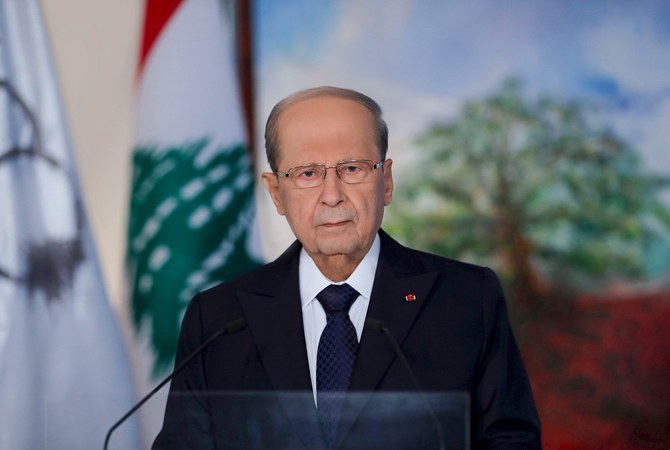
Lebanon “is going to hell if the situation remains as it is,” President Michel Aoun said. “Neither bullying one another will benefit, nor channeling foreign powers will help. Only understanding each other based on the constitution and balance will take us to stability and recovery. The rigidity of positions will not lead us to any result except for more aggravation, while what Lebanon needs most in light of all its successive crises is some resolution and solidarity so that it can rise and confront its problems.”
An initiative from France stipulates that the government comprise specialists who are separate from the parties in power, that portfolios should be rotated, that the government be small, its work team homogeneous and that it carry out a specific reform mission.
This mission, based on its implementation, would lead to crucial international aid that would bail Lebanon out of its economic and financial misery.
President Emmanuel Macron gave parties a deadline to form a government. It was missed, however, and has been extended until Tuesday.
Aoun proposed cancelling the sectarian distribution of key ministries, not allocating them to specific sects but making them available to all sects, and making the ability to accomplish and not sectarian affiliation as the criterion for choosing ministers.
Activists criticized Aoun’s statement on social media. Majd Harb, the son of former MP Boutros Harb, said Lebanon had been “in hell” since Oct. 31, 2016, the date of Aoun’s election as president.
Adib went to the presidential palace on Monday. He said in a statement: “Lebanon does not have the luxury of wasting time amid the unprecedented financial, monetary, economic, social and health crises it is going through.”
He reminded all political parties of their pledge “to support the government, which has a definite program,” and urged everyone “to work for the success of the French initiative immediately and without delay, which clears the way to rescue Lebanon and stop the rapid deterioration.”
Lebanon is facing a shortage of foreign currency reserves that threatens to stop the subsidy of basic materials in the country, such as fuel, wheat and medicine, within two months.
The devastating August explosion exacerbated the country’s many crises, including the coronavirus outbreak.
The total number of people infected since the detection of the disease in Lebanon on Feb. 21 is around 30,000. The death toll is around 300.
The government committee tasked with managing the pandemic and putting preventive measures in place met on Monday following the increase in infections.
It recommended the closure of towns with a spike in cases and the “strictness in punishing individuals who do not wear masks and institutions that do not comply with the preventive conditions imposed.”
The health minister’s proposal to lock down Lebanon for two weeks faced objections from the caretaker government, trade unions and stakeholders.
Dr. Abdul Rahman Bizri, an infectious disease specialist and member of the emergency committee on coronavirus, said that the virus would remain “for no less than a year, and our life cannot be postponed for a year, and we must coexist with it.”


