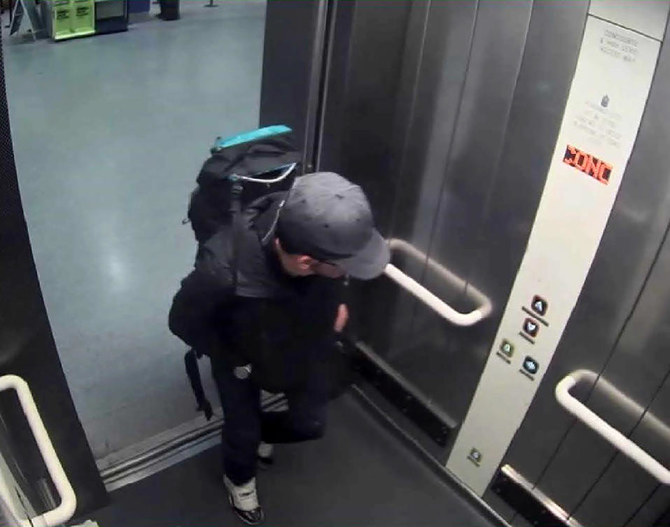
LONDON: The Manchester Arena bomber had visited a convicted terror offender in prison “more than once,” an inquiry into the attack has heard.
Despite this, the UK’s domestic intelligence service MI5 did not reopen an investigation into attacker Salman Abedi, The Independent reported.
The security service also knew of his contact with Daesh supporters and travel to Libya, but failed to consider Abedi as a security threat, the British newspaper said.
“MI5 information indicated that Abedi visited a terror offender in prison on more than one occasion, but MI5 assessed that this did not justify reopening him as a subject of interest,” counsel to the inquiry, Paul Greaney, said.
One of the bomber’s schoolteachers had also seen a photo of Abedi holding a gun in Libya during the country’s civil war but had believed his claim that he had just been “shooting.”
The tutor “saw an image on Abedi’s computer of him holding a gun while in Tripoli, but his explanation that his family had lots of land in Libya and he used to go shooting there was accepted,” the hearing was told.
Photos that Abedi posted on social media included one of him making a hand gesture used by Daesh supporters, the inquiry heard.
Greaney said the inquiry would consider if it had been “reasonable” for MI5 to close an active investigation into Abedi in July 2014 and then fail to reopen it in light of new intelligence.
“Links with Abdalraouf Abdallah are of significant interest to the inquiry,” he added.
Abdallah, who also lived in Manchester, in northern England, attended the same school as Abedi and shared many associates with him, was jailed in 2016 for helping Daesh fighters travel to Syria.
The pair had regular contact with each other and Abedi visited Abdallah in two separate English prisons. Abdallah is still serving his sentence and has refused to answer questions from the public inquiry.
Abedi had also been at the deathbed of a suspected extremist preacher four months before he carried out the brutal attack on people leaving a concert by US singer Ariana Grande, The Times reported.
Mansoor Al-Anezi died of cancer on Jan. 17, 2017 and Abedi comforted him as he died.
Greaney said that “various items related to Al-Anezi” had been found at Abedi’s family home in Manchester and that he had been in “frequent phone contact” with the preacher, the British newspaper added.

Manchester Arena bomber visited jailed terrorist, but MI5 did not reopen probe
Short Url
https://arab.news/8rkfm
Manchester Arena bomber visited jailed terrorist, but MI5 did not reopen probe
- The security service also knew of his contact with Daesh supporters and travel to Libya, but failed to consider Abedi as a security threat
- Abedi had also been at the deathbed of a suspected extremist preacher four months before he carried out the attack
Taiwan says reached ‘general consensus’ with US on trade deal
- Taiwan has reached a “general consensus” with the United Sates on a trade deal, the democratic island’s negotiators said Tuesday, after months of talks
TAIPEI: Taiwan has reached a “general consensus” with the United Sates on a trade deal, the democratic island’s negotiators said Tuesday, after months of talks.
Taiwan and the United States began negotiations in April to hash out a trade deal after US President Donald Trump slapped a 32 percent tariff on Taiwanese exports, which was later lowered to 20 percent, as part of his sweep of measures against dozens of trade partners.
Taiwanese President Lai Ching-te has pledged to boost investment in the United States and increase defense spending as his government tries to further reduce the levy on its shipments, as well as avoid a toll on its semiconductor chip exports.
“The goal of the US-Taiwan tariff negotiations has always been to seek reciprocal tariff reductions without stacking tariffs, and to obtain preferential treatment under Section 232 for semiconductors, semiconductor derivatives, and other items,” the Office of Trade Negotiations said in a statement, adding there was a “general consensus” on these issues.
Section 232 refers to part of the US Trade Expansion Act that allows tariffs to be imposed when national security is found to be at risk.
“Both sides are currently discussing the schedule for a concluding meeting, and an announcement will be made once it is confirmed,” the statement said.
Taiwan’s trade officials also vowed to provide “a complete explanation of the negotiations and the agreement” to the opposition-controlled parliament and the public.
American soil
Taiwan is a powerhouse in the manufacturing of semiconductor chips, which are the lifeblood of the global economy, as well as other electronics.
Trump has previously accused Taiwan of stealing the US chip industry and his administration had made clear it wants more of the critical technology made on American soil.
The US government launched investigations under Section 232 into semiconductors and chip-making equipment last year.
Taiwan’s trade surplus with the United States was the seventh highest of any country in 2024, reaching $73.9 billion.
More than half of its exports to the United States are information and communications technology products, including semiconductors.
Lai has been at pains to find favor with Trump, vowing to raise defense spending to more than three percent of GDP this year and five percent by 2030.
TSMC, which is the world’s largest contract chip maker, also has pledged to invest an additional $100 billion in the United States.
But Taiwanese Deputy Foreign Minister Francois Chih-chung Wu told AFP recently that Taiwan planned to keep making the “most advanced” chips on home soil.
Taiwan and the United States began negotiations in April to hash out a trade deal after US President Donald Trump slapped a 32 percent tariff on Taiwanese exports, which was later lowered to 20 percent, as part of his sweep of measures against dozens of trade partners.
Taiwanese President Lai Ching-te has pledged to boost investment in the United States and increase defense spending as his government tries to further reduce the levy on its shipments, as well as avoid a toll on its semiconductor chip exports.
“The goal of the US-Taiwan tariff negotiations has always been to seek reciprocal tariff reductions without stacking tariffs, and to obtain preferential treatment under Section 232 for semiconductors, semiconductor derivatives, and other items,” the Office of Trade Negotiations said in a statement, adding there was a “general consensus” on these issues.
Section 232 refers to part of the US Trade Expansion Act that allows tariffs to be imposed when national security is found to be at risk.
“Both sides are currently discussing the schedule for a concluding meeting, and an announcement will be made once it is confirmed,” the statement said.
Taiwan’s trade officials also vowed to provide “a complete explanation of the negotiations and the agreement” to the opposition-controlled parliament and the public.
American soil
Taiwan is a powerhouse in the manufacturing of semiconductor chips, which are the lifeblood of the global economy, as well as other electronics.
Trump has previously accused Taiwan of stealing the US chip industry and his administration had made clear it wants more of the critical technology made on American soil.
The US government launched investigations under Section 232 into semiconductors and chip-making equipment last year.
Taiwan’s trade surplus with the United States was the seventh highest of any country in 2024, reaching $73.9 billion.
More than half of its exports to the United States are information and communications technology products, including semiconductors.
Lai has been at pains to find favor with Trump, vowing to raise defense spending to more than three percent of GDP this year and five percent by 2030.
TSMC, which is the world’s largest contract chip maker, also has pledged to invest an additional $100 billion in the United States.
But Taiwanese Deputy Foreign Minister Francois Chih-chung Wu told AFP recently that Taiwan planned to keep making the “most advanced” chips on home soil.
© 2026 SAUDI RESEARCH & PUBLISHING COMPANY, All Rights Reserved And subject to Terms of Use Agreement.



