ISLAMABAD: World Health Organization (WHO) Director General, Dr. Tedros Adhanom Ghebreyesus, has listed Pakistan among a handful of countries whose preparation and response offer lessons for the rest of the world to fight the COVID-19 outbreak and future pandemics.
As coronavirus cases have dropped to a trickle in Pakistan, life has gotten largely back to normal, and the last remnants of partial lockdown restrictions have been lifted. Restaurants and tourism have reopened, and schools and universities, along with marriage halls, are set to open this month.
On Thursday Pakistan reported six new deaths from COVID-19 in the past 24 hours, while active coronavirus cases have dropped to 5,540. The South Asian nation has so far reported 299,855 infections and 6,365 deaths.
“Pakistan has used the infrastructure it developed in its fight against polio to tackle COVID-19,” Ghebreyesus said at a media briefing this week. “Community health workers, previously used to vaccinate children for polio, have been redeployed for contact tracing and monitoring.”
He also named Thailand, Italy, Mongolia, Mauritius and Uruguay for their preparation for, and response against, the COVID-19 pandemic, adding: “This will not be the last pandemic,” he said. “History teaches us that outbreaks and pandemics are a fact of life. But when the next pandemic comes, the world must be ready – more ready than it was this time.”
Ghebreyesus gave other examples of countries who had done well, including Cambodia, Japan, New Zealand, the Republic of Korea, Rwanda, Senegal, Spain, Viet Nam and more and said: “Many of these countries have done well because they learned lessons from previous outbreaks of SARS, MERS, measles, polio, Ebola, flu and other diseases. That’s why it’s vital that we all learn the lessons this pandemic is teaching us.”


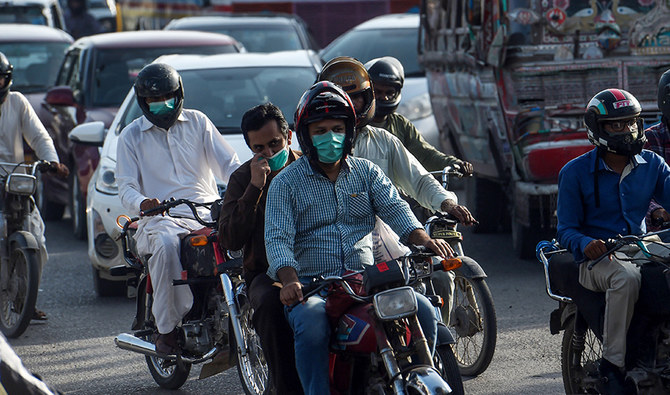
WHO chief lists Pakistan among countries to learn from to fight COVID-19, future pandemics
https://arab.news/9gum2
WHO chief lists Pakistan among countries to learn from to fight COVID-19, future pandemics

- Says Pakistan used the infrastructure it developed in fight against polio to tackle COVID-19
- Also lists Mongolia, Thailand, Uruguay, Mauritius, Italy

Islamabad launches real-time fuel monitoring system as Iran war rattles oil markets
- Authorities say they will track petrol stocks at 145 stations through City Islamabad app
- Petrol stations in the city are required to upload daily stock data to prevent shortages
ISLAMABAD: Authorities in Pakistan’s capital have launched a digital system to monitor petroleum stocks at fuel stations in real time, and official statement said on Tuesday, as the government steps up oversight of supplies following market disruptions linked to tensions in the Middle East.
The system has been introduced by the Islamabad district administration days after authorities sealed seven petrol stations for refusing fuel to motorists. It will allow officials to track fuel inventories through the “City Islamabad” mobile application, requiring petrol pump operators to upload daily stock details as authorities seek to prevent hoarding and artificial shortages.
The initiative comes days after Pakistan raised fuel prices sharply and authorities across the country launched crackdowns on hoarding amid fears that escalating conflict in the Middle East could disrupt global energy shipments and push oil prices higher.
“Real-time monitoring will ensure that any shortage of petroleum products can be addressed immediately,” Islamabad Deputy Commissioner Irfan Memon said in the statement announcing the system.
The statement noted the new digital tool would enable authorities to track stock levels at 145 fuel stations across Islamabad and monitor transactions through the mobile platform.
Under the system, petrol pump owners must upload daily stock information, while the district administration has released a tutorial explaining how to use the feature.
Authorities warned that failure to upload stock data could result in action against fuel station owners.
Pakistan has tightened monitoring of fuel supplies in recent days after global oil markets were rattled by United States and Israeli strikes on Iran, which raised concerns about possible disruptions to shipping routes in the Middle East, particularly around the Strait of Hormuz, a key corridor for global energy trade.
The government has said it is closely watching domestic supply conditions and international oil markets while taking steps to ensure fuel availability and prevent panic buying.


