US shale producers race for federal permits ahead of presidential election

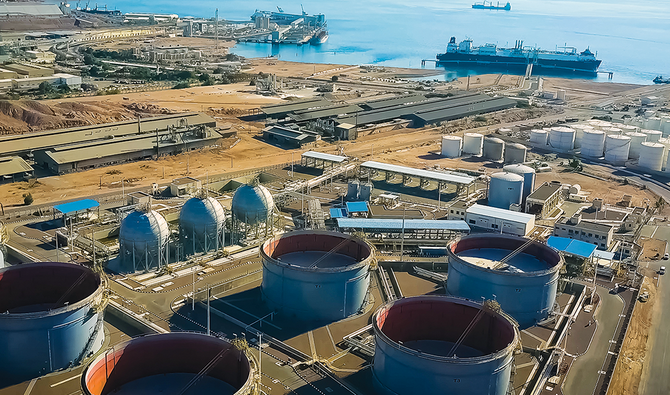
Federal permits have risen 80 percent in Texas and New Mexico, where oil and gas revenues account for up to a third of state budgets. (Shutterstock)
Short Url
Updated 08 September 2020
Follow

US shale producers race for federal permits ahead of presidential election

  • Oil firms hedge their bets as Democrat hopeful gains ground against Trump

HOUSTON: Oil producers in the top US shale fields are stockpiling drilling permits on federal land ahead of the November US presidential election, concerned that a win by Democratic candidate Joe Biden could lead to a clamp-down on oilfield activity.

Federal permitting in the largest US oilfield in the Permian Basin, located in Texas and New Mexico, is up 80 percent in about the last three months, which analysts attribute to a hedge against a win by Biden, who currently leads US President Donald Trump by several points in national polling.

Biden has stated that he does not want to ban fracking outright, putting him at odds with many environmentalists and Democratic party activists.

However, his climate plan includes banning new oil and gas permits on public lands, which industry groups say would hurt the economy and cut off an energy boom that has made the US the world’s largest crude oil producer. 

The shale revolution of recent years boosted US crude output to roughly 12 million barrels per day last year through hydraulic fracturing, or fracking, which is environmentally controversial as it involves pumping water, sand and chemicals into rock at high pressure to release oil or natural gas. As of Aug. 24, producers have received 974 permits so far this year for new wells on federal land in the Permian, compared with 1,068 for all of last year and 265 in 2018, according to data firm Enverus.

In the 90 days up till Aug. 24, producers received 404 permits in the Permian, compared with 225 and 11 in the same period in 2019 and 2018, respectively.

The scramble for permits comes despite the weak outlook for oil drilling and prices due to the ongoing coronavirus pandemic.

Crude prices plunged in spring following the outbreak and have remained stuck near $40 a barrel. The number of oil and gas rigs drilling new wells in the United States hit record lows for 15 weeks and last week was 71% lower year-on-year, according to Baker Hughes data, and analysts do not expect a sharp rebound for some time.

Uncertainty about a ban and other possible regulatory changes, including a proposal to modify royalties to account for climate costs, mean more permits will be filed ahead of the election, said Bernadette Johnson, vice president at Enverus.

The industry has raced to file for permits before ahead of potential regulatory changes.

In Colorado in 2018, as voters considered a proposition to increase the distance required between new wells and buildings, permitting jumped 165 percent in the last six months of the year compared with the first half, according to Enverus. At least nine producers stockpiled more than two years’ worth of permits.

EOG Resources Inc, Cimarex Energy Co, Matador Resources Co. and Devon Energy Corp. are among the shale producers who have said they expect to have years of drilling permits.

Devon is “proactively managing risks” by stockpiling more than 550 federal permits in New Mexico and Wyoming, Chief Executive Officer Dave Hager told analysts this month.

Most producers have “a runway of 12 to 18 months” in permits in the Permian and Wyoming’s Powder River Basin, said Jake Roberts at energy investment bank Tudor, Pickering, Holt & Co. Federal permits are for two years and can be extended another two, but there is no guarantee that routine permit extensions would continue in the future, Cimarex CEO Tom Jorden said on an earnings call in August.

US oil production remains below 2019’s peak and analysts expect it will be slow to recover in the coming year, as shale production depends on new investment due to the short life of the wells drilled.

The race for permits has centered on the part of the Permian located in New Mexico, said Artem Abramov, head of shale research at Rystad Energy. About 85 percent of well permits there have been on federal lands this year, up from 60 percent in 2018 and 2019 — evidence of companies trying to “fast track” permits on federal acreage, Abramov said. Meanwhile, permits on state and private lands, which features similar geology, have fallen.

New Mexico Governor Michelle Lujan Grisham, a Democrat, has said she would ask for a waiver exempting it from any drilling bans. The state is one of the nation’s poorest, and a third of the state’s budget comes from oil and gas revenues. Around 65 percent of New Mexico production is on federal acreage.

Matador and EOG have been two of the most aggressive in adding federal permits in New Mexico.

Matador expects to have 300 federal permits by late 2020.

“We think the chances of them saying you can’t drill on your leasehold are fairly slim,” CEO Joseph Foran told analysts in July.

Its new federal permits in two key New Mexico counties that are among the most prolific in the Permian Basin are up 149 percent so far this year, compared with its 2019 total, according to Rystad.

EOG’s permits in those same New Mexico counties, Eddy and Lea, are up 49 percent so far this year compared with all of 2019, according to Rystad.

EOG has 2,500 permits on federal lands in four states approved or in the works, enough for four years, Chief Operating Officer Lloyd Helms said on an earnings call.

The industry has secured so many permits that investors and analysts have largely shrugged off the political risks of a federal fracking ban.

“I’m not sure if it would have the big impact that people are making it out to be,” said Rob Thummel, energy portfolio manager at Tortoise Capital.


AI will never replace human creativity, says SRMG CEO 

Updated 30 January 2026
Follow

AI will never replace human creativity, says SRMG CEO 

  • Speaking to Maya Hojeij, senior business anchor at Asharq with Bloomberg, Jomana R. Alrashid expressed pride in SRMG platforms that had absorbed and adopted AI

RIYADH: Jomana R. Alrashid, CEO of Saudi Research and Media Group, highlighted how AI cannot replace human creativity during a session at The Family Office’s “Investing Is a Sea” summit at Shura Island on Friday. 

“You can never replace human creativity. Journalism at the end of the day, and content creation, is all about storytelling, and that’s a creative role that AI does not have the power to do just yet,” Alrashid told the investment summit. 

“We will never eliminate that human role which comes in to actually tell that story, do the actual investigative reporting around it, make sure to be able to also tell you what’s news or what’s factual from what’s wrong ... what’s a misinformation from bias, and that’s the bigger role that the editorial player does in the newsroom.”

Speaking on the topic of AI, moderated by Maya Hojeij, senior business anchor at Asharq with Bloomberg, the CEO expressed her pride in SRMG platforms that had absorbed and adopted AI in a way that was “transformative.”

“We are now translating all of our content leveraging AI. We are also now being able to create documentaries leveraging AI. We now have AI-facilitated fact-checking, AI facilities clipping, transcribing. This is what we believe is the future.”

Alrashid was asked what the journalist of the future would look like. “He’s a journalist and an engineer. He’s someone who needs to understand data. And I think this is another topic that is extremely important, understanding the data that you’re working with,” she said.

“This is something that AI has facilitated as well. I must say that over the past 20 years in the region, especially when it comes to media companies, we did not understand the importance of data.”


The CEO highlighted that previously, media would rely on polling, surveys or viewership numbers, but now more detailed information about what viewers wanted was available. 

During the fireside session, Alrashid was asked how the international community viewed the Middle Eastern media. Alrashid said that over the past decades it had played a critical role in informing wider audiences about issues that were extremely complex — politically, culturally and economically — and continued to play that role. 

“Right now it has a bigger role to play, given the role again of social media, citizen journalists, content creators. But I also do believe that it has been facilitated by the power that AI has. Now immediately, you can ensure that that kind of content that is being created by credible, tier-A journalists, world-class journalists, can travel beyond its borders, can travel instantly to target different geographies, different people, different countries, in different languages, in different formats.”

She said that there was a big opportunity for Arab media not to be limited to simply Arab consumption, but to finally transcend borders and be available in different languages and to cater to their audiences. 


The CEO expressed optimism about the future, emphasizing the importance of having a clear vision, a strong strategy, and full team alignment. 

Traditional advertising models, once centered on television and print, were rapidly changing, with social media platforms now dominating advertising revenue.

“It’s drastically changing. Ultimately in the past, we used to compete with one another over viewership. But now we’re also competing with the likes of social media platforms; 80 percent of the advertising revenue in the Middle East goes to the social media platforms, but that means that there’s 80 percent interest opportunities.” 

She said that the challenge was to create the right content on these platforms that engaged the target audiences and enabled commercial partnerships. “I don’t think this is a secret, but brands do not like to advertise with news channels. Ultimately, it’s always related with either conflict or war, which is a deterrent to advertisers. 

“And that’s why we’ve entered new verticals such as sports. And that’s why we also double down on our lifestyle vertical. Ultimately, we have the largest market share when it comes to lifestyle ... And we’ve launched new platforms such as Billboard Arabia that gives us an entry into music.” 

Alrashid said this was why the group was in a strong position to counter the decline in advertising revenues across different platforms, and by introducing new products.

“Another very important IP that we’ve created is events attached to the brands that have been operating in the region for 30-plus years. Any IP or any title right now that doesn’t have an event attached to it is missing out on a very big commercial opportunity that allows us to sit in a room, exchange ideas, talk to one another, get to know one another behind the screen.” 

The CEO said that disruption was now constant and often self-driving, adding that the future of the industry was often in storytelling and the ability to innovate by creating persuasive content that connected directly with the audience. 

“But the next disruption is going to continue to come from AI. And how quickly this tool and this very powerful technology evolves. And whether we are in a position to cope with it, adapt to it, and absorb it fully or not.”