Ruled out: East India Company which once owned India now owned by Indian

The entrance to East India Company's flagship store in Mayfair, London, on September 4, 2020. (AN photo by Saadia Gardezi)
Short Url
Updated 08 September 2020
Follow

Ruled out: East India Company which once owned India now owned by Indian

  • In 2010, Sanjiv Mehta relaunched the East India Company as a consumer brand selling luxury teas, coffees, and food
  • For 250 years, the Company dominated the Indian subcontinent, seizing by brute military force great chunks of the Mughal Empire

LONDON: The East India Company name is synonymous with the colonial exploitation of South Asia, including the Indian Subcontinent, since the 1600s. Today, in one of the great ironies of history, the Company is owned by an Indian.
Founded in London in 1600 to pursue trade in spices, the East India Company was authorized by its charter to wage war. In the next 250 years, it dominated the Indian subcontinent and used brute military force to conquer large chunks of the Mughal Empire, including India, present day Pakistan and Bangladesh and half of Afghanistan.



East India Company seal from the 1600's in use on merchandise today at the East Indian Company store in London, on September 4, 2020. (AN photo by Saadia Gardezi)

But the Company was disbanded after soldiers of the company’s own army rose in rebellion against the British in 1857.
A tiny shadow of the company persisted: the trading name and a small tea and coffee concern.
In 2005, Indian businessman Sanjiv Mehta acquired the company and turned it into a consumer brand focused on luxury teas, coffees, and food.



Sanjiv Metha, chairman and CEO of the East India Company, poses for a photograph in London on September 4, 2020. On the wall behind him displayed is the original coat of arms of the East India Company. (AN photo by Saadia Gardezi)

“A company which once owned India is now owned by an Indian ... a feeling of the empire striking back,” Mehta, who opened his first store in 2010 in London’s affluent Mayfair area, told Arab News.
When he learnt that the company’s shares were up for sale, he said he had to own them, “no matter the cost.”
Today, Metha has the license to trade under the coat of arms and seal of the historic company. He also has the rights to mint coins, including one mohur gold coin that was last minted in 1918 in British India.
As an Indian familiar with the history of the Company’s aggressive trade policies and exploitation of the Indian Subcontinent, buying the shares meant emotional closure for Mehta, he said at the East India Company store, its shelves lined with teas and coffees from India, China, Africa, and everywhere in-between.



Luxury teas on display at the East India Company in Mayfair, London, on September 4, 2020. (AN photo by Saadia Gardezi)

“This avatar of the East India Company is based on the idea of unity in diversity,” Metha said. “We are taking all the good forward and leaving the bad behind. The previous company was built on aggression, this company is built on compassion.”
In 1600, Queen Elizabeth I granted over 200 English merchants the right to trade in the East Indies to compete against Dutch traders. They became known as the East India Company and by the 18th century dominated the global textile trade, with an army to protect their interests.
Most of the forces were based at three main “stations” in India: Madras, Bombay, and Calcutta.
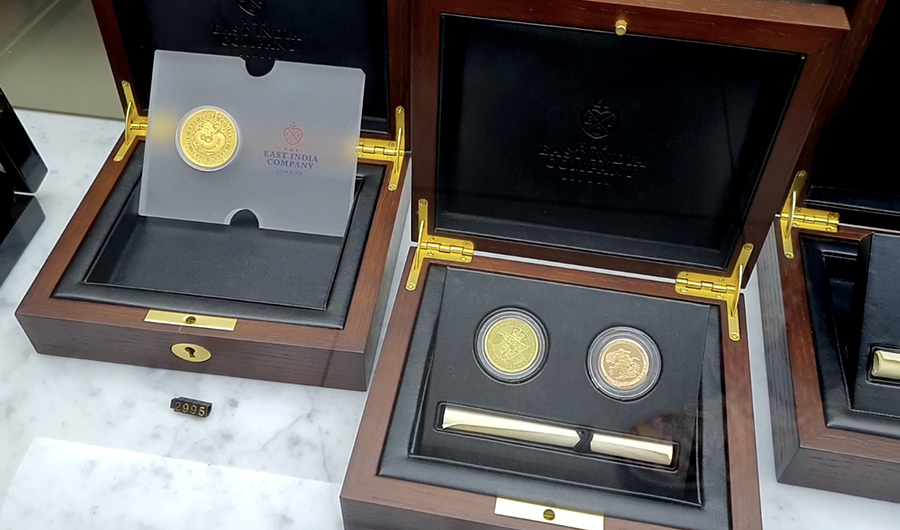


Golden coins from the time of the British Raj, reminted by the East India Company, on display at its shop in London's Mayfair on September 4, 2020. (AN photo by Saadia Gardezi)

In 1857, Indian soldiers revolted against the British and the Company’s territorial and economic control was shifted to the British government. What remained was a small tea and coffee concern and trademarks.
In 1874, the East India Company dissolved.
But can a company with a dark history of colonial exploitation be rehabilitated? Metha certainly thinks so.
“We were worried about some of the reactions that might come out of it being the colonizer,” he said. “But due to the fact that the one who was colonized bought the company, the story is extremely positively received by the Indian Subcontinent.”

Justice Amin-Ud-Din Khan takes oath as chief justice of Pakistan’s first Constitutional Court

Updated 14 November 2025
Follow

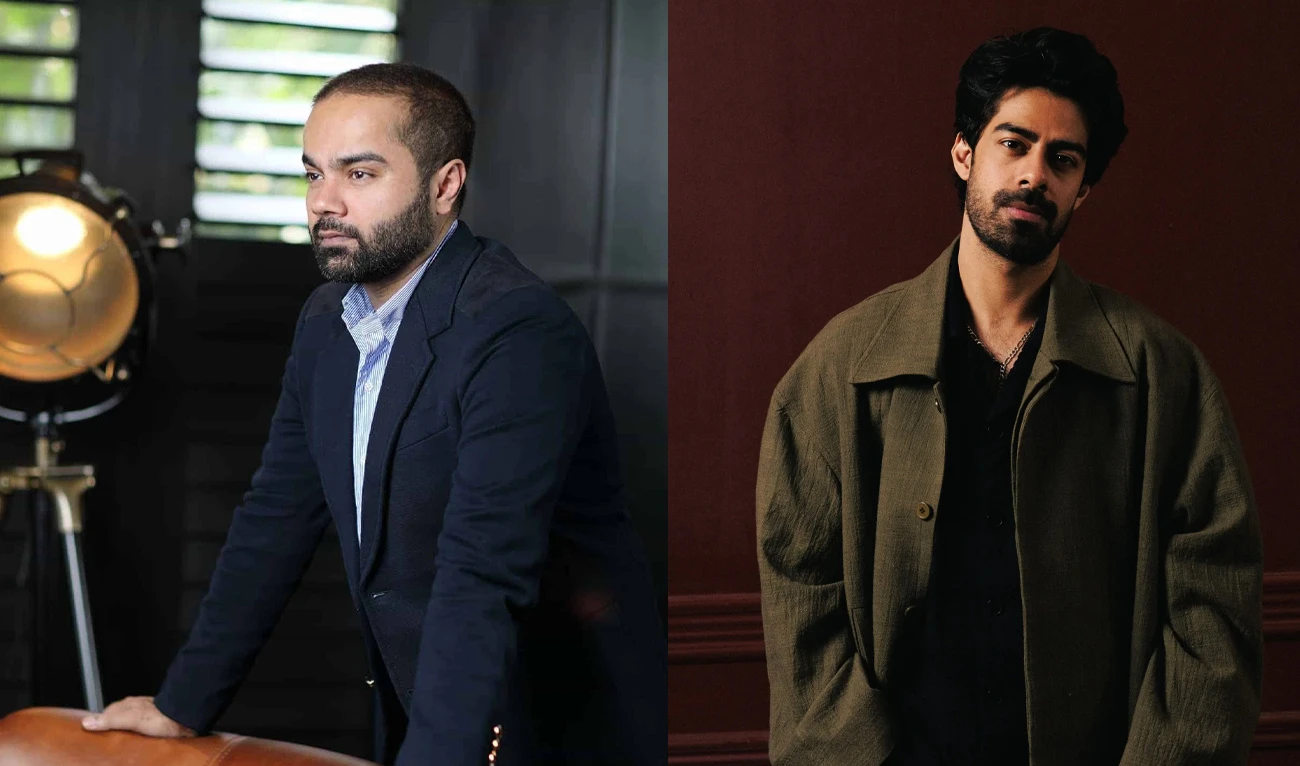
Justice Amin-Ud-Din Khan takes oath as chief justice of Pakistan’s first Constitutional Court

  • The Federal Constitutional Court will now decide cases involving Pakistan’s constitution, instead of the Supreme Court
  • Two Supreme Court judges resigned Thursday in protest against 27th constitutional amendment which paved way for FCC

ISLAMABAD: Justice Amin-Ud-Din Khan on Friday took oath as the first chief justice of the Federal Constitutional Court (FCC), following sweeping changes in the country’s military and judicial command structure.

The FCC was formed after the government made changes to the military and judicial command structure via the 27th constitutional amendment. The amendment shifts constitutional cases from the Supreme Court to the FCC while it grants expanded powers to Pakistan’s army chief.

President Asif Ali Zardari administered oath to the FCC Chief Justice Khan at a ceremony in Islamabad, which was attended by Prime Minister Shehbaz Sharif, cabinet members, Supreme Court Chief Justice Yahya Afridi, parliamentarians and top military officials.

“I, Justice Amin-Ud-Din Khan, do solemnly swear that I will bear true faith and allegiance to Pakistan, that as chief justice of the Federal Constitutional Court of Pakistan, I will discharge my duties and perform my functions honestly, to the best of my ability and faithfully in accordance with the Constitution of the Islamic Republic of Pakistan and the law,” Khan said as he took oath as the Constitutional Court chief justice.

“I will not allow my personal interest to influence my official conduct or my official decisions.”

FCC Chief Justice Khan was born on Dec. 1, 1960 in the eastern city of Multan where he received his education from Kindergarten Muslim School. He completed his secondary education from the Government Muslim High School in 1977, according to the Supreme Court’s website.

He secured his bachelor’s degree in Philosophy in 1981 and completed his L.L.B degree from the University Law College in Multan in 1984 and also secured a diploma in Taxation Law. Khan obtained the license to practice in Pakistan’s lower courts in 1985 before enrolling as an advocate of the Lahore High Court in 1987.

He was later enrolled as an advocate of the Supreme Court of Pakistan in 2001. The FCC chief justice was involved there in mostly civil cases relating to property, preemption and matters of inheritance. He was elevated to the bench in 2011 and during his stint as judge, he decided thousands of civil cases in the Bahawalpur and Multan benches of the Lahore High Court.

In 2019, Khan was elevated as a judge of the Supreme Court in 2019.

His appointment to the post of FCC chief justice on Thursday took place hours after two Supreme Court judges, Justice Athar Minallah and Justice Mansoor Ali Shah, resigned in protest against the 27th constitutional amendment, with Justice Shah describing it as a “grave assault” on the constitution.

The FCC was set up after years of clashes between the executive and the judiciary. Verdicts issued by the top court over the years ousted prime ministers from office and put the judiciary on a confrontational path with the governments at the time.