

Ruled out: East India Company which once owned India now owned by Indian

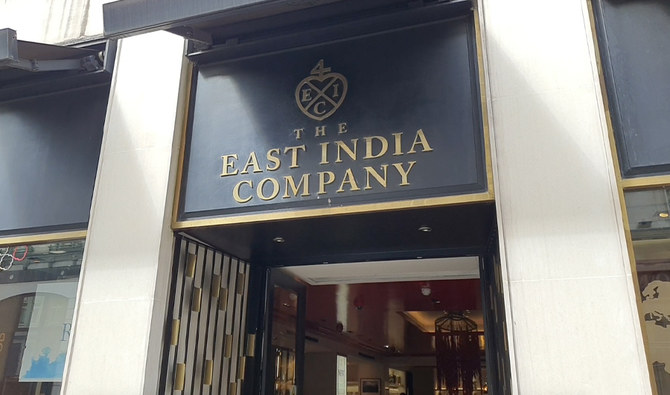
The entrance to East India Company's flagship store in Mayfair, London, on September 4, 2020. (AN photo by Saadia Gardezi)
Short Url
Updated 08 September 2020
Follow

Ruled out: East India Company which once owned India now owned by Indian

  • In 2010, Sanjiv Mehta relaunched the East India Company as a consumer brand selling luxury teas, coffees, and food
  • For 250 years, the Company dominated the Indian subcontinent, seizing by brute military force great chunks of the Mughal Empire

LONDON: The East India Company name is synonymous with the colonial exploitation of South Asia, including the Indian Subcontinent, since the 1600s. Today, in one of the great ironies of history, the Company is owned by an Indian.
Founded in London in 1600 to pursue trade in spices, the East India Company was authorized by its charter to wage war. In the next 250 years, it dominated the Indian subcontinent and used brute military force to conquer large chunks of the Mughal Empire, including India, present day Pakistan and Bangladesh and half of Afghanistan.


East India Company seal from the 1600's in use on merchandise today at the East Indian Company store in London, on September 4, 2020. (AN photo by Saadia Gardezi)

But the Company was disbanded after soldiers of the company’s own army rose in rebellion against the British in 1857.
A tiny shadow of the company persisted: the trading name and a small tea and coffee concern.
In 2005, Indian businessman Sanjiv Mehta acquired the company and turned it into a consumer brand focused on luxury teas, coffees, and food.
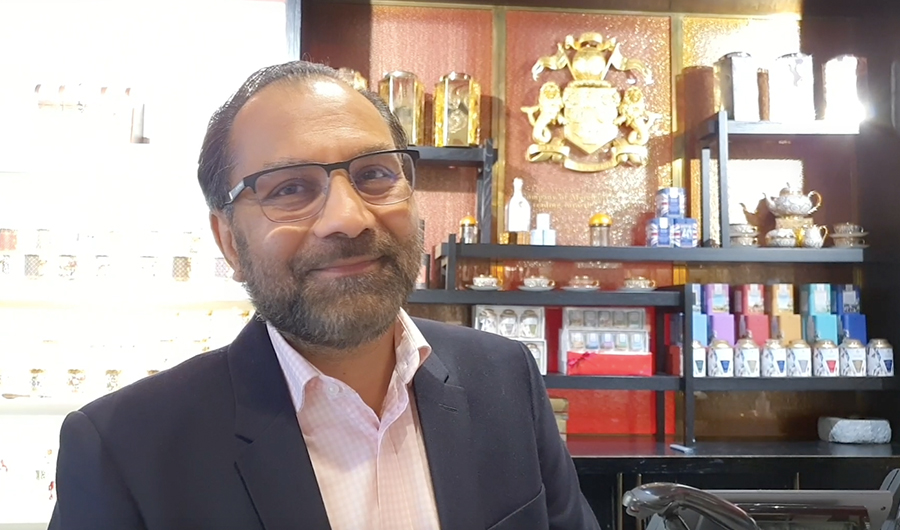


Sanjiv Metha, chairman and CEO of the East India Company, poses for a photograph in London on September 4, 2020. On the wall behind him displayed is the original coat of arms of the East India Company. (AN photo by Saadia Gardezi)

“A company which once owned India is now owned by an Indian ... a feeling of the empire striking back,” Mehta, who opened his first store in 2010 in London’s affluent Mayfair area, told Arab News.
When he learnt that the company’s shares were up for sale, he said he had to own them, “no matter the cost.”
Today, Metha has the license to trade under the coat of arms and seal of the historic company. He also has the rights to mint coins, including one mohur gold coin that was last minted in 1918 in British India.
As an Indian familiar with the history of the Company’s aggressive trade policies and exploitation of the Indian Subcontinent, buying the shares meant emotional closure for Mehta, he said at the East India Company store, its shelves lined with teas and coffees from India, China, Africa, and everywhere in-between.
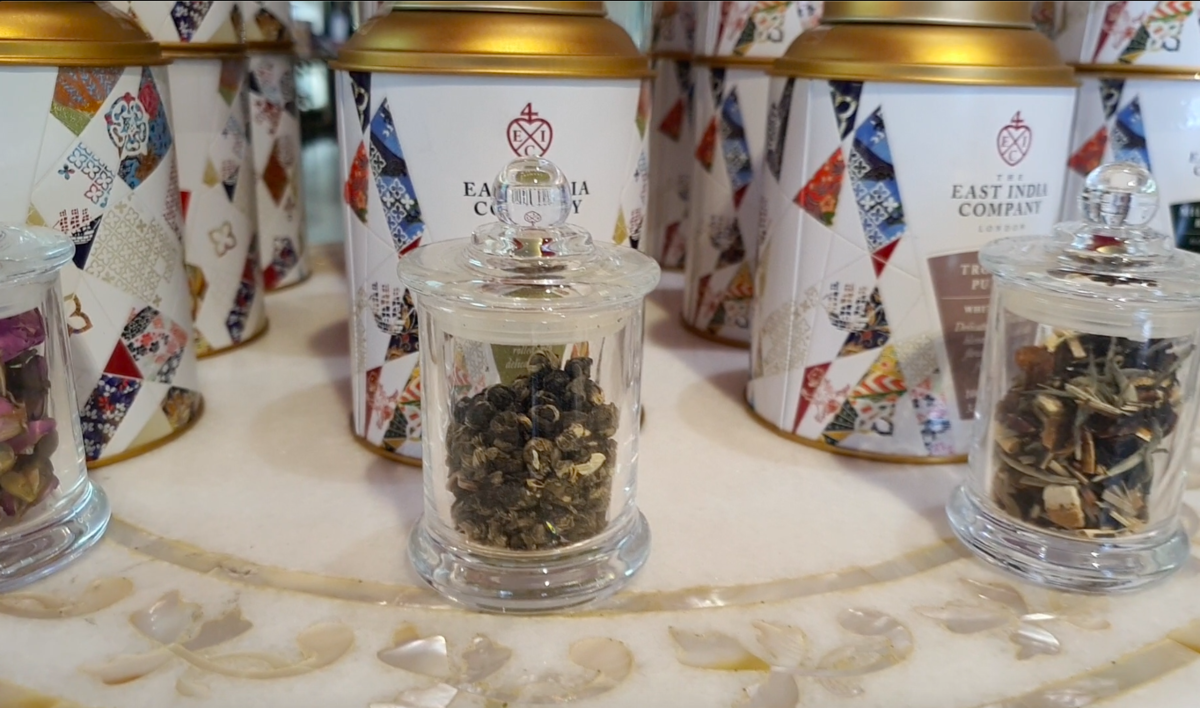


Luxury teas on display at the East India Company in Mayfair, London, on September 4, 2020. (AN photo by Saadia Gardezi)

“This avatar of the East India Company is based on the idea of unity in diversity,” Metha said. “We are taking all the good forward and leaving the bad behind. The previous company was built on aggression, this company is built on compassion.”
In 1600, Queen Elizabeth I granted over 200 English merchants the right to trade in the East Indies to compete against Dutch traders. They became known as the East India Company and by the 18th century dominated the global textile trade, with an army to protect their interests.
Most of the forces were based at three main “stations” in India: Madras, Bombay, and Calcutta.
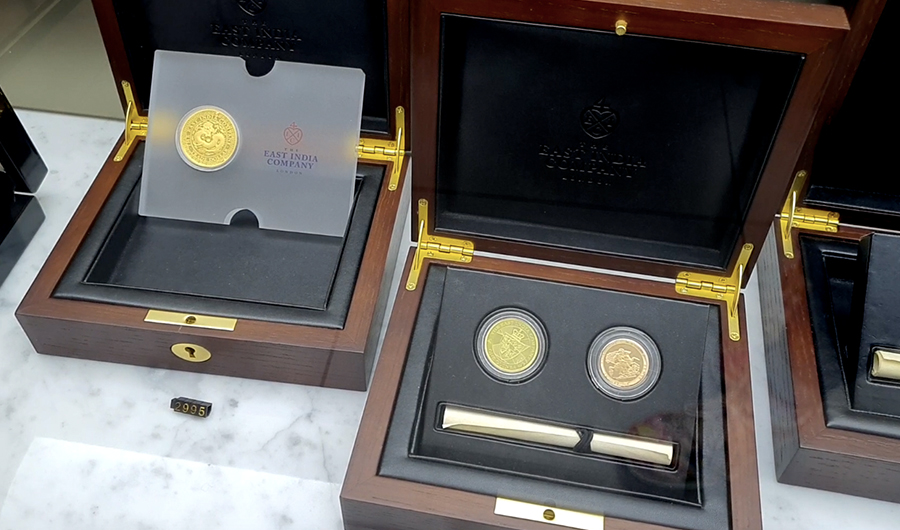


Golden coins from the time of the British Raj, reminted by the East India Company, on display at its shop in London's Mayfair on September 4, 2020. (AN photo by Saadia Gardezi)

In 1857, Indian soldiers revolted against the British and the Company’s territorial and economic control was shifted to the British government. What remained was a small tea and coffee concern and trademarks.
In 1874, the East India Company dissolved.
But can a company with a dark history of colonial exploitation be rehabilitated? Metha certainly thinks so.
“We were worried about some of the reactions that might come out of it being the colonizer,” he said. “But due to the fact that the one who was colonized bought the company, the story is extremely positively received by the Indian Subcontinent.”


Pakistan opposition rallies in Khyber Pakhtunkhwa to demand release of Imran Khan

Updated 07 December 2025
Follow

Pakistan opposition rallies in Khyber Pakhtunkhwa to demand release of Imran Khan

  • PTI-led gathering calls the former PM a national hero and demands the release of all political prisoners
  • Government says the opposition failed to draw a large crowd and accuses PTI of damaging its own politics

ISLAMABAD: Pakistan’s opposition led by the Pakistan Tehreek-e-Insaf (PTI) party demanded the release of jailed former prime minister Imran Khan at a rally in the northwestern Khyber Pakhtunkhwa province on Sunday, describing him as a national hero who continues to command public support.

The gathering came days after a rare and strongly worded briefing by the military’s media chief, Lt. Gen. Ahmed Sharif Chaudhry, who dismissed Khan as “narcissistic” and “mentally ill” on Friday while responding to the former premier’s allegations that Pakistan’s chief of defense forces was responsible for undermining the constitution and rule of law.

He said that Khan was promoting an anti-state narrative which had become a national security threat.

The participants of the rally called for “civilian supremacy” and said elected representatives should be treated with respect.

“We, the people of Pakistan, regard Imran Khan as a national hero and the country’s genuinely elected prime minister, chosen by the public in the February 8, 2024 vote,” said a resolution presented at the rally in Peshawar. “We categorically reject and strongly condemn the notion that he or his colleagues pose any kind of threat to national security.”

“We demand immediate justice for Imran Khan, Bushra Bibi and all political prisoners, and call for their prompt release,” it added, referring to Khan’s wife who is also in prison. “No restrictions should be placed on Imran Khan’s meetings with his family, lawyers or political associates.”

Addressing the gathering, Sohail Afridi, the chief minister of Khyber Pakhtunkhwa, denied his administration was not serious about security issues amid increased militant activity. However, he maintained the people of his province had endured the worst of Pakistan’s conflict with militancy and urged a rethinking of long-running security policies.

The resolution asked the federal government to restore bilateral trade and diplomatic channels with Afghanistan, saying improved cross-border ties were essential for the economic stability of the region.

The trade between the two neighbors has suffered as Pakistan accuses the Taliban administration in Kabul of sheltering and facilitating armed groups that it says launch cross-border attacks to target its civilians and security forces. Afghan officials deny the claim.

The two countries have also had deadly border clashes in recent months that have killed dozens of people on both sides.

Some participants of the rally emphasized the restoration of democratic freedoms, judicial independence and space for political reconciliation, calling them necessary to stabilize the country after years of political confrontation.

Reacting to the opposition rally, Information Minister Attaullah Tarrar said the PTI and its allies could not gather enough people.

“In trying to build an anti-army narrative, they have ruined their own politics,” he said, adding that the rally’s reaction to the military’s media chief’s statement reflected “how deeply it had stung.”

“There was neither any argument nor any real response,” he added, referring to what was said by the participants of the rally.